

I bet there’s been a time when you’ve tuned into the radio, listened to some friendly pop, or heard a chart-topping hit and thought, “Wow, how does that sound so lively and full of energy?”
Remember that catchy beat in Dua Lipa’s “Don’t Start Now” or the toe-tapping rhythm in Bruno Mars’s “That’s What I Like”? Those drum transients just seem to leap out at you, even from little laptop speakers.
It’s a feeling we all understand, even if we can’t quite put it into words. Even those who don’t know the ins and outs of music production can instantly tell when a track has that professional, energetic, hit-worthy quality.
It’s easy to assume that this magic is all down to the work of a celebrity mix engineer like Manny Marroquin, Serban Ghenea, or Greg Wells. But there’s more to it than just a great mix.
From my experience in the dance music world, I learned early on just how crucial it is to incorporate compression into your tracks. It’s not just a technical aspect; it genuinely influences the way the music grooves and feels.
Take for example, David Guetta’s hit “Titanium” featuring Sia, or Justin Timberlake’s upbeat track for the Trolls movie, “CAN’T STOP THE FEELING!”. There’s some top-notch compression going on there that you might not notice at first listen, but trust me, it’s making a massive impact on the track’s groove.
So, how about we explore a few different types of compressors? I’ll throw in some handy tips and tricks to help you add that professional sheen to your own productions.
Let’s dive in!
Table of Contents
The Secret to Pop Hits – Using Compressors to Alter the Feel of Tracks!
Sidechain Compression
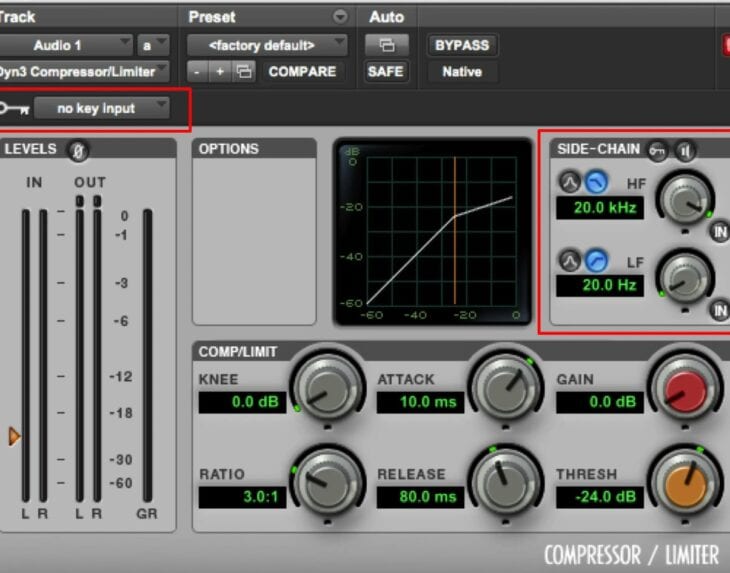
Let’s talk about the art of sidechain compression, which is currently trending big time. You might have heard it in the song “Titanium” featuring Sia, or in tracks by Deadmau5 and Kaskade – it’s pretty noticeable once you know what you’re listening for.
The non-technical way to describe it is extreme “pumping”.
Here’s a fun way to make it work: start with a kick. Ideally, something short, without too much sub, looping on each quarter note.
Then, you’ll want to tweak the routing so it’s going to a bus in your DAW, but not to the master out.
Next, grab any compressor that’s fast and really pumps. Look for the key input on your user interface, click on that, and set the output for your kick to the same bus as your compressor’s key input.
Turn on the sidechain on the compressor, start playing with the threshold, and you’ll see – every time the kick hits, your compressor will pump in sync with it, but you won’t hear the kick in your track. It’s just there to trigger your compression.
Usually, you’ll have your kick on every quarter note for sidechain compression. But if you need it to pump harder, or you’re working with a slower tempo, you can add it to any eighth notes or 16th notes. Just set it to match whatever rhythm you want your compression to groove to.
This technique is super popular because it instantly makes whatever you’re compressing groove. When you groove, you sound like you have more energy – so if your vocal track is a bit lazy, or the vocalist was having an off day, sidechain compression can make it sound like they’re right there with the kick, full of energy and in the groove.
Another great thing about sidechain compression is it can create space in your mix. If you’re working with something that has a lot of noise or sustain – like pads, electric guitars, or orchestral strings – and you want them in the mix but not taking up all your headroom, sidechain compression can help.
It lets you feel them on the downbeats, opening up more space in your mix.
VCA Compression (aka The Punch Compression)
VCA compressors are a popular choice for bus compressors. The SSL Bus compressor, the API 2500, and the Smart Research C2 are probably the three most renowned VCA compressors out there.
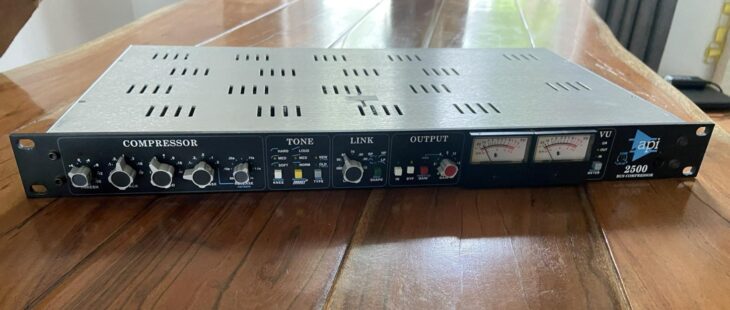
Here’s why VCA compression is often referred to as the “punch compressor” by engineers and producers: they’re incredibly quick to recover after compressing, which, with the right settings, gives your sound a more present feel.
So, how does it add punch? Well, a mix loses its punch when your levels are inconsistent, like when the kick is too loud, the snare is too soft, and maybe the high hats are too long. It can make tracks feel loose and weak.
VCA compression works to pump your tracks similar to sidechain compression but in a much subtler way. When the compression rises and then falls back down in time for the snare hit, everything in between gets ducked, but the main transient is featured. This makes your kick and your snare sound punchier, louder, and more present.
Now, if you have hats between the kick and the snare, depending on their volume and the sharpness of your high hats, they’ll be softened. This gives the impression of better dynamics in the hat and that the drummer really knew how to play that so nicely in between the kick and the snare.
Hip-hop productions often rely heavily on VCA compressors. Most of Dr. Dre’s beats from the MPC 3000 always pass through some sort of SSL VCA compression.
I personally am a huge fan of the Smart C2 on my productions because of what it does to hi-hats, shakers, and anything that feels robotic or stiff.
Many producers and pop producers like Max Martin and Dr. Luke are fans of the API 2500, which is similar to the Smart and the SSL but has its own unique features. It’s more versatile and adds a lovely sheen to the sound that just makes pop productions stand out.
So, if you’re working with loops that don’t feel strong enough or modern enough, or if you’re tracking individual drum parts from a drum machine or even a real drummer, I’d recommend giving a VCA compressor a try.
Play around with a slow attack and fast-release setting. You’ll hear a change instantly, and it’s always for the better.
Bus Compression
Bus compression truly came into its own with the SSL 4000 consoles. In fact, it was situated right in the center, serving as the final stage of the output before heading to tape.
Alan Smart, the genius behind these consoles, implemented it. He then created an individual rackmount that was similar, though not identical, to the bus compressor he designed for the SSL consoles in the 80s. This is the still widely used Smart C2.
The whole idea of bus compression is to avoid peaking and clipping on your way to tape, or nowadays, as you bounce. Think of it as a gentle smoother for your overall track volume.
It spares the engineer the task of manually riding the fader, which can be not just challenging, but also prone to errors, and time-consuming to nail the right take.
Bus compression can also lend a bit of punch and feel to your tracks if you decide to use it a tad more drastically. Many hip-hop artists do this to really make those beats pop.
Another reason hip-hop productions use a lot of compression is because it naturally tames and controls the low end and the bass subs.
You might be wondering if that’s the opposite of what hip-hop artists like since they’re all about that sub-bass. Yes, it seems counterintuitive, but what it does is control it without thinning it out. It actually enhances its presence, but without it wrecking your speakers when you crank up the volume.
So the magic with bus compression is to tweak it to that sweet spot where the bass is always there, but never muddy or overpowering. The undisputed champion of bus compression is, of course, the SSL compressor.
You can find it as a 500 series made by SSL, and Universal Audio has also perfectly modeled it as a plugin.
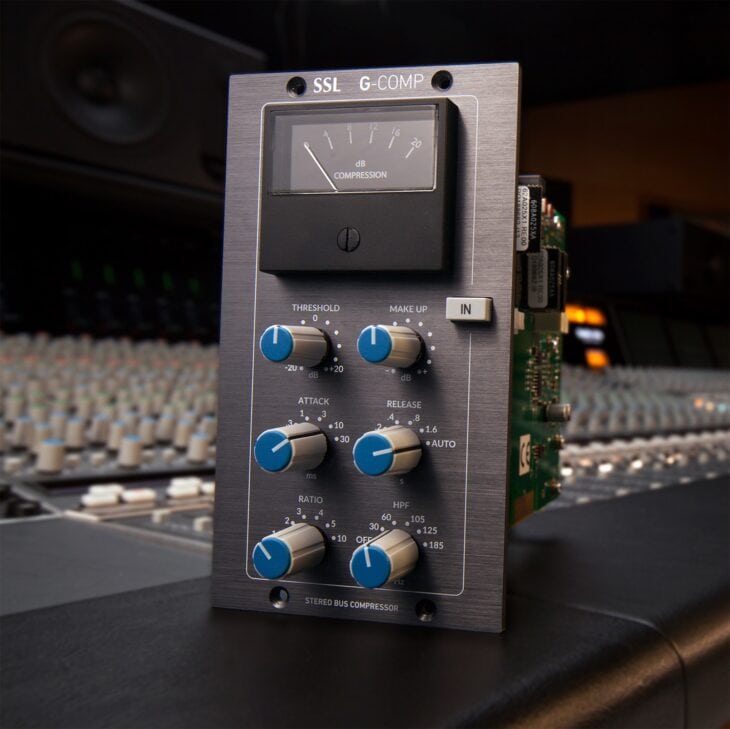
SSL also created its own emulation plugin for its native series.
Tube Compression (Harmonics)
Tube compressors are naturally a bit slower than VCA compressors. This makes them fantastic for textural sounds, even though they’re also great for drums and bus compression.
But hey, they’ll give you a different result than the punchy, VCA compressors, and that’s part of their charm!
Let’s talk vocals. They absolutely adore tube compression.
The Fairchild was the king of tube compressors, but it was so pricey that companies started developing their own designs of what is known as a variable mu compression design. Now, the undisputed heir to the Fairchild throne is the Manley Variable Mu compressor. It’s pretty cool.
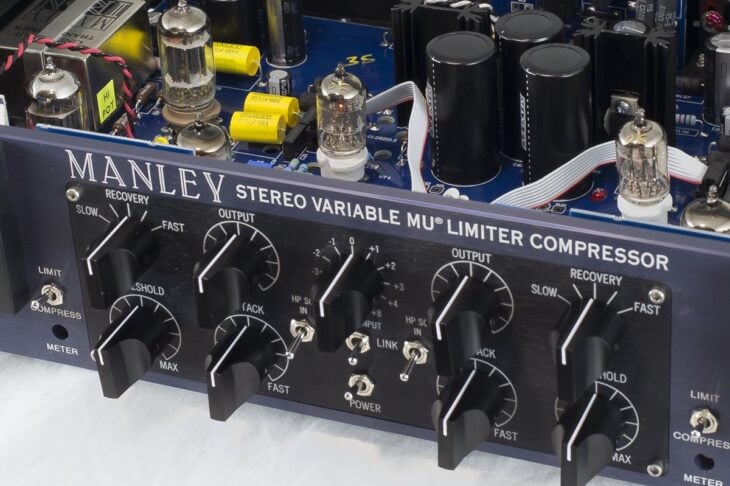
If you’re working with acoustic music or things that are less transient-based and less beat and percussion-based, dialing in a nice healthy amount of tube compression can do wonders!
It can really enrich your track and give it that professional vibe. This is a technique typically associated with mastering.
What tube compressors are actually doing is imparting second-order harmonics onto whatever passes through them. I wrote an article about harmonics if you’re interested in exploring this amazing acoustic aspect of music in depth. You can find it here.
Now, here’s a tip and trick for using tube compression: try using it to smooth out those jarring peaks that can happen in music, whether it’s with acoustic guitars, pianos, or even vocals themselves. If your track has a lot of moments that just don’t feel natural when you automate them, give tube compression a shot.
Add a nice amount and you’ll start hearing how your track begins to flow so much more smoothly.
Limiters
Limiters certainly impact the feel of your track, but the effect is not as noticeable as that of Tube compressors and VCA compressors. Interestingly, compressors, like the Manley, can also be set in limit mode.
Using them this way creates a hybrid effect between tube and VCA, which is quite intriguing.
Mastering greatly benefits from this type of compression. Limiters are typically used as the final stage of your master out when you’re ready to bounce your track, either after the bus compressor or to push it to the max before uploading to Spotify.
Limiters are extremely fast, earning them the nickname ‘brick wallers’. This is because they set a ceiling or limit, that doesn’t allow anything to go beyond. It’s as if your track hits a brick wall and stays at that level.
However, use these with caution. If you’re inexperienced or unsure of what you’re doing, they can negatively affect the dynamics of your track. Also, there are many generic limiters out there.
My personal favorite is the Izotope Ozone 11 Maximizer.
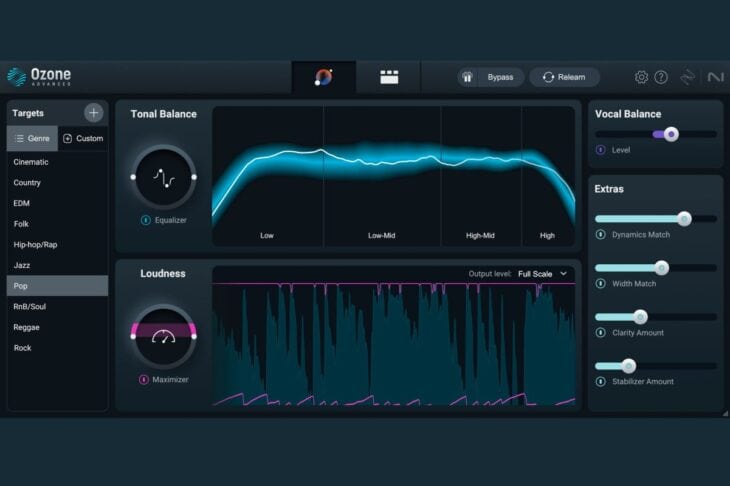
This classic fader unit with ceiling and threshold is a gem. Another great one that has been around and does an excellent job is the Waves Renaissance AXX.
The Waves is a good choice if you want to group a family of instruments, like synths or piano, and want them to be controlled in the mix a bit more. Dial in a little brick wall on the Waves Renaissance, and it’ll ensure you don’t have any unwanted peaks.
Final Thoughts
Chatting about compression can be quite a challenge—it’s a very hands-on, sensory experience. Think of it like a seasoning in cooking; too much can overpower and even ruin the dish.
That’s where the artistry comes into play. Just as a good chef knows the right amount of spice or salt to add, a skillful Producer and Engineer understand when compression enhances and when it detracts.
In my eyes, compression is a musical instrument in itself. Most compressors have a meter or an LED meter that shows you the speed and amount of gain reduction.
I often watch the needles on compressors and listen to my track passing through it, trying to feel if the needle is dancing in time with my tune.
Then, I start tweaking as needed. This is so crucial because when you listen to fantastic mixes by incredible engineers, you’ll notice that everything is in perfect harmony.
The drums groove with the bass, the bass vibes with the keys, and the voice is always at the forefront without feeling detached.
That’s why they call compression the “glue”. That phrase is tough to explain, but when you hear it, you just know.
When you’re using compression correctly, it feels like each instrument has been sprinkled with a bit of top end sheen, and everything in one “glued together unit”.
If done properly, when you hit bypass, you’re like, “Wow, I never want to hear it without compression again!”
