

If you’ve just hopped on the Splice train, you might be feeling a bit overwhelmed by the sheer amount of loops and sounds to choose from. I totally get it – when I started out, we had to buy CDs that, if we were lucky, contained around 800 MB of sounds.
Back in the day, I had to shell out $100-$200 on sample CDs just to spark some creative ideas. But now, with Splice, we’ve got access to hundreds of thousands of top-notch, ready-to-mix loops.
The tricky part? Making your track shine amongst the rest. After all, everyone has access to the same sounds!
This can be a real hurdle for newbie producers, young artists, and songwriters who want to put their own distinctive spin on their work but might not have the funds to hire live musicians or get their hands on high-end analog gear.
I often get asked at panels or on social media how I manage to make my sounds stand out from the crowd.
So, here’s a bit of friendly advice on how you can take those standard Splice or library loops and turn them into something that’s punchy, unique, and pro-level.
Table of Contents
Reamping Through Harmonic Processors
If you’re looking to give your in-the-box sounds and loops a little more oomph, one of the best ways is through reamping. That’s sending them out of your audio interface and into effect boxes or vintage gear that have their own unique character.
Now, I know what you’re thinking – “I’m just starting out, I can’t afford expensive equipment!” But you’d be surprised! For instance, a used TL Audio tube preamp from the ‘90s can be found on eBay for around $300.
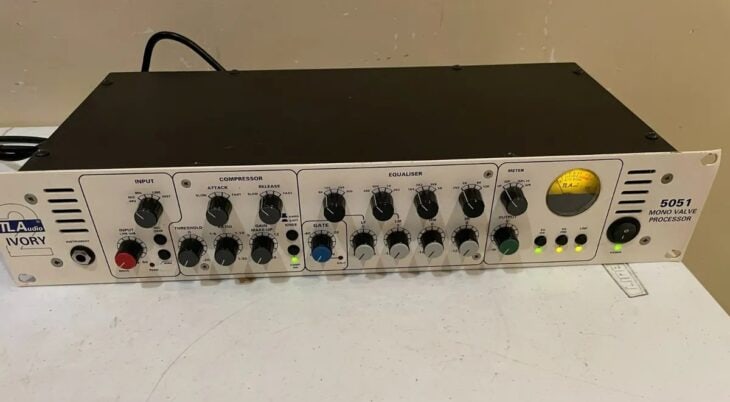
These little beauties come with real vacuum tube analog paths and a fantastic tube EQ that provides lovely subharmonics and a gritty, British-style tube distortion.
And if you’re finding the used market a bit dry, or your budget is even tighter, you’re in luck! Audio equipment rentals are a thing in most major cities.
For as little as $50 a day, you can rent a gritty preamp or vintage compressor that’ll add that extra bit of character to your tracks.
There’s just something about routing audio through a quality piece of analog gear that gives your sound an extra dimension, making it feel less… well, digital. And for those of you with a bit more to spend, or who are looking for that extra special piece of gear, I’ve got two recommendations for you.
For distortion, I can’t recommend the Overstayer Saturator enough. Anything you pass through it – sounds, loops, drum samples, keyboard samples – will come out the other side sounding richer, fatter, and more unique.
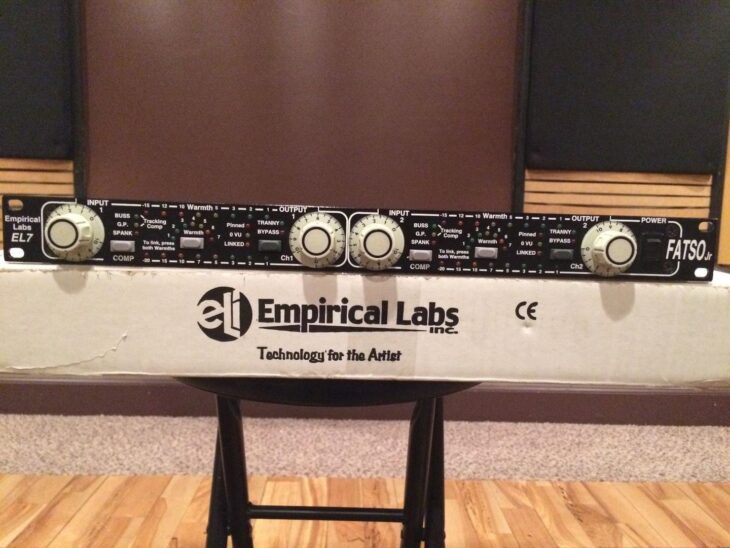
And if you’re a fan of a warm, dark analog tape sound, your best friend is going to be the UBK Fatso. This rackmount is your best bet for getting that analog tape sound without actually owning a tape machine.
It’s a modified version of the Empirical Labs Fatso (Full Analog Tape Simulator and Optimizer) and it’s basically the anti-digital machine – anything passed through it immediately gains more vibe.
Filtering Through Synths
With all the fantastic analog synth remakes coming out from companies like Behringer and Moog, it’s never been easier or more affordable to add a touch of analog filter or grit to your sound.
Sure, plug-ins can do a similar job, but the unique charm of a genuine analog filter is pretty unbeatable when you compare them side by side!
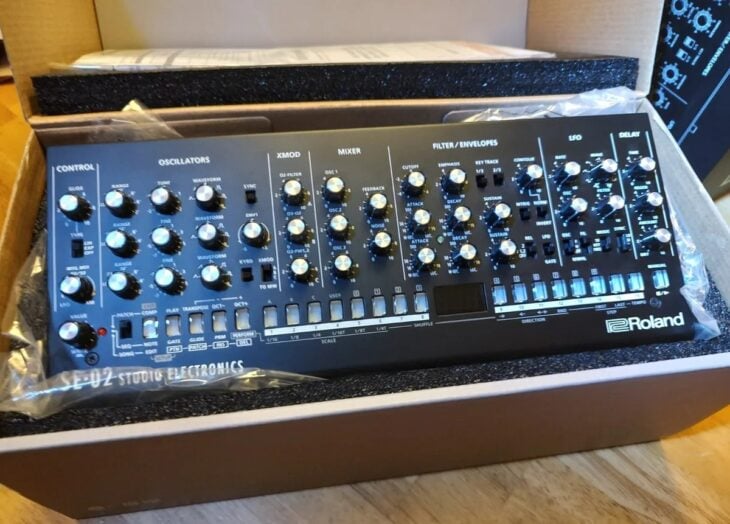
Looking for some wallet-friendly options? Check out the Roland Studio Electronics SE-02. You can route any audio through its analog filter!
Moog, a bit on the pricier side, offers nifty little modules like the Minitaur or Subharmonicon. You can route your audio through their circuits for that beautiful vintage Minimoog-ish low-end sound.
This technique is a real game-changer, especially for enhancing loops that could use a bit more depth in the low-end or a touch of crunch in the high frequencies. Want a unique sound? Try passing individual kicks and snares through these filters.
Transient Designers
I still remember the day I first laid my hands on the SPL Transient Designer rack. I was simply blown away by what it could do.
With just two knobs – attack and sustain, it was like a user-friendly envelope shaper. It got me thinking, “How did I ever manage without this before?”
Think of this device as your friendly neighborhood superhero, condensing all the key functions you’d want from compressors and gates into a single, foolproof knob. Need to add some punch? Just give the attack knob a gentle clockwise turn.
If the loop feels a bit cluttered, a bit too echoey, or the hi-hats are hanging around longer than you’d like, just dial the sustain knob counter-clockwise. This neat little trick tidies up your loop, shortening it much like a gate would, but in a far more harmonious way and without any of those pesky pops or clips.
Talk about a genius piece of kit!
Fast forward to now, and Plugin Alliance is the proud exclusive modeler of plugin versions of all SPL’s gear. But if you’re looking to mix things up, you’ll find similar devices in plugin form from the likes of SSL, Softube, and Sonnox.
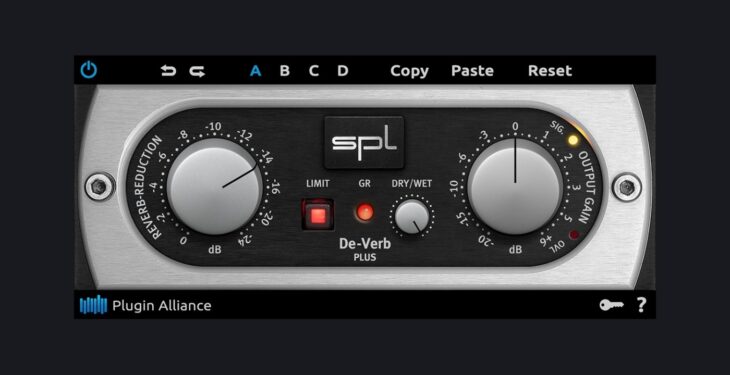
Just a little trick from me to you – using this device before and after distortion effects can take your loops from Splice and elevate them to new heights, making them truly stand out from the crowd.
Slicing and Replaying
Almost all Digital Audio Workstations (DAWs) these days come with a handy slicing tool that can easily chop up your loop into rhythmic notes like quarter notes and eighth notes. But, some tools just do it better than the rest.
Take the Elektron Octatrack for instance. It’s hands down the most awesome loop-mangling and slicing machine ever made. Sure, it’s a bit tricky to learn, but once you’ve got the hang of it, it’s likely the best standalone sampler slicer and sequencer out there.
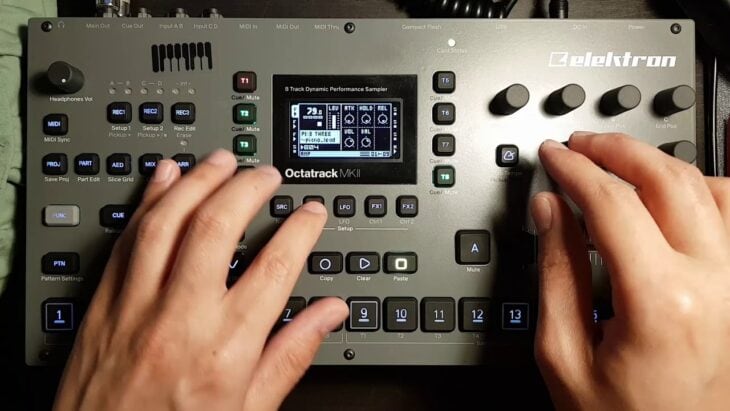
What makes it really cool is this unique feature where you can step sequence slices from any sliced loop in your library just by pressing one key and twirling one knob. This opens up a whole new world of creativity for mixing up your slices.
Say, you have a typical rock beat with a kick on the one and three and a snare on the two and four. With the Octatrack, you can switch these sounds to something entirely different.
Maybe swap the kick for a water faucet sound or replace the snare with a reversed scream – it’s unbelievably versatile!
Ableton with the Push controller is also a decent choice, but it’s not quite as straightforward.
If you want to prepare lots of loops and create different racks for on-the-fly changes like you would on the Octatrack, you’ll need to put in a bit more elbow grease.
It doesn’t have the Octatrack’s randomization features either.
Take a look at this YouTube video to see the Octatrack in action, doing all the cool stuff I’ve just mentioned.
The Coolest Analog Style Plugins
I’ve been chatting about a bunch of hardware techniques and that’s because, in my opinion, the best way to give a unique character to your digital Splice loops is by transforming them in the Analog Domain. But hey, if all you’ve got are Plug-Ins, you’re still in a great place!
Plug-Ins have come a long way and I’ve found lots that I totally adore. Even though I’ve got their hardware doppelgängers, I honestly find them to be almost as good – about 80 to 90% identical in many cases.
I’ve found that UAD Plug-Ins really capture their analog siblings’ charm. Four UAD Plug-Ins that I think are stellar for making Splice loops your own are the Thermionic Culture Vulture, the SSL E Channelstrip, the Moog Filter XL, and the Studer A800.
The Culture Vulture is a lot like the Overstayer Saturator – it’s got this amazing distortion vibe that adds a touch of grit to any Splice loop. Whether you’re after a subtle tube flavor or want to go all out with metal distortion, it’s all up to you.
The SSL E Channel Strip, which is based on the SSL 4000 E, has got the richest EQ of all the channel strips. Plus, they’ve modeled the input preamp which can add a nice crunchy texture when pushed. It’s a dream for live drums and pretty much any organic source you want to play with.
Next up, the Moog Filter XL – it’s like running your audio through a Moog synth, as I mentioned earlier.
And finally, we have the Studer A800, one of the most authentic-sounding tape emulations out there. You can tweak it to get those LoFi vintage-style sounds, kinda like a cassette.
It’s an absolute star for transforming Splice loops, especially when it comes to vocal bits and keyboards.
LoFi Bitrate and Sample Rate Tricks
There are so many cool physical boxes out there that do some seriously impressive stuff with sample rates and bit rates. One that’s worth a look is the Meris Ottobit Jr.
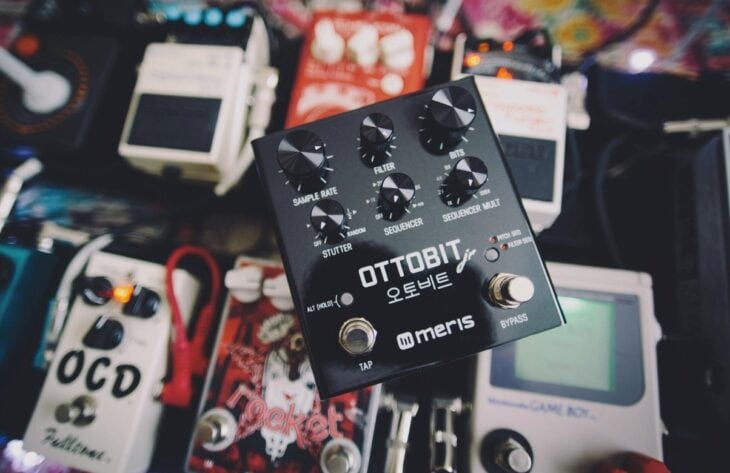
It’s a nifty sample rate filter and bit reducer, all packed into a sleek little pedal. Even though it seems to be mainly for guitars, it’s a top-notch tool for tweaking your Splice loops.
Switching over to the software side of things, Softube and UAD have this popular bit crusher filter called the Biscuit. The original gizmo was an 8-bit analog pedal with a real-deal analog filter and an honest-to-goodness 8-bit converter.
It’s like an instant time machine for your audio, taking it back to the sound quality of the Fairlight sampler.
The real fun starts when you use these pedals and plugins with your Splice library. The possibilities are almost endless!
You can add a warm, analog tone, or darken your sound without warping it. Or, you can turn anything from Splice into a rhythmic sequence that wouldn’t be out of place in a retro video game. It’s pretty amazing stuff!
Final Thoughts
Elevating your music production skills can be an exciting journey, especially when you start to play around with premade loops for an instant groove. Using that classic vintage gear that was part of so many legendary records of the past is going to make your sound truly one-of-a-kind!
Feel free to choose modern equivalents, whether they’re plugins or hardware, and stick with what works for you. Don’t forget, enhancing loops isn’t just a task for the mixing engineer. Many producers already have a perfectly mixed track by the time they’re laying down the vocals.
Let’s say goodbye to the “fix it in the mix” mindset. It doesn’t quite reflect the love for quality sounds and creativity, does it? Depending exclusively on available sounds doesn’t showcase your artistic flair or skillful mastery of your craft. So let’s make the most of what we’ve got and make some fantastic music!
