
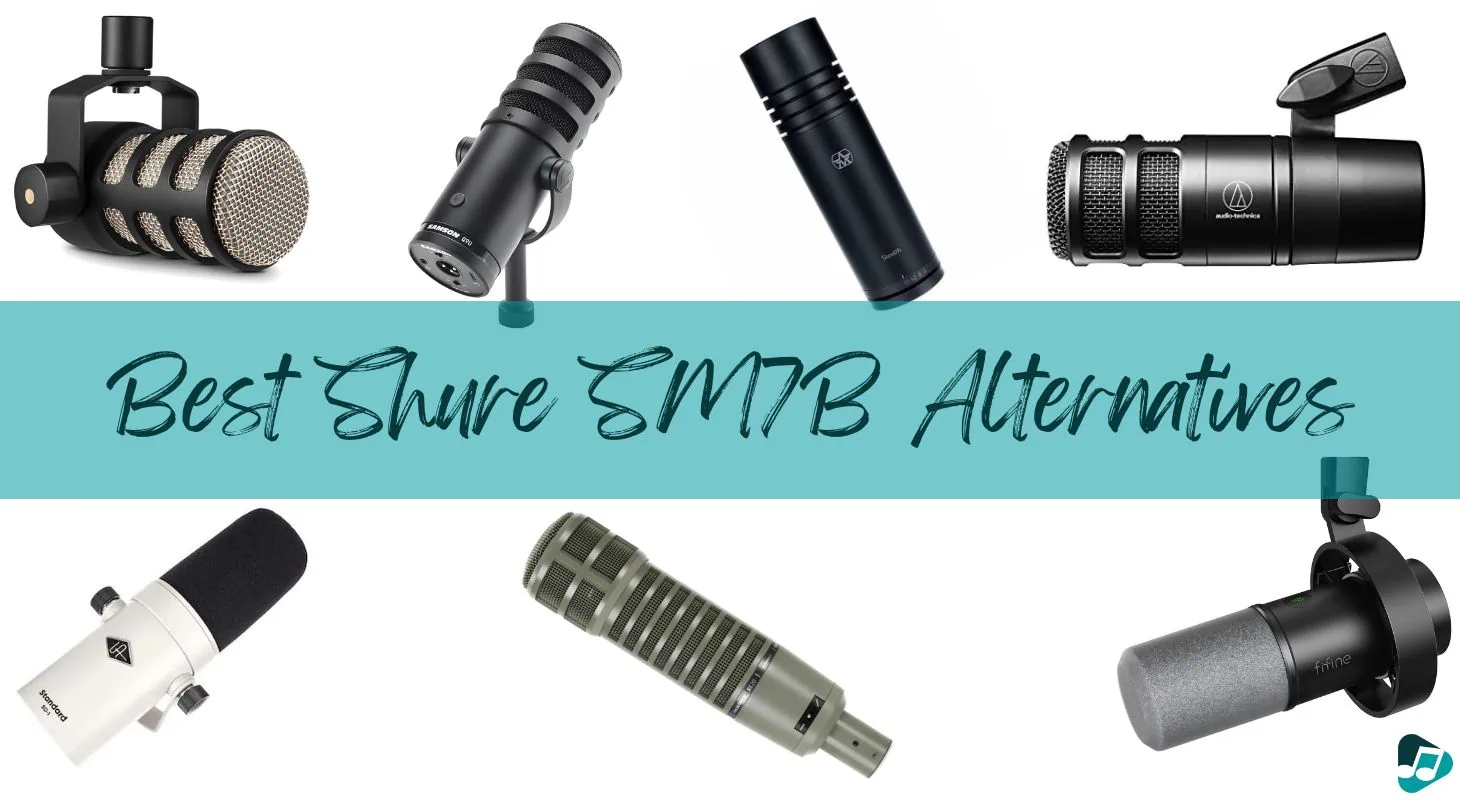
In a world with more microphone choices than breeds of dog (ok, I might be exaggerating a little), it’s easy to understand why so many people flock to one tried and true model.
While ubiquitous, Shure’s SM7B dynamic mic comes with a hefty price tag that makes it inaccessible and frankly unnecessary for many users. (Unless you’re recording the next Thriller. In which case, please continue …)
Sure, the SM7B is a versatile, durable mic with a clean signal that EQs well live or in post and handles off-axis rejection with precision. But other reputable mic manufacturers are stepping up to offer products that rival some of the SM7B’s most desirable features.
Let’s look at a few such mics … Of course, nothing that I haven't personally had the chance to play around with at least for a short while (I've owned or tested all but one of these extensively).
The Competition
No matter what kind of content you’re creating, there’s a crystal clear dynamic mic to suit your needs, and it doesn't always have to be the SM7B. As we explore some of the best alternatives, it is important to have a clear picture in your mind of the use case for your mic, the conditions of your environment, and your budget.
1. Samson Q9U
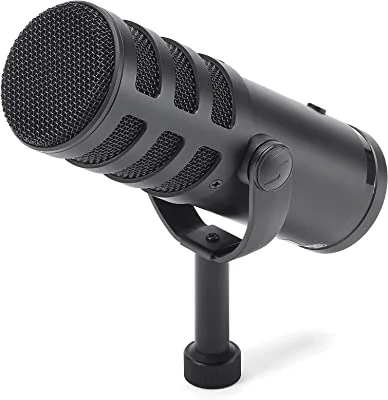
As far as SM7B alternatives go, Samson’s Q9U ranks right at the top for a fraction of the price. Right down to the hardware level EQ.
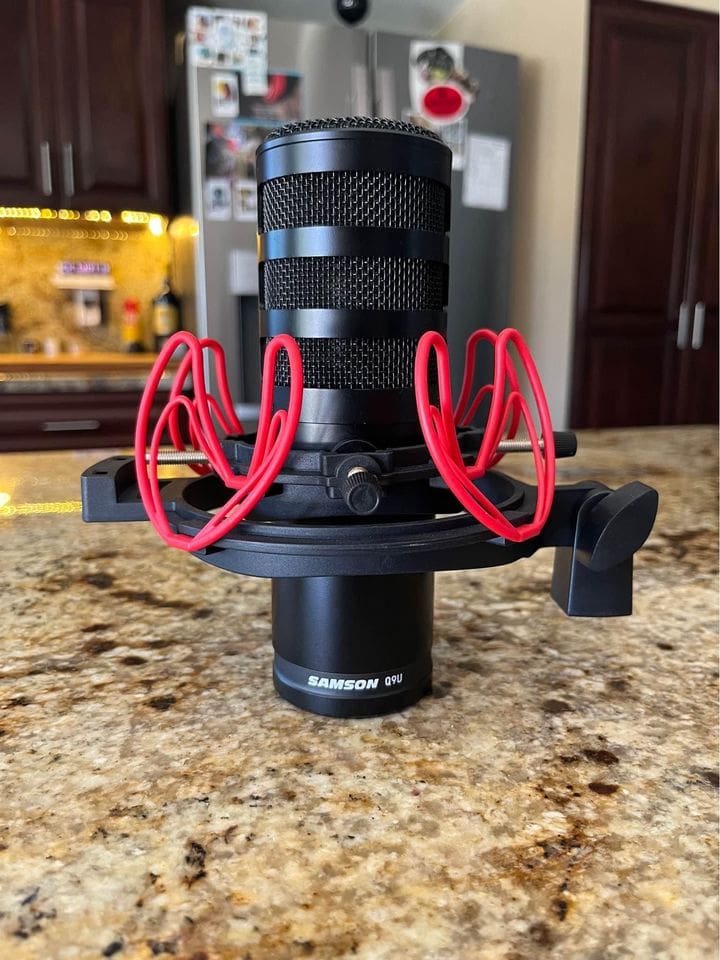
Samson Q9U
Off the bat, you’ll notice two toggles on the back of the microphone that mimic those found on the SM7B: mid boost allows you to boost the frequencies you want to hear in spoken word and low cut reduces any boominess in the signal’s sound.
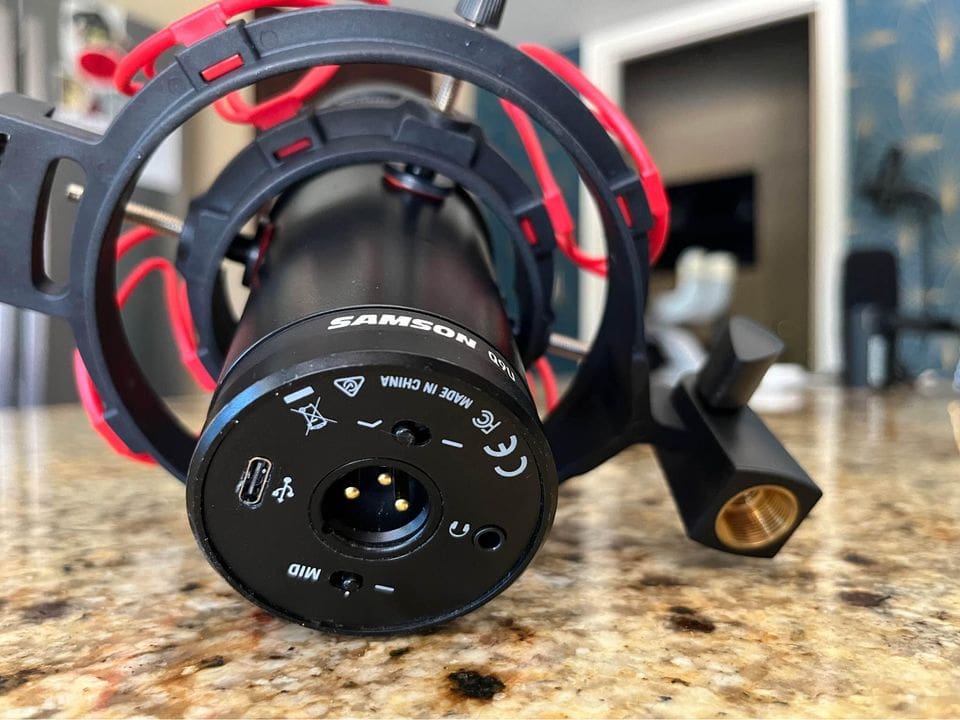
Samson Q9U - Controls
So, if you want to perform some basic EQ without spending too much time down the audio engineering rabbit hole, the Q9U delivers.
For those of you that already dwell in that rabbit hole, the Q9U features an XLR output in addition to USB-C so you can plug into any audio interface you prefer.
This output configuration is crucial when considering an SM7B alternative mic because you want a highly musical microphone that can record studio-grade vocals while also serving your content and social media needs.
When I tried out this mic, I used the XLR output connected to a Volt interface by Universal Audio. The Volt offers excellent input with quality converters and the ability to add hardware emulation plug-ins.
Having a mic with a dedicated XLR output is essential for tracking professional, record-quality vocals. For the best results, route through an analog preamp — ideally one with vintage circuitry, if your budget allows.
If you can't spring for the actual hardware, Universal Audio's preamp plug-ins offer impressive alternatives. They accurately recreate both the coloration and impedance characteristics of the original hardware preamps — it's remarkable what they've achieved with this software modeling.
For those wanting to experiment with high-end plug-ins, I recommend colored preamp emulations like the Neve 1073 or Manley Voxbox, which perfectly capture that beautiful tube sheen.
Since the Samson is a very linear, clean mic (much like the SM7B), any circuitry that adds harmonic warmth or character will greatly enhance its sound.
However, if you're working on your laptop and need a clean signal without noise or interference — without time to experiment with preamp emulations — the USB-C connection is fantastic. Whether you're podcasting, creating TikTok videos, or producing other content where you're addressing your audience or explaining your process, the USB-C connection delivers more than adequate quality.
Any additional color or flavor can be added during post-production and mixing.
While this mic doesn’t come with a stand, it does feature a useful swivel yoke mount that not only looks great and super broadcast-y but functions well.
As for sound quality, the Q9U’s cardioid polar pattern is exceptionally good at rejecting background and off-axis noise. It’s a bit sensitive to vibration, and there are better choices out there for musical use cases. But overall, it’s a sturdy, intuitive microphone that is ideal for voice work.
I also found the Samson to work well for guitars and guitar amps. Since it's a bit sensitive to vibrations, as mentioned earlier, I'd position it farther from amps and reserve it for cleaner, softer guitar sounds rather than high-energy, heavy guitar work.
Microphones with excellent rejection and precise polar patterns typically excel at recording vocals and acoustic instruments. They're less suitable as room mics for pianos or drum overheads because of their precision. However, since most people browsing this list are likely looking for a vocal mic, this shouldn't be a significant concern.
And, at the price point, the Q9U is great for podcasters who want more than one high-quality, hyper-focused microphone for their setup.
2. RØDE PodMic
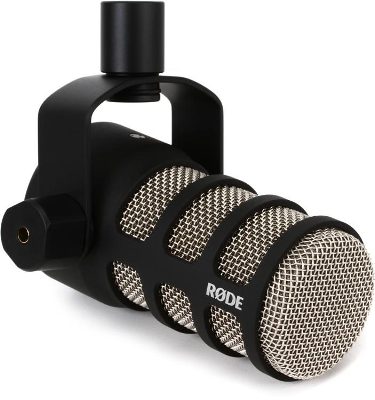
RØDE’s plosive-vanquishing PodMic is an extremely handsome, vintage looking microphone featuring the quality, modern technology one expects from this company.
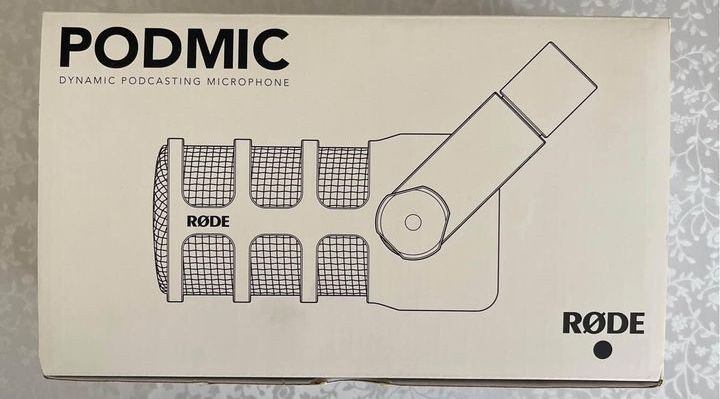
RODE PodMic - Box
How does it vanquish plosives, you ask? With an integrated pop filter, of course. And to be sure, it actually works really well. This mic shines at close distances, and even vocalists who tend to hug the mic will be pleased with a crisp and clear signal.
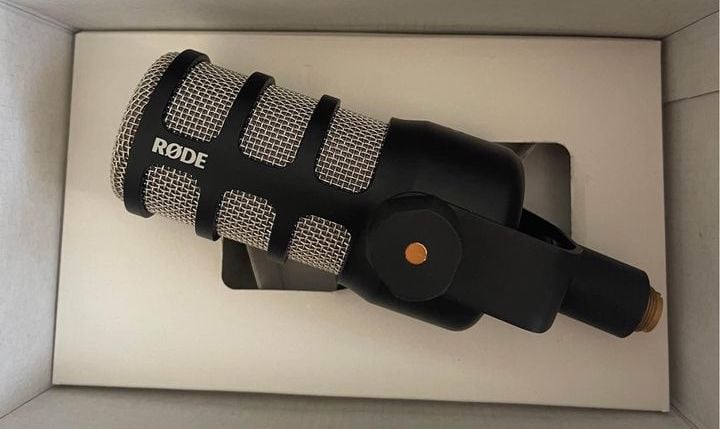
RODE PodMic
The integrated pop filter is a game-changer for recording studio-level vocals. Modern vocal styles are not only extremely energetic, but they're also mixed very upfront in the mix. If you've listened to most records from 2016 until now, you'll notice how prominently the vocals are mixed.
When I first started producing, labels would have us do a "vocal down" mix where we wanted it, and then a "vocal up" mix about 1 dB above where we thought it should sit. On my last indie label project, they requested vocals 3 dB up — which is pretty extreme — but that's how concerned artists and labels are about vocals translating in this content-driven era where 96k WAV files get converted to MP3s.
Having a mic like the Rode Pod Mic saves you considerable trouble and engineering expertise when optimizing your vocals in post-production, whether for a mix or social media content. The clearer your initial mic signal — through proper EQ and compression — the better your final result will be.
I particularly love using this mic for female vocals. I prefer positioning female vocalists less than an inch from the microphone's mesh or pop filter, compressing that signal at a 4:1 ratio so that even every breath comes through larger than life.
This technique is widely used by producers like Jack Antonoff and Max Martin for some of the world's biggest stars. It requires skill to capture a great, uniform vocal that isn't over-compressed, distorted, or full of pops and plosives.
If you're a singer or work with singers, and you're not well-versed in vocal optimization during mixing, I strongly recommend this mic for you.
Constructed of all metal, the PodMic is a sturdy and heavy microphone that will need an equally sturdy mount but benefits from a handy built-in swing arm. It should be noted, however, that the XLR connection impedes the swing arm’s full range of motion.
As for connections, XLR is the only choice with the PodMic which may be a dealbreaker for anyone who isn’t already set up to broadcast or record. You will indeed need to purchase an audio interface in order for this mic to work. The good news is that there's also a USB version of the PodMic, which is identical in terms of features.
For a microphone of this quality that handles high SPL so well, I strongly recommend using the XLR version with a good preamp that has quality circuitry and boost capabilities. Most USB versions of mics have either artificial gain or no gain at all — you simply plug in and record at the mic's default level, then boost or cut during mixing.
While this works fine for podcasting and general video creation, it lacks a certain musical vibe, for lack of a better word.
The RØDE PodMic integrates seamlessly with the RØDEMaster Pro, the company’s proprietary podcast production console. This console works well for basic gain adjustments, but it can't match the performance of a dedicated musical preamp.
Ultimately, if you’re creating voice-related content and looking for a mic that rivals the best, the RØDE PodMic is an affordable, high-performing choice.
3. FIFINE Amplitank K688
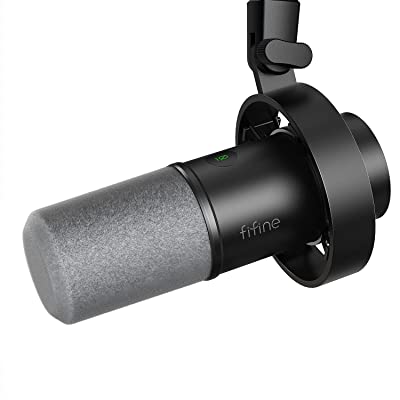
Plug-and-play is the name of the game with FIFINE’s Amplitank K688. With both XLR and USB-C outputs, hardware level gain control and headphone monitoring, this microphone was designed for even the technophobe-iest of streamers and content creators.
This is not to say that creators who are comfortable with audio engineering won’t find a quality mic at a low price with the K688. Anyone who was a fan of the K658 predecessor microphone will be pleased to hear less harsh trebles, an overall clearer and smoother sound, as well as a more intuitive design.
While this microphone shares qualities with the Shure SM7B — a phenomenal video and podcasting choice — I've found an interesting use that goes beyond just calling it a vocal or dialogue mic.
For the past couple years, I've been hired to record NPR-style in-studio improvisation performances by artists and musicians. These often happen during radio station interviews. I document the performance, take it back to my studio, and mix it.
I clean it up, maybe tune the vocals a bit (don't tell anyone I said that), and deliver a professional mix and master. These recordings serve not only as content but have even appeared as bonus tracks on deluxe editions and record releases.
For these recording setups, a microphone with excellent noise rejection is essential.
In this area, the K688 has several helpful features. First, a permanent shock mount means that bumps, knocks and other unwanted vibrations won’t muddy your sound. Perhaps my favorite feature is the digital mute button which is backlit when you toggle it. Because it is not an analog button, the muting process is smooth and virtually noiseless.
I used this exact microphone with a male soul artist during a KCRW radio live stream here in Los Angeles. When selecting microphones, I needed something that would effectively reject stage vibrations, since his music was bass-heavy and he was singing to a background playback track while performing at a round table on stage.
Though it was an unusual setup, it was the only way to capture the video they needed. And let me tell you — it was an excellent choice. The vibration absorption exceeded both the advertised specifications and what you'd expect from a microphone in this price range.
I’m also a fan of the K688’s minimalist look. There is nothing flashy about this microphone and it just looks like it belongs in anyone’s home studio. At the same time, it doesn't give off amateur-ish vibes either.
Ultimately, if you’re looking for a quality entry-level mic that can evolve with you throughout your engineering journey, look no further than FIFINE’s K688.
4. Audio-Technica AT2040

A trusted name in the microphone market (albeit me personally not being a fan of a few of their designs, especially headphones), Audio-Technica offers its AT2040 as an ideal entry point for emerging content creators.
Right out of the box, you’ll appreciate the AT2040’s sturdy build and sleek design — especially for a quality mic that comes in at a lower price than many of its competitors.
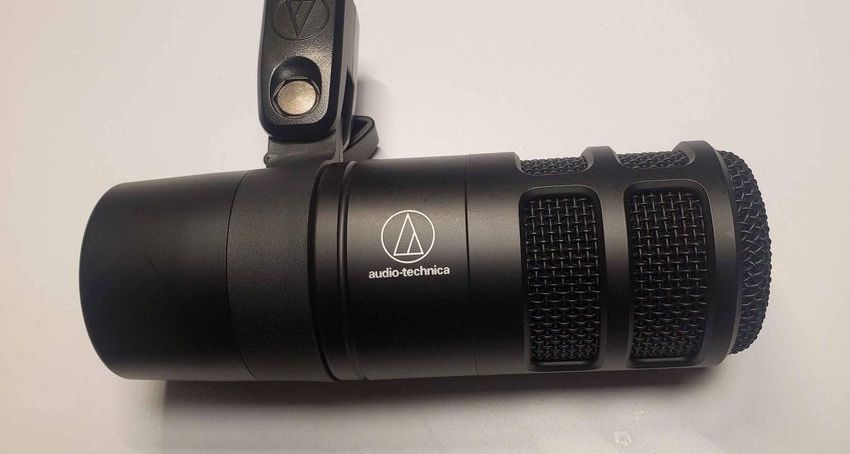
Audio-Technica AT2040
It comes outfitted with an integrated pop filter as well as a shock mount to minimize noise from unintended bumps and vibrations. As an added bonus, the AT2040 package also includes a ⅝” to ⅜” thread adapter to fit just about any mic mount on the market.
As for sound, this mic does Audio-Technica’s reputation well by producing a warm and crisp sound in addition to superior off-axis noise rejection. Indeed, content creators who want more than one voice in the room will be pleased with the AT2040’s performance.
This microphone is really interesting because it combines the warmth and presence in the low mids that the SM7B was renowned for, while also serving as a robust, jack-of-all-trades microphone for many different purposes. In some ways, it reminds me of a more affordable version of a Neumann U 87.
For those who have used the U 87, you know it sounds amazing on anything you put in front of it, especially vocals and instrument micing. One of the reasons for this is its unique combination of being both fairly uncolored and neutral while still remaining warm and musical.
It's almost impossible to describe in writing — you have to hear a Neumann U 87 and an Audio-Technica AT2040 side by side to understand what I'm trying to convey. I actually own four of these microphones because, unlike the extremely expensive Neumann U 87 — not even considering the vintage ones — these microphones are an incredible bang for your buck.
They literally sound good on everything. A great neutral and reliable microphone, especially for vocals and spoken dialogue recordings, gives you more flexibility to add effects later because of its linear response.
This is key because most of the time, you don't want to track with many effects. Even if you're an amazing engineer, it's usually a rule of thumb — and just wise overall — to track fairly neutral. You might add a little compression to prevent volume spikes, and maybe a touch of EQ if the person on the microphone sounds a bit lifeless, dull, or too bright, but that's about it.
If you have a microphone that's too colored, you'll have to compensate either while recording or in post-production. That's why the SM7B has been a staple in many studios for dialogue, podcasting, and musical recording — it provides the perfect starting point by being neutral but not dull.
Keep in mind, however, that the AT2040 only has an XLR out (update: there's now a USB version), which means you’ll need an appropriate audio interface to use it. Regardless, this is a buy-it-for-life microphone that is ideal for anyone who is ready to get serious about their sound but doesn't have SM7B money.
Like I mentioned with the Røde mic, I recommend the XLR version of this Audio-Technica over the USB version, despite its convenience. While this mic excels at adding coloration, I've noticed that USB mics can make me complacent — simply plugging in and recording without considering how to optimize the sound.
Here's something to consider, especially for music producers: the traditional XLR-to-preamp-to-interface setup will give you better results.
5. Electro-Voice RE20
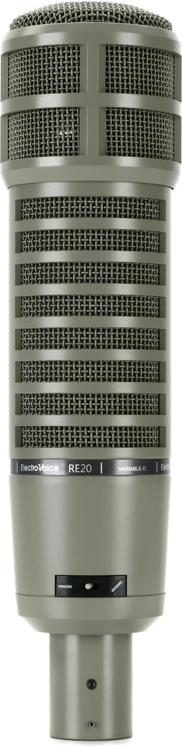
A pro-level mic at a pro-level price, Electro-Voice’s RE20 is one of a handful of direct competitors to the Shure SM7B. To be sure, this mic comes with all the bells-and-whistles that professional audio engineers expect from high-end products.

Electro-Voice RE20
Chief among its high-end features is E-V’s Variable D technology that virtually eliminates the proximity effect. You can be on top of this mic without hearing any boom or significant variations in clarity. This is a tremendous benefit to particularly animated speakers.
For similar reasons, this mic can be used for a variety of instruments that are notoriously challenging to mic. Think stand-up basses, bass drums and acoustic guitars. The genius of the RE20 is that it has the sensitivity of a condenser mic with the power to withstand high levels of sound pressure.
This, in addition to an integrated pop filter, is why you will find the RE20 in broadcasting booths around the world. Voice talent can practically put their lips on this mic without experiencing overwhelming boom or explosive consonants.
While it was somewhat popular mainly as a broadcast mic originally, around 1973, the legendary Stevie Wonder began using it for vocals, which sparked its popularity as a vocal mic for recording and live performances across the world.
This has long been one of my favorite mics for loud male vocalists, especially if they're doing angry music! Trent Reznor from Nine Inch Nails has also been known to record through this microphone for the more high-energy tracks.
A word of caution if you're going to use this microphone: I would run it through a preamp that has at least basic EQ. The amount of bass and sub frequencies this microphone captures, even on vocals, is insane. That's one of the reasons why it's often used as a kick and bass mic.
But it also does something really interesting — I've used this mic on many powerful rappers (Kendrick Lamar-style). They get so close to the mesh, practically in their mouth, and they are literally spitting rhymes.
This microphone has an incredible natural compression curve that happens when the SPL is getting toward the limits of its range. It starts thinning out some of the low end and boosting a bit of that midrange, which makes the vocals cut through without needing compression.
It also gets a bit of a vintage quality to it, which explains why it's used so much for kick drums. On really good classic rock recordings, when the drummer is playing breakdowns and laying off the kick drum a little bit, you get more of that low, warm sound. When the drummer hits hard on the choruses, you get that punch of the kick without it sounding thin or plastic.
Something very similar happens when you use this mic for vocals. It works great for dialogue too — I've used it in situations where I'm recording comedy, like on podcasts. Often, comedians go from 0 to 60 dB literally — they start laughing or suddenly go high-energy as part of their act, which can catch you off guard.
I usually need a compressor or limiter to prevent distortion, but when I use the RE20, it does some of the heavy lifting with its natural compression curve. So, if you're somebody who constantly records loud vocals, this is the one for you.
RE20s are expertly designed to reduce line noise and other sources of hum and buzz in your chain. They’re also virtually unbreakable. (I mean, don’t go trying to use it as a hammer, as the legend goes; but this is one seriously rugged microphone!)
If you're interested in learning more about this particular mic, especially w.r.t the SM7B, please check out this article on our blog.
6. Universal Audio SD-1
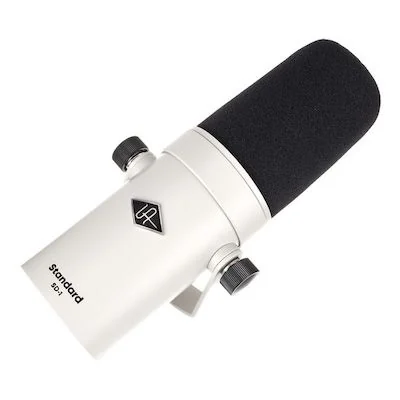
Universal Audio has always been one of my favorite gear makers since I first used their beloved 1176 compressor back in my early days. Since then, as most of you know, they have come out with an incredible line of interfaces and plugins.
It was only a matter of time until they started making their flagship dynamic mics, and it has finally come true with the SD - 1, a cardioid dynamic microphone.
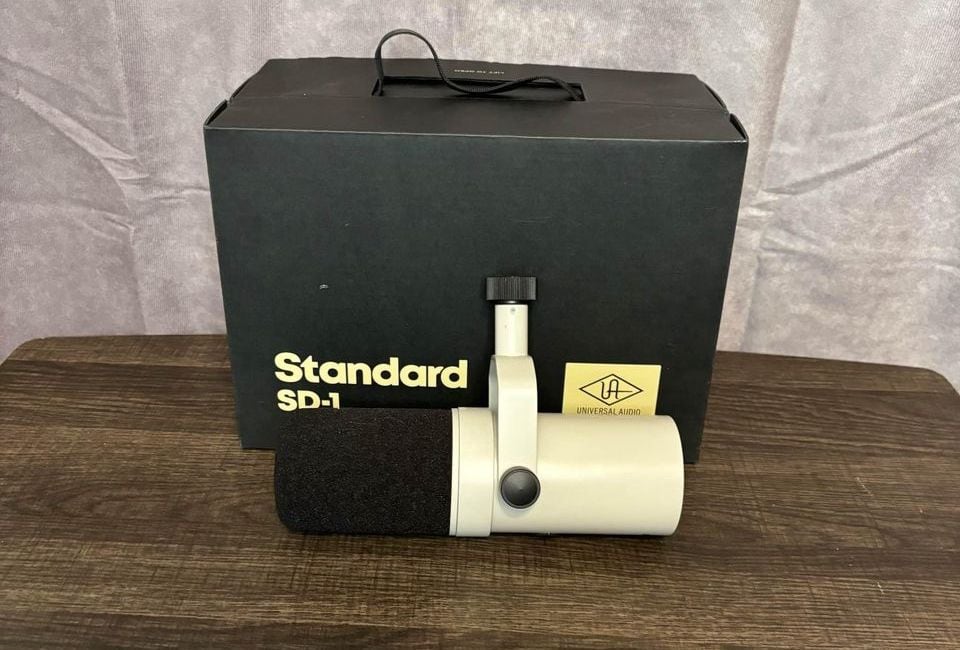
Universal Audio SD-1
This microphone is highly regarded as a broadcast microphone because of its popularity in podcasts. It's a clear alternative to the Shure SM7B.
Universal Audio has the advantage of compatibility with their Apollo interfaces, and they have created channel strip presets specifically tailored to the frequency response of this microphone. These presets are absolutely stunning, ranging from telephone effects to warm, vintage Neumann-type radio DJ sounds.
Additionally, this microphone has a cool vintage look, similar to the SM7B but with its own unique style. It comes in a white cream color, making it stand out for video recordings.
Because Universal Audio prioritizes sound quality, they have carefully designed their high-pass filters to ensure that you can shape your sound at the source. They believe in capturing the desired sound rather than artificially fixing issues in post-production.
They have added a rumble cut at 200 Hz and an amazing articulation boost switch between 3-5 kHz. For audio engineers familiar with interviews, you know that this is the sweet spot for vocal presence, after the muddy and harsh frequencies but before the sibilance.
It's clear that Universal Audio knows what they're doing.
My only complaint with their high pass filter is that it's a bit too drastic, although it does sound very musical. I wish they had cut at a maximum of 100 Hz.
However, for those of you using this microphone in less than professional rooms, the cut will only benefit your sound, so it's not a deal-breaker for me.
7. Aston Stealth

Aston Microphones has recently made a significant impact in the world of microphones by offering highly-priced, top-quality microphones. One of their latest standout products is the Aston Stealth active/passive dynamic microphone, which stands out in the crowded space of dynamic mics.

Aston Stealth
This microphone has both active and passive modes, allowing it to be used with or without phantom power depending on the situation. It is designed to function as both a dynamic and condenser microphone, depending on whether phantom power is used.
In passive mode, it delivers similar performance to the well-regarded Shure SM7B, with crystal-clear clarity, high SPL handling, and a full, present sound. This makes it ideal for podcasting, videos, and any broadcast-related applications that require a clean signal.
However, if you want to increase sensitivity, engaging the phantom power activates the built-in Class A circuitry. This feature enhances the high frequencies and provides a wider sound, similar to what you would expect from a microphone like the AKG C414.
I can personally vouch for the impressive performance of this microphone.
Aston enlisted the feedback and expertise of over 90 top engineers and producers to not only beta test but also help develop the microphone. This means it was built by professionals, for professionals.
Additionally, the microphone offers four different voicings: vocal one, vocal two, guitar, and dark. This versatility allows it to also serve as a primary vocal microphone in the studio.
These voicings are not just EQ tweaks, but actual contour networks built into the circuits, creating different audio paths. This innovative approach sets it apart from other microphones on the market.
The only criticism I have about this microphone is its physical design. It has a simple cylindrical shape, which could have been more visually appealing with a vintage or classic broadcast aesthetic, similar to what Universal Audio has done.
However, there is no doubt that it delivers excellent sound quality.
Decisions, Decisions
To return to the opening analogy, there are just as many factors that go into choosing the right mic for your content as choosing the right dog breed for your lifestyle. The Shure SM7B, while about as popular as the Golden Retriever, may not always be the most suitable for your needs!
In many ways, that's because in the world of recording and broadcasting vocals, aiming for a clean sound isn't always the best choice. Of course, if you have an amazing studio with vintage preamps and tube processors that can add warmth to any signal, then any microphone would work.
Sometimes, you might even prefer a clean signal initially so that you can add your own character using your favorite processor afterward.
However, for most of us regular folks who record directly to digital using a very clean, almost clinical dynamic microphone, might need some additional options.
Here are a few things to consider:
Features
XLR or USB? Hardware level controls or minimalist interface?
The answers to these and similar questions can go a long way in helping you narrow down your list of candidates.
For example, if you are brand new to content creation, or are looking to improve your streaming experience but aren’t sure where to start, a microphone with USB connectivity may be a better choice. USB mics are typically plug-and-play, and they don’t require expensive or complex audio interfaces to function.
Some mics even feature hardware level settings that can help you adjust your sound without getting too deep in the nitty-gritty of audio engineering.
That said, if you’re new to the game but might be curious about the science of sound, it might be wise to choose a mic with both USB and XLR capabilities that can grow with you and your budding engineering skills.
Among these settings, the most helpful ones are the high-pass filters that really help you get rid of unwanted low frequencies and rumble. This is especially important for broadcasters who might be in environments with a lot of background noise, such as traffic, air conditioners, or computer fans.
The type of circuits they use for built-in low rumble cut-offs offer much more forgiving curves than just trying different plug-ins and tweaking your DAW’s EQ to eliminate some of this unwanted sound. Always aim to capture the signal as close to the mix as possible without adding any external effects.
Like an experienced mix engineer mentor once said: "the better the meat, the less seasoning you need."
Those are wise words, my friends.
Environment & Use
The type of content you plan to create as well as the environment you’ll be working in has a big impact on your choice of SM7B alternatives.
For example, most of the alternatives out there are rated for voice work which is fine if you’re streaming, podcasting, or doing any other kind of voice-based broadcasting.
But if you’re also interested in recording music, some mics fare better than others. The industry-standard E-V RE20 is so well-designed that it shines even when recording acoustic guitar or stand-up bass!
The Aston Stealth, with its optional active dynamic mode, is also awesome for recording other instruments in addition to vocals. The mic’s dark mode really excels with drums, and its guitar profile mode adds a nice warmth and low midrange to cabinet amps or acoustics.
Also, microphones like the Universal Audio SD – 1 are perfect companions if you're already using the UAD environment for recording and mixing. By that I mean, using the incredible Apollo or Volt interface line.
If you're using the UA Volt, then you're even better off with this microphone because they incorporated a vintage mode circuit onto that interface that sounds tailor-made for this microphone.
It just adds a little bit of that grit that you might be missing from clean dynamic microphones.
Also, using the Universal Audio mic allows you to use the custom-made preset chains to record in real-time using the fantastic plug-ins from UA, which, in my opinion, are the most realistic and almost hardware-replacing plug-ins of all time.
Similarly, some mics perform better than others in noisy environments. If you’re using your mic in an untreated room with lots of traffic in the background, you may want to select a mic that has a reputation for superior off-axis noise rejection, like the Samson Q9U.
Creators in well-treated or otherwise “quiet” rooms can probably get some great sound with something as basic as the FIFINE K688.
Budget
It goes without saying that budget is always a consideration when it comes to quality sound.
And when you consider how much SM7Bs cost, not even including additional costs for an audio interface, preamp, cables and the like, most creators are keen on finding a more affordable alternative.
Thankfully, there are suitable choices at nearly every budget level. FIFINE’s K688 is a clear and well-balanced mic at entry-level pricing. Indeed, everything you need comes in the box.
Moving up the price ladder gets you more desirable features, such as hardware level EQ as found on the Samson Q9U. Right at the tippy-top, in direct competition with the SM7B, you get high quality proprietary technology with Electro-Voice’s RE20.
Finally, it’s worth keeping in mind that if you’re not already an expert engineer (amateur or pro), the nuances heard at each of these price points may not concern you just yet. Go with what sounds good to your ear and your wallet.
That’s a Wrap!
At the end of the day, finding a well-constructed, silky smooth microphone akin to Shure’s iconic SM7B is easy if you know what you’re looking for.
Reputable microphone manufacturers from Audio-Technica to RØDE to Samson all have exceptional offerings to suit content creators or every genre, every technical ability, and every budget!
