

If you're new to broadcasting and podcasting, you may be captivated by the deep, warm tones of some podcast hosts. Their voices can be so soothing that you might find yourself nearly falling asleep.
This has happened to me multiple times. While much credit is due to the natural voices of the hosts, there's another important factor: their microphones.
If you were to survey the most popular broadcast vocal microphones, particularly for male vocals, you would likely find the RE20 and SM7B mentioned.
These microphones also work wonders for female vocals. One of their greatest strengths is handling sibilance and high-pitched voices exceptionally well.
The challenge, however, is choosing between these two fantastic microphones. Let's jump in together and figure out what might work best for you!
RE20
Vs.
SM7B
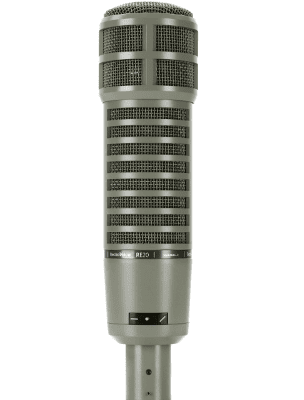
Electro-Voice RE20
The Electro-Voice RE20, a real gem, has been with us since 1968. It's fascinating to see how its applications have continuously evolved, all the while excelling at its most common uses.

The RE-20 in all its glory.
Initially, it was a broadcast microphone. But guess what? Around 1973, the legendary Stevie Wonder began using it for vocals. This sparked a trend of it being an exceptional choice for recording and live performances, especially for male vocalists.
Pros
Whenever I'm recording live drums, this mic is my absolute go-to! It has a knack for honing in on the sound you want while leaving the rest in the background. It's a real game-changer in enhancing your recording.
One of the best features of this mic is its resistance to the proximity effect, a common issue that can disrupt many vocal and bass-heavy recordings. This effect causes a muddled and out-of-phase sound when the mic is too close to sources like a male singer, kick drum, Fender Rhodes suitcase piano, or even a bass amp.
Thankfully, this microphone doesn't succumb to sound distortion from the proximity effect, a problem that often leads to time-consuming post-recording edits. You can operate this microphone extremely close to the sound source - so close that your lips could practically touch it - and still achieve a clear sound.
Pair it with a high-quality pop filter, and you can produce warm, intimate vocals, making it ideal for audiobooks, podcasts, ADR for films or hip-hop tracks.
In conclusion, this mic is highly responsive, produces a very full sound, and is incredibly durable.
Cons
While no microphone is perfect, I often find that most dynamic microphones boasting impressive specs lack clarity. This is my issue with the RE20.
Although it translates sounds cleanly and captures low-end tones beautifully, it's too dark for my taste.
The microphone has a ribbon-like quality that tames the high-end. Despite only rolling off at 18 kHz, it lacks the crisp, modern tones I prefer.
After discussing with engineers, I discovered that the humbucking coil in the circuitry is responsible for this.
While it curbs interference, it also makes the sound too tame in general. In other words, it lacks the modern presence needed to cut through the mix in transient-heavy, modern pop music.
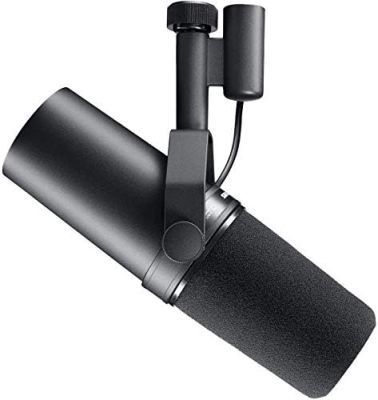
Shure SM7B
The Shure SM7B is a legendary dynamo of a microphone that's been a go-to for many, just like the RE20. The exception? Kick drums.
It's not often you'll find it used for kicks, possibly due to its unique shape, size, and weight distribution, which might not be the best fit for kick drum holes.
But when it comes to broadcasting and singing, it's been embraced by many notable artists. Did you know it was a favorite of Michael Jackson for vocals? And the trend continues with modern pop stars like Charlie Puth, who use it as their go-to mic for vocals.

By this point I've lost count of how many SM7B's I've unboxed in my life...
In the world of broadcasting and podcasting, you'll find the SM7B everywhere. It's so common that my partner and I have a fun game where we guess whether the next Zoom podcast host will be using an SM7B.
The loser gets the next Starbucks round, and you know how producers like their Venti coffee.
Pros
One reason this microphone is popular for recording is its incredibly flat frequency response. It can handle loud volumes and various vocal types from any position, producing extremely clear sound even with subpar audio interfaces.
For more versatility or vibe, I often use the bass roll-off and the mid-range emphasis, also known as a presence boost. These features are especially effective in bringing vocalists or podcast guests to the forefront.
In today's digital world, where many things are distributed online as MP3s, it's crucial to have a signal that won't degrade through rounds of compression, emails, etc. This microphone excels at that.
It also comes with a great windscreen, the A7WS, designed for this model. It effectively neutralizes the pops and smacks of vocalists and podcast guests without reducing the high-end frequency.
Cons
This microphone has a nice color despite its flat response, giving it a pleasing natural tone. However, my main issue is that it's too clean.
In my opinion, it lacks harmonic richness. Even when things get a bit rough, it lacks the pleasant growl you might expect. The microphone is too nice, too pretty, but not in the right way.
This presents a problem because, while you can make it sound amazing, you'll likely need to invest in a good tube preamp or an interface with a harmonic circuit add-on, such as the UA Volt or the Focusrite Scarlett, to give it some analog vibe.
RE20 vs SM7B - How to Choose!
So here’s the dilemma: one of the microphones, the RE20, lacks a bit of the modern crisp, transient response that you'd typically want to keep up with current times. The other one lacks some grit, guts and pleasant harmonics.
You could likely address these issues with some high-quality outboard gear or a few high-end plug-ins, but you need to be quite skilled to do it correctly.
When recommending gear, I aim to suggest versatile items that can be used in many ways. I also understand that not everyone has the budget to buy the mic, a fancy interface, and some nice vintage tube gear to accompany it.
Here are a few tips on how I would use these microphones for recording and how I would overcome their weaknesses. Hopefully, it aligns with your needs and helps you choose the right one.
Podcasting
Both options are fantastic for podcasting, but I have a soft spot for the SM7B. Its bass roll-off and mid-range presence boost, give it an edge. Whether it was planned or a happy accident, the presence boost works magic with mid-range enhancement - it makes voices sound clear and stand out.
However, it's not all sunshine and rainbows. If you have a sibilant, squeaky, or harsh voice, you might encounter a problem. In these cases, the presence boost might not be your best friend, and the frequency tone may not be mellow enough to handle a more high-pitched voice.
But let's not forget about the RE20. Even though it doesn't have a boost, it's a champion when it comes to dealing with sibilance. It's as if it comes with its own little built-in de-esser.
Sure, this might make it sound a tad darker to some, but in the podcasting world, a touch of warmth can make it sound just right. After all, who wants to spend an hour and a half - or even two - just trying to get rid of sibilance?
Studio Vocals
For studio vocals, it's a close call, but I would give the edge to the SM7B. This is mainly because I've been using tube gear and harmonically rich tape effects for a while now, so I'm well-versed in reintroducing a bit of gritty character to a very clean dynamic microphone, even when using plug-ins.
However, I understand that many people, especially younger enthusiasts who haven't studied engineering, may not have this experience. For them, the RE20 might be easier to manage.
The RE20's main distinction is its condenser mic quality sound. It reminds me of the Neumann U87 at times due to its natural darkness. But when you start adding EQ, especially a rich tube EQ like the Manley Massive Passive, it really comes to life.
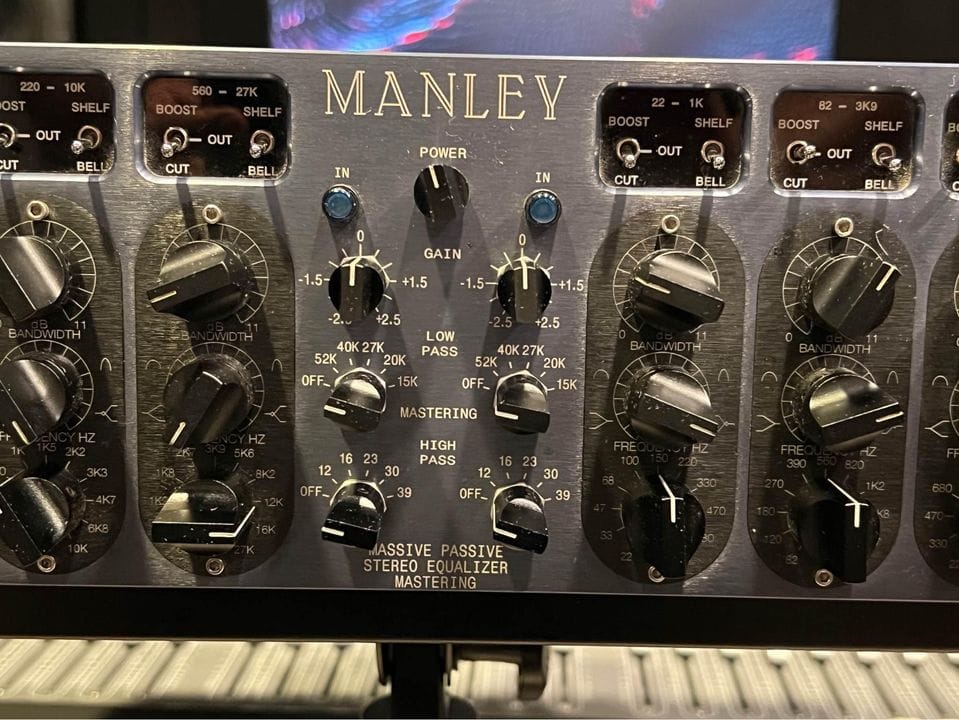
The Manley Massive Passive - I had the chance to play around with this expensive tube EQ costing around $7K - this is one instance where getting a rich tone actually requires you to be 'rich'!
Instruments
When it comes to all types of instruments, the RE20 has the edge, particularly for those with a lower end. I've even used two RE20s in stereo to capture the unique thump of an upright piano's keys with the lid off - it was quite cool!
The RE20 has a vintage touch to it, making it an excellent studio microphone in general.
The Shure SM7B, on the other hand, has genuinely impressed me, especially when recording brass and string instruments. There's something about its flat response and mid-range boost that makes it ideal for capturing the true essence of sounds.
So, if your goal is to achieve a clear, non-colored, non-distorted, and smooth audio representation of a particular instrument, the SM7B is top-notch. I’ve noticed it gaining popularity in orchestras and film scoring scenarios, where sometimes the goal is not to add character but to achieve a smooth, clean, and elegant response.
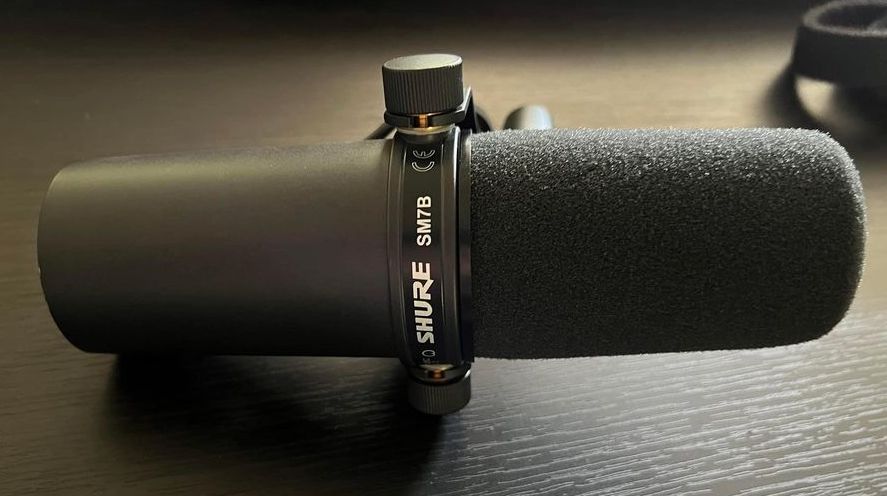
One could argue that the SM7B is a truly bang for the buck proposition given its versatility.
Final Thoughts
When it comes to choosing between these two, your experience in recording and mixing microphone signals really comes into play. Both microphones have the potential to deliver fantastic results, though one might require a bit more finesse to get the most out of it.
Looking for instant gratification? Well, just a heads up, both microphones do have their quirks, especially if you're planning to use them for a variety of tasks. But, if you're on the hunt for a reliable, versatile podcast microphone, you can't go wrong with either choice.
Happy recording!
