
There's an old joke in the musician community of Los Angeles, and it goes something like "If you throw a stone in LA, you're bound to hit a film composer."
It's a bit exaggerated, but there is some truth in it for sure, and the phenomenon grows each year as graduates flock to LA from prestigious institutions worldwide — Berklee College of Music, Juilliard, European conservatories, and more. Los Angeles remains the place to be for aspiring film composers as well as music producers.
I can't knock this trend, as I followed the same path after graduating from Berklee.
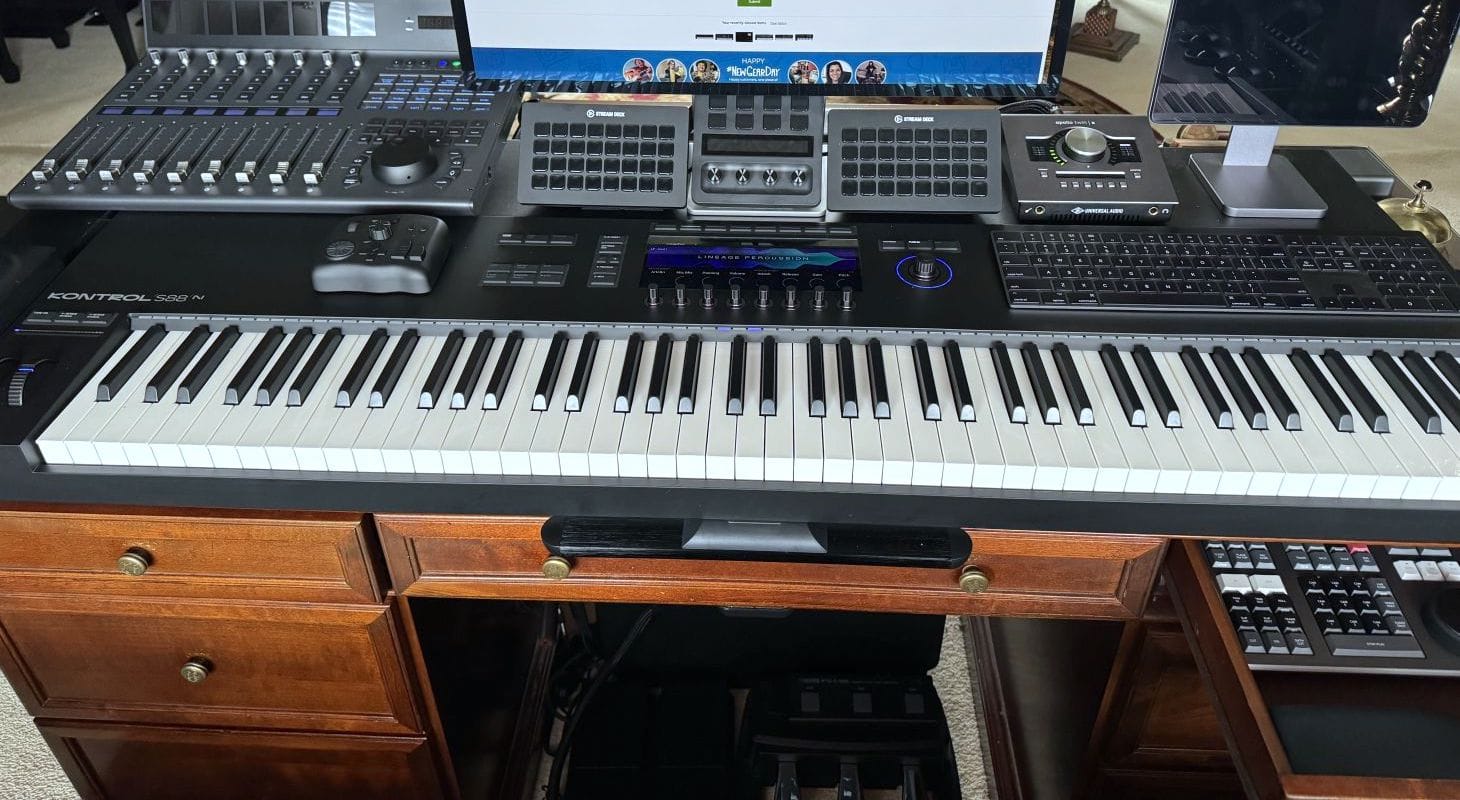
If there's one thing we all have in common though, it's that there's one piece of equipment that isn't just helpful but essential — a quality controller that can handle navigating through the vast number of sample libraries we work with every day. That piece is inarguably the Kontrol S88 Mk3.
Sneak Peek
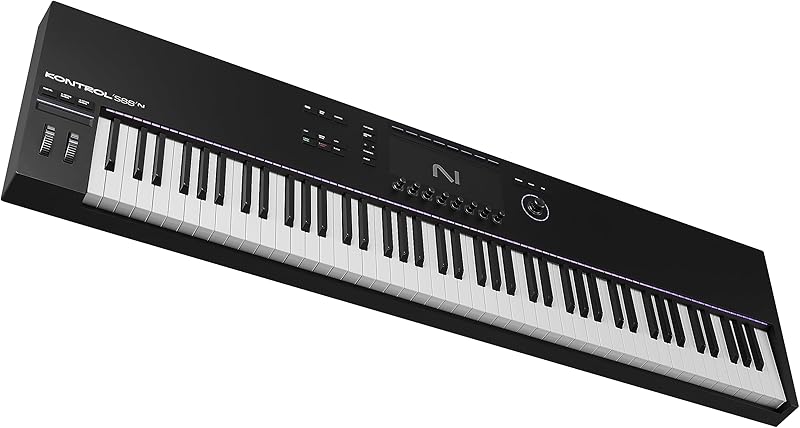
An 88-key controller built for serious composing, with RGB key zones, deep software integration, and a keybed that adapts to more than just piano work. Cuts down menu diving and keeps large sessions moving.
Surprisingly, other companies haven't adopted this design, so NI is pretty much the ruler of the land when it comes to this perfect integration between their samplers, instruments and effects and composer/producers.
As a film composer myself, here are my top four reasons why the S88 Mk3 is completely unrivaled in this arena.
Top 4 Reasons It’s a Composer’s Dream
Reason #1: Browser Feedback and Backlit Keys
One of the features that has been an absolute game changer for programming epic pieces of music like those often commissioned for film and TV is the Native Instruments Komplete Kontrol series' use of customizable RGB backlit keys.
Let me give you a brief rundown of how most composition mock-ups or “demos” happen these days.
You often have a “temp” track that is temporarily placed in the movie or show to use as a reference as to what they're looking for. Most of these tracks are already completed soundtracks, sometimes with 90-piece orchestras recorded live in London or Los Angeles.
So the gig is to basically sound as close as possible, using only sample libraries, to these massively produced live recordings that have been professionally mixed and mastered at the highest levels with almost unlimited budgets. No pressure, right?
So, as you can imagine, you're gonna run into track counts of probably 150 tracks per demo. This means you're probably gonna be using close to 200 different instruments at times just to write the piece!
These patches are typically sourced from a massive amount of library presets that are organized by drums, orchestral strings, ethereal and atmospheric loops, epic sound design, sanding guitars, and of course vocal choirs.
Before the newer software samplers came out, keeping track of where everything was on your keyboard was practically impossible. This becomes even more challenging when you start splitting patches.
Then came this revolutionary keyboard. It features a customizable light behind each key that can be color-coded and organized into groups. The browser can also audition and navigate through thousands of presets in real time, helping you choose what to load.
Not only does this keep me sane, but it also helps me look for better sounds without feeling overwhelmed.
I now use a series of presets in a template that instantly loads multiple instances of Native Instruments Kontakt sampler with my most frequently used patches. These are color-coordinated so when I switch to another track, the entire RGB light set changes to reflect the instruments in the new patch.
Next, while working through the composition, I create custom patches with new splits that blend different orchestral sections, guitars or even ethnic percussion. I color-code these by group, allowing me to play in real time and perform various orchestral parts almost instantly.
So because my orchestral strings are in green, my orchestral brass is in yellow, my epic drums are in red, and my ethereal guitars are in blue, I never miss a beat and I can be making these intense mock-ups in hours instead of days.
If something is so complicated that I can't find a patch that's suited for my needs, I can also access the browser and just browse through thousands of patches quickly, audition them all, and then just load the ones I want.
So it really is not only a time saver, but incredibly useful to be creative because you end up performing more musical bits instead of thinking so much about MIDI notes and copy-pasting sections.
Reason #2: Native Instruments Software Integration
Several premium companies like EastWest, Spitfire Audio, and Heavyocity make incredible film scoring-based sample libraries. What these companies share in common is their reliance on Native Instruments Kontakt — both in the past and currently — to program and control their libraries.
This automatically puts this keyboard at an advantage because of how integrated it is with that environment. But this isn't just a keyboard for film composers — this is a keyboard for songwriters, musicians, composers, producers, you name it.
Music producers creating original tracks — from simple demos to complete in-the-box record-ready productions awaiting mixing and mastering — can benefit from integration with the Native Instruments ecosystem, better known as Komplete (which is now in its 15th revision!). Each year with each upgrade they add incredible instruments and effects while overhauling and revising current ones.
This is an incredible package that addresses the diverse needs of producers who must compose and write across all genres without access to live musicians.
For example, sometimes the gig isn't to sound orchestral or epic like Hans Zimmer but instead, you have to create a down-and-dirty blues track like Chris Stapleton.
Well, Native Instruments offers some of the best collections of realistic sampled drums in their Abbey Road and Modern Drummer series. They also feature incredible vintage organs with immensely detailed samples, including the Hammond B3, Vox Continental, and retro 1960s transistor organs — all frequently also used in film scoring.
There's also an incredible collection of ethnic instruments which also take huge advantage of the preset browser and RGB backlighting of this keyboard.
For example, when splitting a patch of world instruments, I can get creative by combining collections from different regions. I love pairing Middle Eastern flutes with Asian string instruments and African pitched percussion.
I can then save these combinations as a patch preset on my S88 keyboard, where they'll be color-coded and organized so I can easily locate instruments from various ethnic backgrounds, ready to go for my film cue.
If you need to write more electronic productions and sound design-oriented pieces — commonly commissioned in film, TV, and trailer writing — the large, well-lit LCD screen browser will offer more detailed visual feedback and even help you manually add effects. This again saves a lot of menu diving and time!
One thing I always do is arrange my keyboard layout and splits based on sound intensity and character. The darkest, most powerful, and distorted sounds occupy the lower half of the range, marked with deep reds and purples. Meanwhile, the more ethereal and processed electronic sounds sit in the middle and higher areas, highlighted with brighter colors.
The way that I can call up effects and dial in quick settings is also amazing. The Native Instruments eco-system also has a multitude of guitar amp simulators like Guitar Rig, and more out-there deep sound design engines like Molekular, which takes sound design and mangling of patches to a whole new level.
Reason #3: Touchstrips and Wheels
If there's one thing I've learned from interning with amazing producers and composers in Los Angeles, and from making electronic records in my own studio, it's that what truly sets in-the-box producers apart is how they manually perform the intricate automation and adjustments that create epic music.
By "epic music," I'm referring to powerful movie scores, dramatic trailer soundtracks, or intense pop EDM tracks. Each style requires vast amounts of sound design, precise EQ adjustments, extreme compression, and loads of automation.
In past articles I’ve written about controllers, I've mentioned that touch strips are my favorite way to perform intricate and musical automation, and I typically prefer controllers that feature them as their main input method. But what if you could have both touch strips and the traditional pitch and modulation wheels? Well, guess what? That's exactly what you get with the S88.
On this keyboard I’ll use all four of these controllers constantly and simultaneously because they're completely assignable. To make orchestral instruments sound realistic, you need to create dynamic changes. For example, violins and brass often need to fade in, starting from a whisper and building to those huge, bombastic movie stabs.
Doing that with a mouse and trackpad doesn't work the same way that you would when you're using a modulation wheel and touch strips.
Although touch strips have always been my go-to, some modern music styles require extensive pitch bend modulation. For traditional pitch bending, a snappy wheel is still the best option. In hip-hop, for instance, I frequently use the pitch wheel to bend 808 kicks, giving them more of a bassline feel.
I also use pitch bend when I'm doing a lot of synth solos, especially when recreating 70s style ARP 2600 and Minimoog lines correctly.
Modern composing never has enough modulation options, but among all the keyboards I've tried, this one comes closest to having everything in one place.
Reason #4: Improved Keybed
It may seem unusual that my review of an 88-key keyboard focuses more on production and composition capabilities than its emulation of a real piano. This is because the keyboard goes way beyond being a mere controller and instead serves as a gateway to take complete control of the Native Instruments ecosystem. Hence the name.
Of course, as a pianist, though, I had to own the S88 because not only do I love having the extra keys to be able to add more patches at splits, but I also love using this as my main digital piano.
The feel on this upgraded Mark Three has been improved vastly from earlier versions. It has that classic FATAR weighted keybed and snaps back without being too clunky.
This keyboard also allows me to play other instruments besides piano much better. Audio companies have always struggled to create an 88-key keyboard that works well for pianists, drummers, and funk players alike who also use diverse keyboards like Clavinets and Wurlitzers.
I own a large collection of vintage keyboards: a Wurlitzer 200A, a Clavinet D6, and a Hohner Pianet. Each requires a distinctly different touch to play properly. The S88 is the first 88 note controller I’ve owned that truly adapts to all types of playing styles.
When I'm doing complex mockups and demos on a tight deadline, though, I don't have the time to really track all of my incredible vintage keyboards properly and so I have to end up using emulations.
Thankfully, I think Native Instruments caught onto that quickly, and truly adjusted the way that the velocity from this keyboard translates to different libraries. When I combine this keyboard with some of my favorite keyboard libraries such as “Keyscape” by Spectrasonics and the “Abbey Road Keyboards” refill by Reason, I can truly get the response that I would expect from my precious real versions.
Final Word
The downside of this being such a large and premium keyboard is that it can be quite expensive. Therefore, NI was forward-thinking enough to see the ever-shrinking landscape of recording budgets and also has 61 and 49-key versions in this format.
You may lose some visual feedback, but at least the overall workflow is similar.
However, before you downgrade due to the sticker price, let me offer one final piece of advice to any aspiring film composers or multimedia producers out there who might be reading this.
Music production, especially for Film and TV, is a cutthroat industry with tons of competition and a very fast pace.
Clients typically expect extraordinary results with minimal money, time, or direction. If your equipment's efficiency can save you hours of work, reduce stress, and help you make a better impression — invest in it.
This is one of those pieces of kit that will eventually pay for itself many times over.
Composer's Workhorse
The Kontrol S88 Mk3 handles complex scoring setups without slowing you down, and the upgraded keybed feels at home across different playing styles. It's pricey for sure, but it’s hard to match for film and media work.
