
You know how when you’ve sat through the end credits of a movie, you’ll notice there’s always a shout-out to the music programmers? Especially towards the end where they list everyone who had a hand in creating the film’s score?
Sometimes you’ll see it written as “programming by” or “additional music by”.
Well, the job of a music programmer is super important, even though it’s often misunderstood. It’s kind of like being a jack of all trades – part ghost writer, music producer, mixing engineer, and all-around musician.
The role of the programmer can differ depending on the movie’s genre, but their main job is to help the composer achieve their vision. With today’s modern scores becoming increasingly complex, programmers are often mistaken for assistants, but in reality, they’re more like music producers.
In fact, music programmers are more crucial than ever today. Why, you ask?
Well, it’s because many scores now require intricate electronic music, in addition to traditional orchestral scores. And it’s not just that – directors often want to hear a detailed mock-up of what the final score will sound like, complete with all the beats, guitars, synths, and the full orchestra, even before they give it the thumbs up.
Imagine working on movies that need over an hour of music, all to be done in just six weeks! It’s no surprise that composers need some help to pull it off.
Here’s a look at some of the most common tasks I’ve tackled when working as a music programmer for a few renowned Hollywood composers.
Table of Contents
5 Responsibilities of the Music Programmer
Creating Loop Libraries and Samples
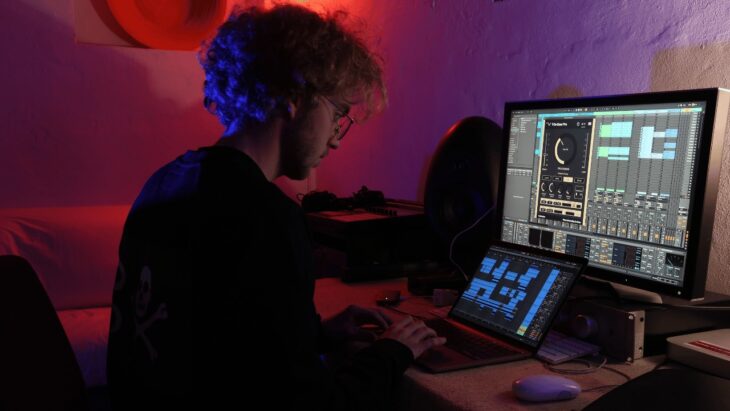
The journey to align the music with a director’s vision begins by creating a template or palette of the type of instruments that will be used for the movie’s score. Even if the Director has a taste for the classic style of John Williams, modernizing the score requires a variety of instrumentation.
Gone are the days when a composer would directly translate sheet music into an orchestral date and record everything in real-time, and the mix would then be sent to the engineer. This practice is no longer the norm.
As I mentioned earlier, directors usually appreciate hearing something close to the final product, say about 80% complete. This includes detailed orchestral sounds, strings, and even live bands in your demo recording for their approval.
The programmer works hand in hand with the composer to limit and determine the direction of the sounds. Then, the programmer embarks on the exciting journey of developing unique loops, samples, recordings, and atmospheres that are sure to convince the Director that an incredible score is in the making.
While there are numerous virtual instrument libraries available, such as Heavyocity Damage 2 and East West StormDrum 3, these can often seem generic and overused.
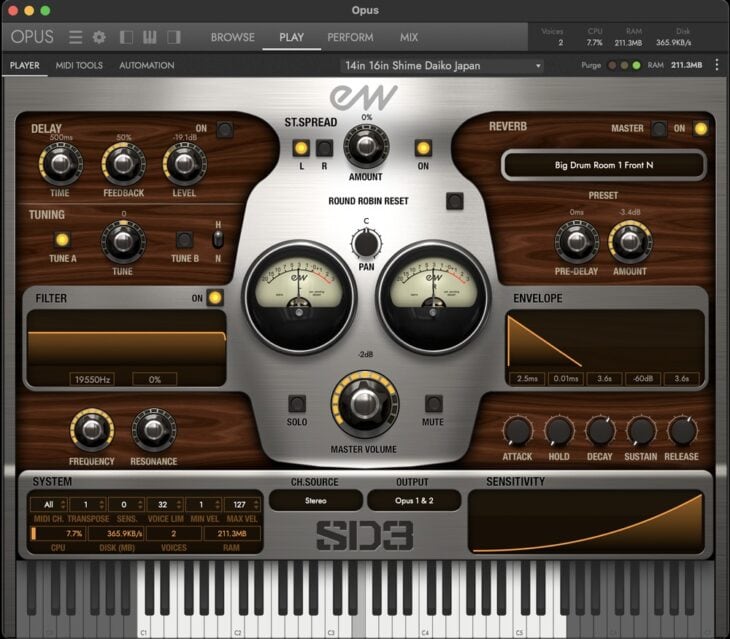
This is why most A-list or high-end Hollywood composers prefer to have a music programmer on their team, or hire one per project, to create something of higher quality and more unique, specifically tailored for the Composer and his current project.
Remixing and Recreating Live Tracks
I’ve had the incredible opportunity to work on several Marvel movie scores as a music programmer. You know what’s super characteristic of that Marvel movie sound? It’s all about those raging guitars and a lot of rock band elements!
Since these movies have budgets that are simply out of this world, we actually get to bring in superstar bands like Hans Zimmer did for Man of Steel, for example. So, remixing and creating live rock tracks became a significant part of my job as a music programmer.
Here’s how it usually goes down: we enter a large studio, like East West Studios in Los Angeles or Abbey Road Studios in London, and we’re surrounded by some seriously talented musicians.
We start jamming or creating short loop-style recordings of cool things. Later, we chop these up and create fresh samples to use in the score.
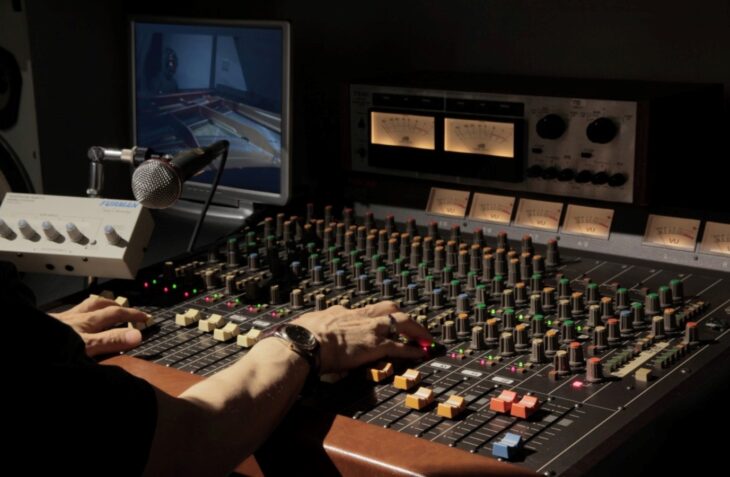
For instance, in one of the Marvel movies I worked on, I took some fantastic metal guitar and ran it through many different tape effects. After a trip through a stunning SSL console, I took it back to my studio and created many ambient loops from this guitar session.
Using the industry-standard Native Instruments Kontakt software, I turned these into Kontakt instruments. Then, I handed these instruments over to the composer to blend into his orchestral writing.
So, that’s a little peek into how music programmers like me take live recordings and create new instruments from them.
Writing Additional Score
Being part of the Hollywood scoring system, as an emerging music programmer, the ultimate goal is to have a crack at composing some original music for the film score. We all know how hectic movie timelines can be, and sometimes, the Composer just can’t handle it all.
If you’re a reliable and skilled music programmer, the Composer might just entrust you with a few cues in the film. You’ll be in charge of writing, programming, engineering, mixing, and getting the demo ready for the Director – how exciting is that?
This is when you see “additional music by” in the movie credits. It means you contributed a few cues, but not quite enough to share the limelight on the poster or the main music credit with the Composer.
But hey, don’t feel down! You’re not just an assistant to the Composer, you’re a valuable contributor to the score.
Given this, you ought to have some solid skills in orchestrating and writing for orchestras. The Director won’t be told who wrote what – he’ll just receive all the music pieces and approve them as they come in.
Not only does your work need to be on par with the Composer’s, but it also has to be performance-ready for the massive orchestra once the Director gives the green light. So, it’s crucial that your piece passes the quality test.
Remember, you’re there to support the Composer. If your cues constantly need changes and adjustments because you’re not quite on his level, he may think twice before asking you to write more in the future.
So, let’s stay on our A-game!
The silver lining? There’s a sweet financial reward for composing additional music. Your work will be submitted to Ascap and BMI as a co-write between you and the Composer.
This means all future royalties for this specific track will be split between you two, forever. Imagine seeing hefty checks for years to come because a few of your cues got approved in the movie. Now, that’s a great deal!
Creating Final Mockups for the Composer
Whether or not you’re writing the final cue in the movie, a major part of your job is to assemble the final mock-up or demo for the Director’s approval.
This means you’ll be printing all the midi orchestral instruments that the composer used in the piece, which could be hundreds! On top of that, you’ll be printing, editing, and correcting any of the Kontakt instruments used for beats, even some of your own deconstructed and reconstructed rock tracks.
And then, the cherry on top – merging your beats that add power and texture to the overall cue.
I know, it sounds like a lot. Some composers have a staff engineer working at their studio 24/7 while they’re creating mock-ups for the Director to approve, but that’s not the norm.
So another part of making the final mockup is that you are the demo mix engineer for the temporary track that’s going to be shown to the Director and maybe even the studio or network.
Now, because technology has really upped the game in mixing and getting really good sounds out of libraries, Virtual Instruments, and synths, directors and networks are kind of spoiled. They are used to hearing pretty amazing, big, almost mixed scoring cues, even if you’re just at the demo stage.
So, the job of a music programmer definitely requires being a competent mix engineer as well because a markup isn’t a mockup until it sounds like it’s pretty close to what you’re going to hear in the film. The orchestra needs to have nice reverbs, and a great balance between the strings, the brass, and the woodwind.
The rock bands need to be punchy and those guitars need to be in your face with cool distortions and effects. The synths need to be modern, powerful, and just sound cool.
Making Sessions for the Live Orchestral Date
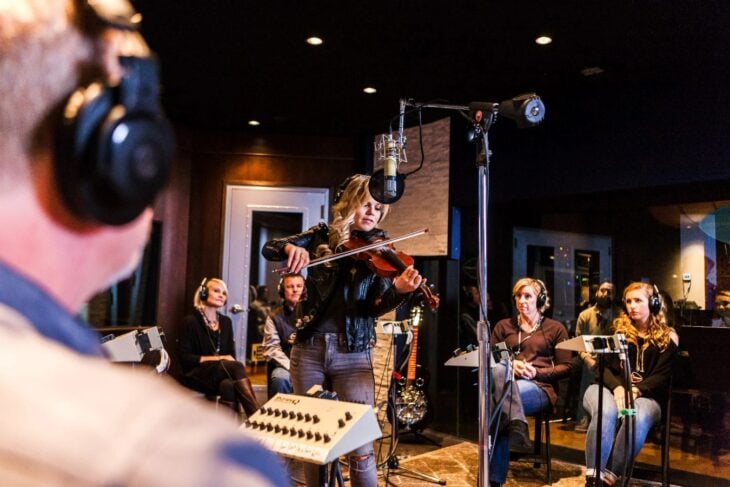
The final step, and one of the biggest, most exciting responsibilities for the music programmer, is to oversee the creation of the final session that will set the stage for the orchestra.
Once the Director gives the green light on everything that has been written, the composer and the programmer head into a large scoring studio. Here, they get to work with a 60 to 80 piece orchestra, replacing all the Midi virtual instrument with the real deal. It’s a thrilling experience!
Now, this can be a bit tricky. Film scoring, unlike traditional record-making for pop music or rock, has many tempo changes and many odd meters. The sessions can get quite complicated with 30 or 40 tempo changes throughout.
Even though most of the loops, beats, and guitars have already been given the thumbs-up, they still need a final touch-up to sound as smooth as possible. We don’t want anything to throw the orchestra off, right?
These dates can be quite the rollercoaster ride. You’re dealing with so much music that needs to be recorded in a few hours or a few days. But the biggest thrill (or chill!) is the price tag – one hour with such a high-quality orchestra, plus the engineer, plus the studio rate can run into the hundreds of thousands for a few days.
So the last thing the Composer or Director wants is something to trip up the orchestra and cause delays and overtime. That’s why the final Pro Tools session that goes to the engineer to record the orchestra needs to be meticulous, balanced, and stemmed out.
It also needs to follow the score that the orchestrator created for each individual musician and the conductor.
If you’re not familiar with what stems are, they’re consolidated tracks where there are no edits, no crossfades, and nothing that could move out of place. It starts at one and goes on to the end of the song.
This is how engineers, music programmers, and composers keep sessions from accidentally changing. It’s a failsafe to make sure nobody can move something without knowing and cause havoc.
Getting Hired as a Music Programmer for Scores
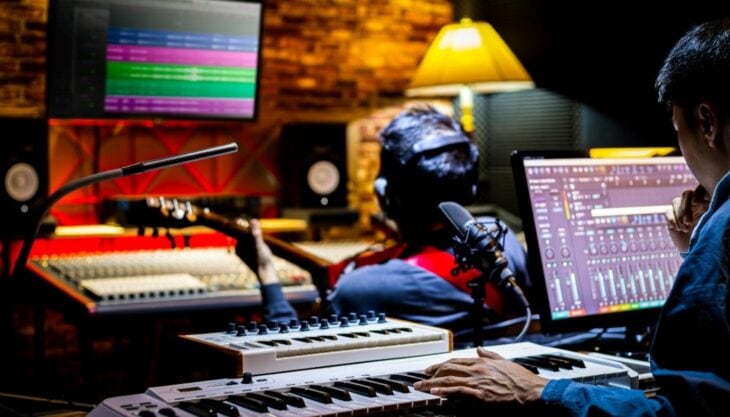
So you might be wondering, “Wow, that sounds like a really cool job! How do I get hired for that?”
Typically, music programmers are budding composers themselves. They are often viewed as the composer’s right-hand person, ready to take the wheel if things get a bit tricky.
But primarily, a music programmer needs to be a music producer. You need to be a wizard with sound, able to record brilliantly and extract fantastic sounds from guitars, drums, beats, drum machines – you name it!
As for getting noticed by a composer, most music programmers are based in Los Angeles or other major film hubs. They get to know composers and agents, and through word-of-mouth and impressive demo reels, they sometimes land auditions or trial jobs to see if they’re a good fit for the composer’s team.
Final Thoughts
Believe it or not, being a music programmer can be a blast – maybe even more than being the composer! You get to dive into all the fun stuff like recording, joining bands, playing with sound, and spending time in amazing studios.
Plus, you get to avoid some of the stress that comes with being the Composer, like having to deal with a grumpy director if something doesn’t go as planned. Sure, you’ve got a lot on your plate, but it’s all exciting stuff!
If you’re the kind of person who loves juggling different roles, adores recording, and has a knack for creating awesome electronic music, this could be your dream job. Not only that, but if you can also work as a sound designer and mixing engineer while composing some top-notch orchestral music, then you’re just the right fit for this adventure!
