
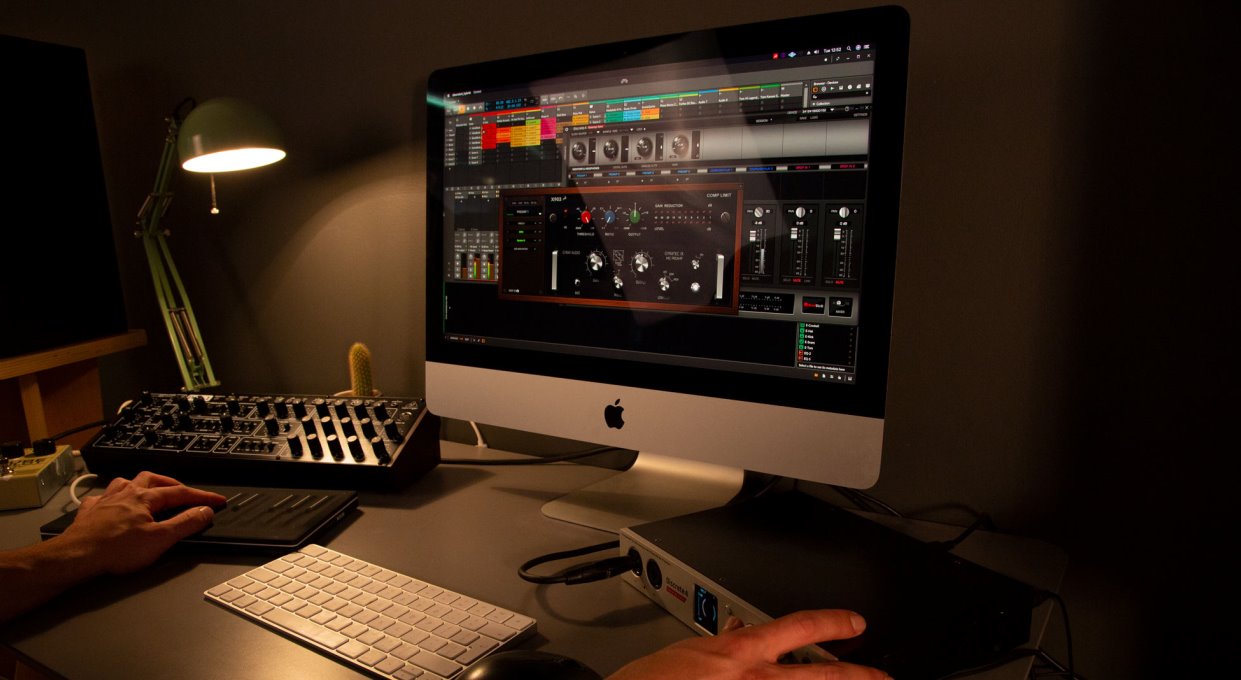
So, I just got an Apogee Hype Mic for my own sample pack project, and I have to say, it’s been a blast to use. Apogee is known for making some killer digital converters and audio interfaces, and this mic is no exception.
The coolest thing about it is that you can even plug it straight into your iPhone or iPad for some real mobile recording. I’ve been capturing some super cool non-musical sounds, and it has taken my creativity to new heights.
This has got me pretty hyped about the possibilities of making music and sounds without traditional instruments. Here are a few ways that have really inspired me.
Table of Contents
Online Sample Packs
I got the idea to create my own sample pack because I have made several sound and loop collections for different people over the years. Through all of that, I have developed my own style.
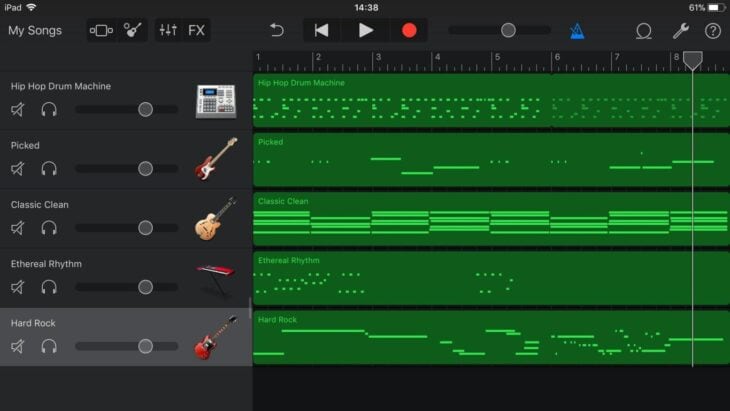
Lately, I have been making my own tracks using sample packs, and it’s amazing how quickly you can come up with cool stuff. All you need is a subscription to Splice or Loopcloud, some music software, and headphones. You can even use an iPad or iPhone version of GarageBand or Logic Pro.
If possible, I would recommend using Ableton Live because it has a really cool browser that lets you preview any loops you have at whatever tempo your new song is using. Even if the loops were recorded at completely different tempos, the browser can adjust them to play in time.
In Ableton, you can quickly drag different loops and clips to your “session view” window and change their pitch so they all play together. All of this without even using a sampler or keyboard controller.
There’s also a function called “Slice to New MIDI Track” that can chop up any loop you have with whatever instrument and create a pitched MIDI track of all the slices. That means you can move the slices around, delete them, and even swap them out for other ones to create a fully produced track without touching a single instrument or MIDI controller!
With GarageBand, you can also move loops around and stack them in different ways to start creating tracks. I have even done this while waiting for a haircut. That’s how easy it is.
Household Items
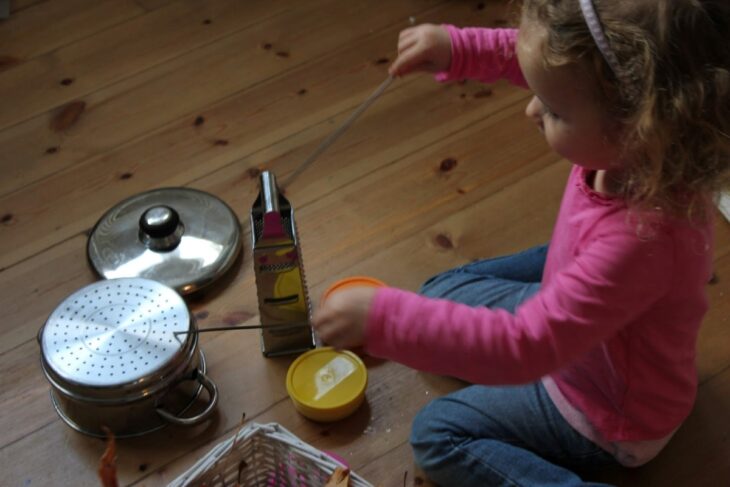
As a huge fan and user of Splice, I have recently been exploring their trippy and unusual percussive loops. There is some seriously cool stuff in there that has inspired me to start experimenting with household objects to create unique sounds.
Believe it or not, you can find many amazing musical objects lying around your house with just a bit of imagination. For example, I put some rice in a soda can, taped the lid shut, and made one of the coolest shakers I have ever used. I started making percussive shaker loops with just rice in a can and recorded them into GarageBand with my Apogee mic.
Another cool thing I discovered was using and tuning wine glasses to create resonant drones. I saw someone in a movie documentary once using wine glasses and always wanted to try it. It takes a bit of practice, but it is actually pretty easy, and you can get some really sweet glassy resonance tones that you can pass through different effects to create some pretty cinematic-sounding stuff.
Junk Percussion
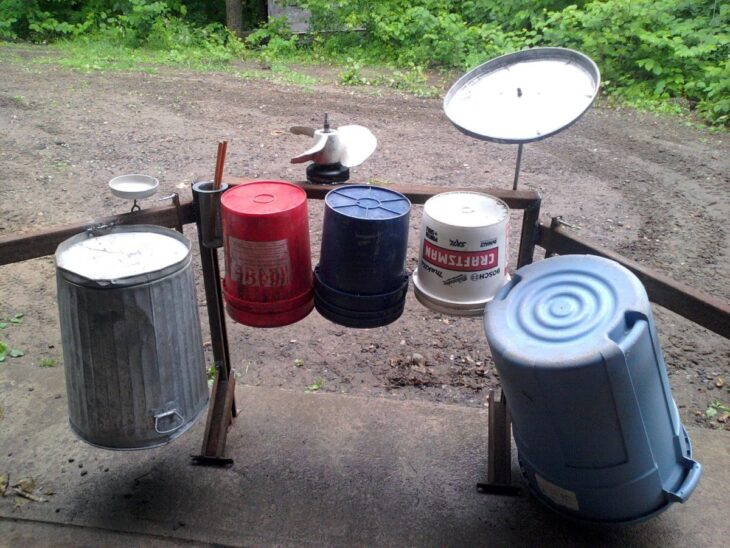
My obsession with finding cool household items to use led me to a nearby junkyard, which had all sorts of strange metal pieces. Armed with just a serving spoon from my kitchen, I recorded different metallic hits and scrapes on some of these rusted metal objects. Passing these sounds into my DAW (Digital Audio Workstation) produced some really cool drum-like sounds, just by pitching the junk percussion up and down.
By applying distortion, delays, and guitar amp effects within my program, I was able to produce some incredible harmonics. And it doesn’t even have to be all metal – I found that a used gallon water jug produced an amazing kick-like sound when banged low and pitched down. Very cool indeed!
Body Miking
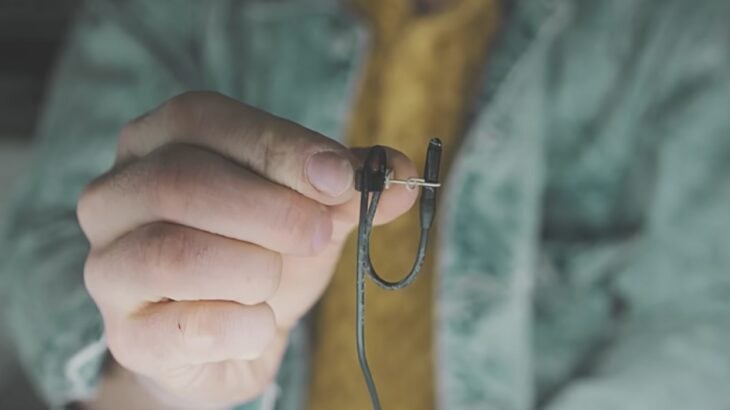
Naturally, one of the coolest music-making entities is your own human body. I remember going to see the acappella group Take 6 live in Boston during my Berklee days, and I was absolutely blown away by the percussion and bass sounds that I heard.
I kept looking on stage to see if they were playing with loops or playback, or if there was a hidden percussion and bass player somewhere offstage where I couldn’t see them. I couldn’t believe it — the baritone was doing a walking bassline with his mouth, and another baritone was doing a beatbox that sounded so cool and real that, with a few effects, you could pass it off on the record without knowing where it came from.
Bobby McFerrin, who had that huge hit “Don’t Worry Be Happy,” was also known to overdub a lot of body percussion, either slapping his chest as a snare, clapping, finger snapping, or making mouth clicks. If you listen to that song, you’ll notice that the whole track is him overdubbing himself vocally.
I highly suggest you start making loops of things from your own body and then pitch them, filter them, and pass them through cool distortion effects, reverbs, and delays. You’ll be blown away by how incredible the possibilities are.
Nature Recordings

Lately, I’ve been reading producer blogs and magazines, and they’ve been talking about a technique called “found sound.” Let me tell you, it’s pretty cool. Basically, composers, sound designers, and even electronic music producers go out into nature and record all sorts of sounds, from volcanoes to rivers to bird songs.
Then, they put these sounds into their software programs and make them sound futuristic and cool. Composers from Iceland have been using this technique in movies, and it sounds amazing.
Splice even has a category where you can search for nature sounds or “found sound”. People are starting to make sample packs of organic sounds they recorded and treated without using instruments.
When you’re processing recorded sound through microphones without using samplers or keyboards to pitch, you can use a filter to add some effects. All computer programs have a filter plugin, which is like an EQ curve that cuts out all the bad frequencies and keeps the good ones.
A high-pass filter gets rid of the lows and keeps going until it reaches the highs. A low-pass filter, on the other hand, gets rid of the highs and keeps going down. Then there’s a band-pass filter that targets a specific range of frequencies from 20 Hz to 20 kHz.
It cuts out both the lows and highs at the same time, so it’s kind of like a low-pass and high-pass filter all in one. Producers refer to it as the “Telephone Effect” because it has a nasal, thin quality to it. You hear it a lot in modern pop and EDM.
People have been using filters for ages since they started making synthesizers. If you haven’t tried making sounds with filters before, you should definitely check it out. It’s pretty awesome!
Turntables, Tape Machines, and YouTube
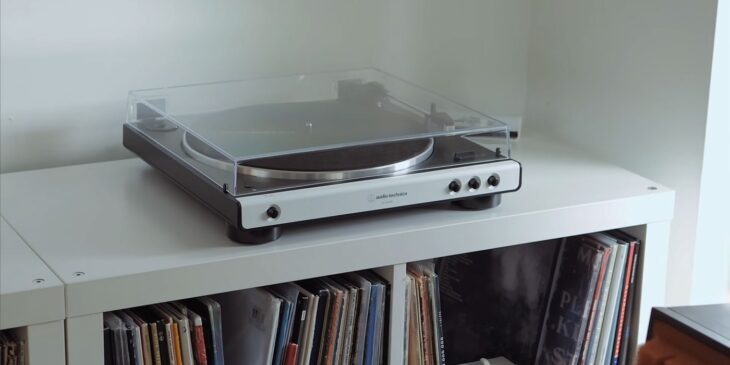
Lastly, we have gadgets that can play back sound and can also be used in different ways to produce musical effects. Brian Eno, who created the genre called “Ambient Music,” used tape machines as instruments themselves.
Many of his sounds that seem like they were made by synthesizers were actually made by tape recordings slowed down or sped up while going through different tape effects, such as the Roland space echo and Maestro echoplex.
The key is to change the pitch and texture of the tape by slowing it down or scrubbing it. You can even do this with cassette tapes if your machine has speed control.
Vinyl turntables are even easier to use. By playing a record at a lower speed or manually slowing it down, you can create weird, distorted, low sounds. Early hip-hop samples were created by DJs using this technique.
You can use the same idea with any device that plays back sound. You might even be able to do this with some digital programs by scrubbing the audio slowly instead of pressing play. Or you can sample things from YouTube by lowering the playback speed dramatically.
Radiohead did this on the song “Everything in Its Right Place” from “Kid A.” They used a tool called a scrubber in Pro Tools to go back and forth on Thom Yorke’s vocals, creating a stuttering effect.
It’s amazing how incredibly musical sounds can be produced without even using an instrument these days, as long as you get creative!
