
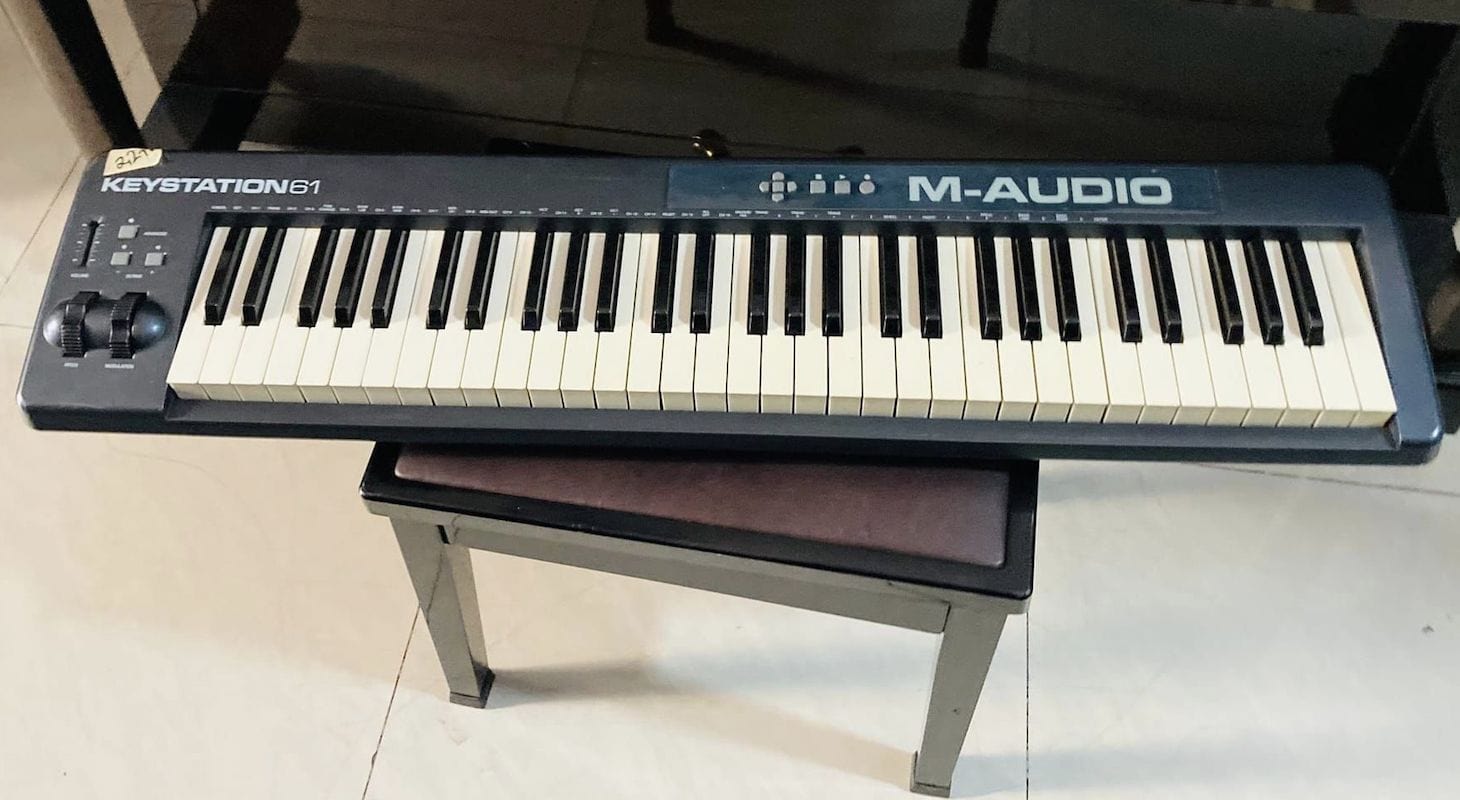
I heard on a podcast recently that during the pandemic, the number of keyboards and MIDI controllers sold probably tripled.
I hadn’t thought of it, but I did notice that every time I collaborated with an artist on Zoom, it seemed like they had another MIDI controller of a different size somewhere in the room.
I feel their pain. It can be very difficult to decide which size keyboard or MIDI controller you need, especially if you only want to get one. I myself have bought several and returned half of them after realizing I didn’t need them, only to rebuy them later because I realized they might be useful for something else!
Let me help you out by giving you an overview and (hopefully) a solution to the great dilemma of which keyboard size to get.
Table of Contents
49 Keys
I think the 49-key controller is perfect for a laptop setup, but you can also use it in a professional studio. The central part of the keyboard aligns almost perfectly with a laptop, making it the best option.
If you’re not a pianist, you only need about three octaves or so to program. The important range of most VST synths and drum racks is in the center, between C2 and C4.
You can also MIDI-learn any aspect of your DAW software to assign whatever range you need, and it’s easy to do on programs like Ableton and Logic Pro. Another reason to get a 49-key controller is not just for portability but for ease of storage.
If you’re someone who dabbles in music or just needs to program something once in a while, like musical chords or basslines, but you don’t have a lot of desk space, this keyboard can be stored below the desk in a small closet, on top of a drawer, etc. I have a 49-key controller at home that I put on my lap when I just want to input an idea quickly and set it aside.
If you want a simple controller that you can pop in and out of your desk whenever needed, I suggest something like the Roland A-49. It’s light, reliable, and feels great.
If you’re a songwriter or a professional who needs something more complex, but you’re limited in both studio space and desk space, then you can’t go wrong with a Komplete Kontrol S49. It has cool backlit keys and a great browser.
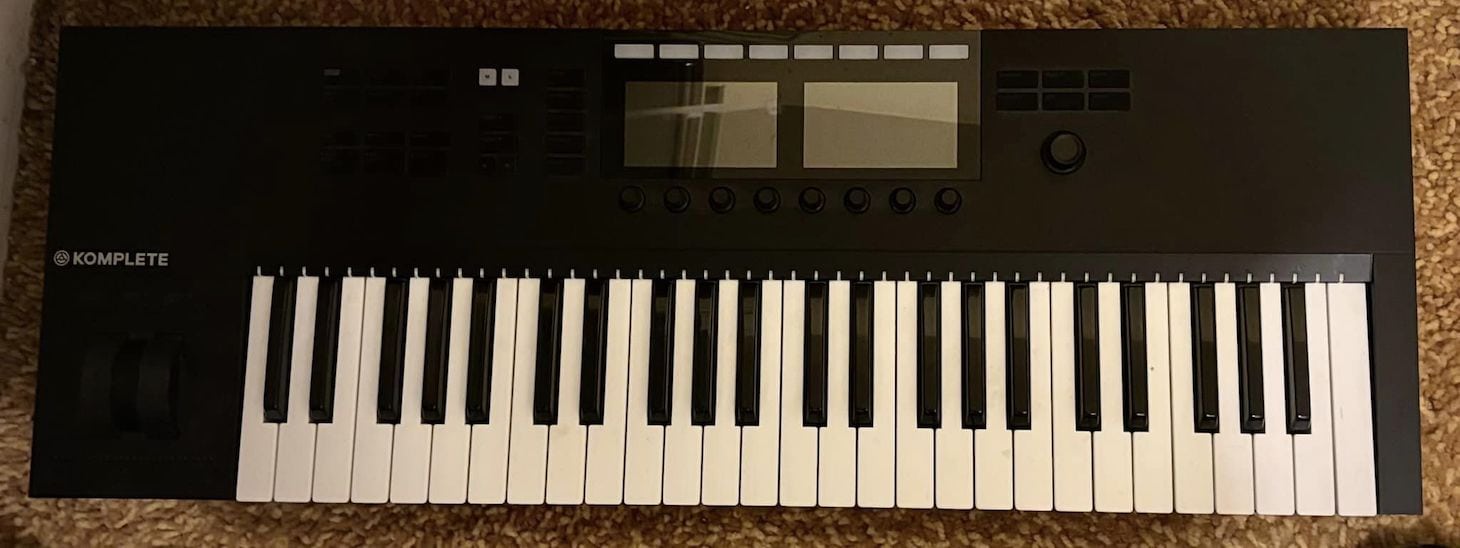
If you’re into electronic music and synthesis, you’re in luck because there are some great analog synthesizers with 49 keys on the market. My two favorites are probably the Moog Matriarch and the Sequential Prophet-6.
The downside of having a 49-key controller is that it’s a bit limiting if you’re going to perform live. They are more for computer programming than actual playable instruments.
61 Keys
Back in the day, before all these companies started making controllers and keyboards of all shapes and sizes, the classic vintage synthesizer and keyboard had 61 keys. I remember I once had a chat with Dave Smith from Sequential and asked him why that particular size was so popular.
He said it was like a sweet spot for both experienced keyboard players who wanted to show off their skills and jam, and for those who weren’t too experienced but also didn’t want to constantly switch octaves to play certain notes.
And he was right! If you’ve ever used anything smaller than 49 keys, like a 25-key controller, you know how annoying it can be to have to switch octaves all the time. Especially when programming bass lines.
But with 61 notes, you can split the keyboard and have two sounds going at once. Maybe a bass sound on the lower half and a pad sound on the upper half. Perfect for live performances!
And if you’re a film composer dealing with a string ensemble patch, 49 keys would be too limiting. But with 61 keys, you can have the bass strings on your left hand and the high violins on your right. Just makes sense, right?
My go-to 61-note keyboard controller is the Arturia Keylab 61 (full review). Not only is it a great keyboard, but it also offers drum pads that can double as a drum controller.
And if you’re a film composer or producer who uses a lot of software sample libraries, you can’t go wrong with a Komplete Kontrol S61.
But if you’re a pro and want the absolute best package of amazing, thick analog synthesis, filters, and a top-notch controller with an amazing feel, look no further than the Sequential Prophet-5 remake.
I’m not usually a fan of reissues, but this one blew me away. It could easily be the best 61-note keyboard out there today.
Of course, the downside of having a 61-note keyboard is that it’s usually too big to be portable, weighs more, and is not quite a full digital piano.
88 Keys
So, who would go for an 88-key controller? Well, obviously, pianists and skilled keyboard players would be the first to come to mind.
And if you’re into live performances, it’s always great to have the full range of keys at your disposal, just in case you want to play a piano ballad that you recorded in a studio with a real piano.
Another good reason to go for 88 keys is if you want a full-featured workstation. Some of the really awesome ones, like the Roland Fantom and Korg Nautilus, come with 88 keys by default.
If you’re interested, I wrote an article comparing different workstations that could give you some insight into what these machines can do.
Of course, the downside of having an 88-key controller is that they can be heavy and large, but there are some lighter options out there made by M-Audio and Roland. But let’s be real, if you’re looking for that true piano hammer feel, you’re probably willing to commit to the size and weight.
If you want to recreate the experience of a digital piano, don’t mind the space and weight considerations, and want to trigger sounds from your laptop, then your best bet might be the Arturia Keylab 88.
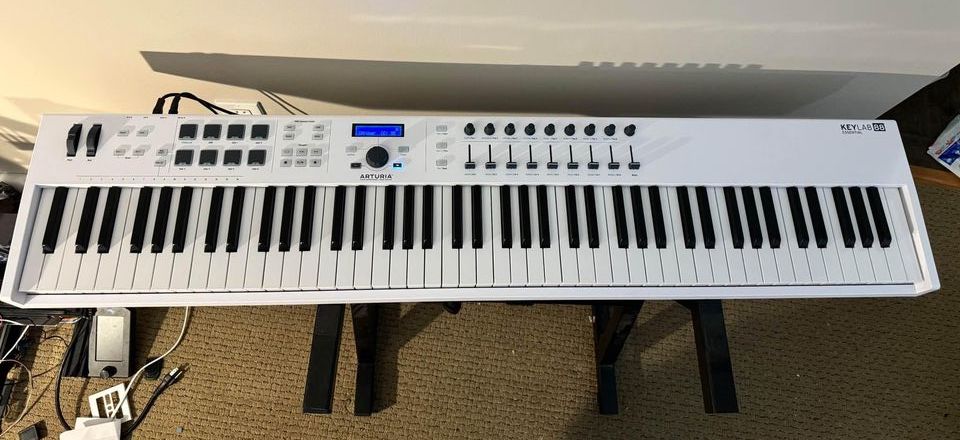
If you want something lighter but still with a great feel, the Yamaha P-45 has a nice hammer action and is very lightweight. It’s also pretty thin for an 88-note controller, so it could be more easily stored for those of you who have smaller spaces that might double as an office or studio.
Final Thoughts
Alright, when it comes to deciding which size to choose, it really depends on your own workflow. The difference in size between all three options is quite significant, so you’ll definitely notice it.
If you’re into playing the keys and want to use your controller for practice, don’t go for anything smaller than a 61-note keyboard. I’ve tried playing full chords and melodies on a 49-note keyboard, and let me tell you, it’s a major pain.
Now, most of you are probably songwriters or people who use the keyboard to produce tracks, demos, and remixes. So, real-time piano playing might not even matter.
Depending on how much space you have in your studio, office, or bedroom, a 49-note keyboard should be enough to input anything you need into your computer.
These days, with all the loop-based programs like Fruity Loops, Ableton, and Logic Pro, many of us are using our mouse or trackpad to produce. Believe it or not, there have been times when I’ve finished 75% of a track without even touching the keys on my keyboard.
I don’t know if that’s something to be proud of or not, but it’s the truth. My advice would be to try out a couple of keyboards in your own studio and then return one if you don’t like it, that’s the best way to find what you need.
