
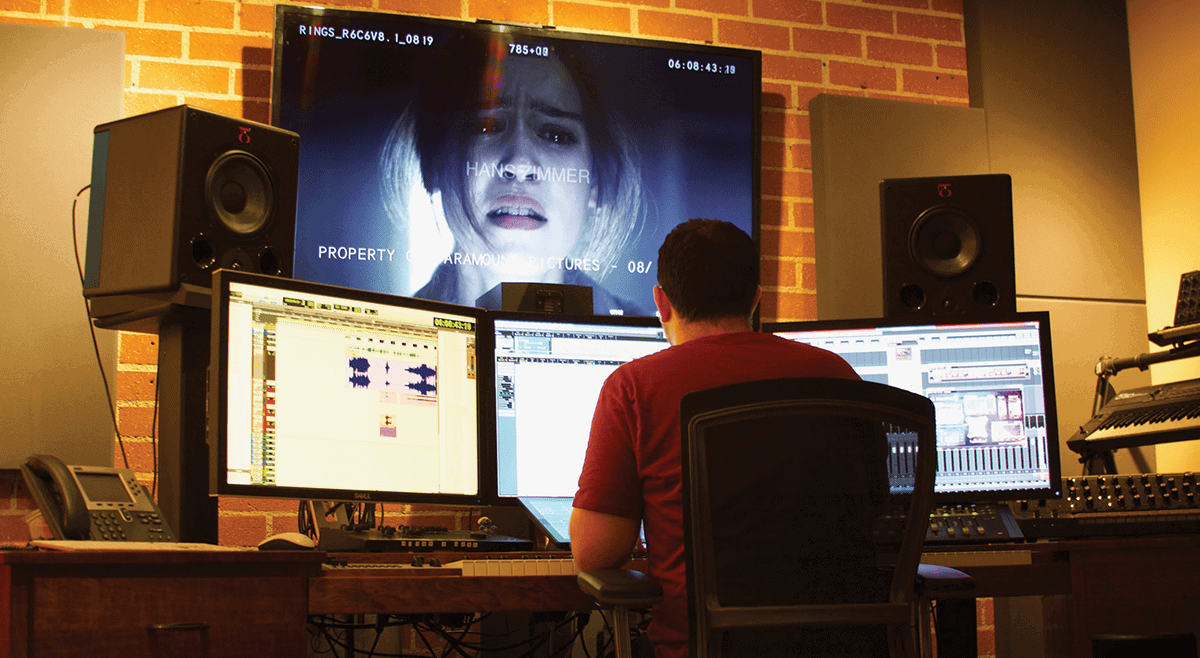
I began my adventure at the Berklee College of Music in Boston, immersing myself in all things related to film scoring. It was captivating! However, the real fun started when I moved to LA and began working on my own projects.
That’s when I genuinely understood what sets film and TV scoring apart. You see, it all comes down to how you structure and perceive your music.
With film, it’s a straight shot. You start with the opening credits, blend in some emotional, tragic, or spine-chilling music as the story unfolds on-screen, and tie it up neatly with the end credit crawl.
TV? Now, that’s a whole new ballpark. There are a ton of subtle nuances that might slip under the radar for most.
But when you’re in the thick of it all, receiving pointers from the network, you start picking up on these familiar moments. And it’s when you need to deliberately weave these moments into your work that you truly grasp their significance.
While the main goal is always to enhance the emotions and narrative playing out on screen, another significant difference is the scope of your composition.
In film, you’re crafting music for a unique, one-time event (unless it turns into a franchise, that is!). For TV, you’re creating themes for a series of episodes spanning an entire season.
Those are just a few key differences that really highlight the contrast between creating music for film or TV. Let’s break them down!
Table of Contents
Pilots
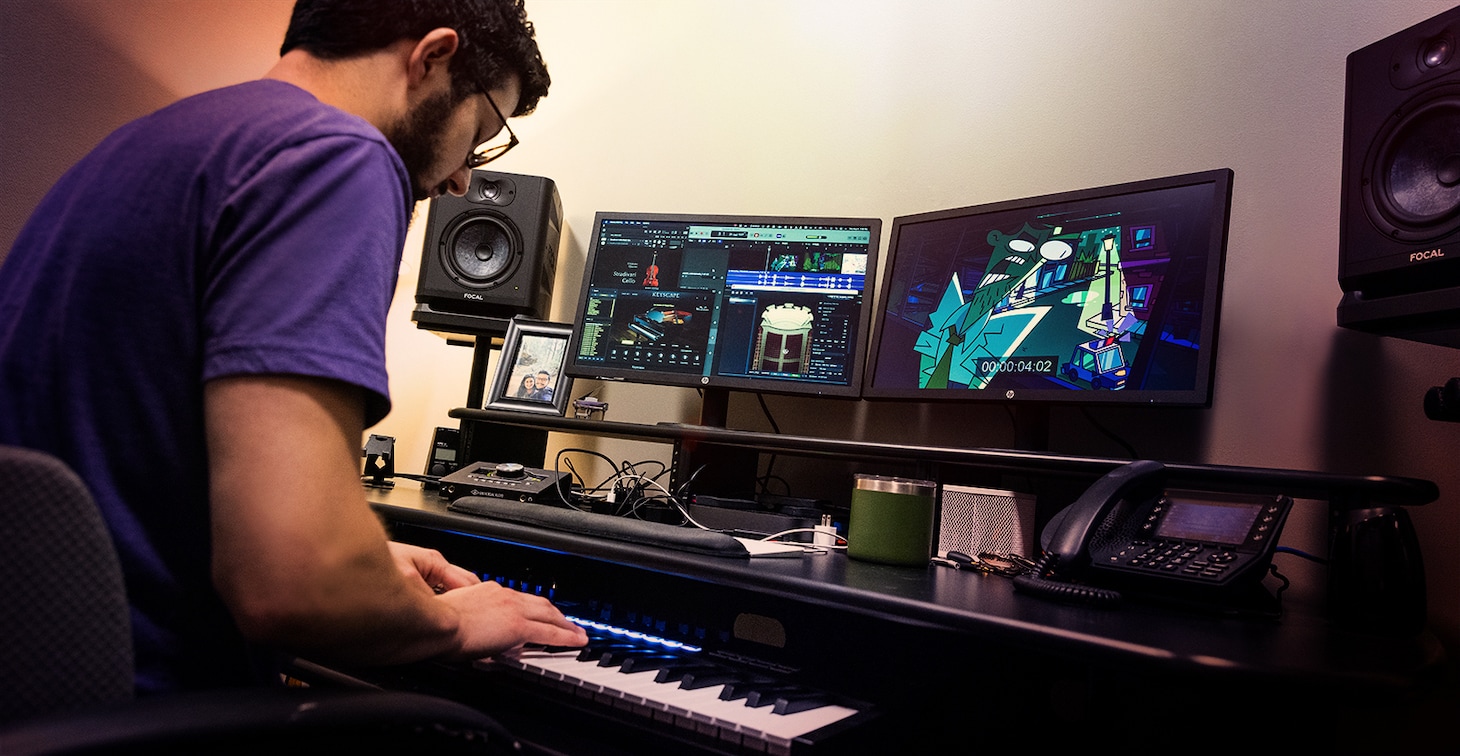
One of the fun facts you might not know about TV shows is that before a show gets the green light from a network, there’s a sort of demo made, known as a pilot. It’s basically a trial run, a sneak peek of what the show could be.
To even get to this stage means your great script, unique idea, and star-studded cast have already cleared several hurdles – pretty stressful.
Networks invest a lot into producing these pilots. Why? Because if they hit the mark, they morph into episode one, setting the stage for the entire season. And once a pilot gets the thumbs up, there’s little room for do-overs.
But here’s the kicker – getting your pilot approved is no cakewalk. You’d think that if someone’s shelling out millions on a project, they’re more likely to want it, right? Well, not always with network TV!
The amount of money that goes down the drain is mind-boggling! I’ve seen full orchestras hired for a pilot, only for the pilot to be unceremoniously dumped and never see the light of day.
It might stun us musicians that this is the norm, but that’s just how things roll in Hollywood.
Director vs. Showrunner
One of the fun things about working in film and television is getting to know the unique roles everyone plays. In the movie world, for example, the director is usually the one in the driver’s seat.
They get feedback from the studio, sure, but for the most part, they’re free to steer the ship as they see fit.
As a composer, you get to be best buds with the director. Your journey together starts with what we call a “spotting session”. This is where you both sit down and watch the film sans music, pinpointing all those special moments that need a little musical magic.
You’ll chat about what kind of score would work best—is it electronic, orchestral, or a cool mix of both? All these moments that need music are what we call “cues”.
Once you’ve got your cues in place, it’s time to set a schedule. This usually involves weekly catch-ups to go over the cues, chat about demos, and move on to other sections if the director gives the thumbs up.
It’s a super collaborative process, and if you’re lucky with the movie’s release date, you might have plenty of time for a good, hearty discussion.
Now, the TV world is a different kettle of fish. A director is still part of the picture, but your new best friend will be the showrunner. This is usually the person who penned the script or a seasoned pro, and they get the gig once a network orders a pilot.
TV spotting sessions are a bit more of a party, with more people joining the fun. This can include a music editor, music supervisor, the video editor, the showrunner, and sometimes even a network representative.
There’s lots of chat about the music that’ll be licensed and used in certain scenes. The music supervisor usually handles this, but we’ll dive deeper into that in the next section.
Role of Music Supervisor
Have you ever noticed the catchy tunes playing during emotional moments in your favorite shows like Grey’s Anatomy or Ted Lasso? Well, that’s all thanks to the Music Supervisor!
In the world of TV, the Music Supervisor selects these songs during what’s known as the spotting session, and then personally negotiates with the artist to feature their song in the show. It’s quite an art!
When it comes to film, the Music Supervisor gets to fill in the spots hand-picked by the Director. It can range from a powerful song by a famous artist making an appearance in the end credits, or a song specifically crafted for the opening titles, like what Dua Lipa brilliantly did for the Barbie movie.
In TV land, Music Supervisors have a significant hand in the creative process. They’re the ones picking out the songs that form the score, aiming to strike an emotional chord typically left to the Composer.
And in a series with many episodes, the musical tone set in the pilot or early episodes is what carries throughout the show. So, naturally, the Music Supervisor often liaises with the Composer to make sure everything harmonizes.
Sometimes, networks even turn to Music Supervisors for composer recommendations, showing just how closely these roles are intertwined. It’s all about making beautiful music together!
Release Schedules
Writing for TV can be stressful due to tight deadlines and the fast-paced environment of weekly release schedules. Imagine working on a high-profile weekly network television show. You only have two days to create, get approval for, perform, and mix the music.
Let’s say the show airs on Friday. You’d have a spotting session on Monday, dive into creation on Tuesday and Wednesday, secure approval, and mix it all up on Thursday.
Just in time for Friday’s big reveal. And the best part? You get to do it all over again the next week. Talk about keeping you on your toes!
Now, let’s switch gears to film. It’s an entirely different rhythm.
You could be immersed in a film project for up to a year, depending on the release date. Some composers, like the talented Trent Reznor of the David Fincher film “The Social Network,” start crafting music during the actual shooting of the movie.
The director uses this music as a catalyst for the scenes themselves, so a composer could be engrossed in a film for years.
This extended timeframe lets composers dive deep into the film, unravel the characters, understand the director’s vision, and create music that’s simply too intricate to conceive in just two days. Plus, it shapes the way you produce and record the music.
You’ve got time to refine the mixing, record larger ensembles, and join forces with amazing musicians from across the globe.
Streaming has added a twist to this process. Companies like Netflix, which serve up entire seasons in one go, allow composers to work on multiple episodes at once, treating it like one epic movie.
Different Rules of the Game
The format itself guides what composers need to focus on. For instance, films don’t have any commercial cuts, so there’s no need to worry about those cliché commercial outs, as our TV composers affectionately call them.
You know, those moments with the rising string lines or big tensions with a dramatic hit at the end that signals a commercial break. Let’s be honest, most composers aren’t fans of those—they can feel kind of cheesy.
Also, films don’t have a recap. You’re familiar with those, right? The beginning of the next episode where they explain what happened previously.
Usually, those are edited with general music from the show by a music editor, but sometimes composers actually write specific music for the recap or adjust previous themes to work better.
But none of that happens in film. With film, you usually get the opening titles right away, accompanied by a beautiful piece of opening music. There is a main title as well, but it usually comes after the recap and is a bit shorter.
End titles? They’re a world of their own. In a lot of movies, the end title is either a song or a beautiful piece of music that serves as a grand finale version of the opening main title theme.
Quite often, they’re so beautiful that you may find yourself sitting in the theater watching the credits roll just because you want to keep listening to the music. That’s the magic of it!
In the era of streaming, the moment the credits appear, you’ll notice that most apps, like Apple TV, suddenly minimize the credit screen to this tiny thumbnail and announce the next episode is about to start in 10 seconds.
Or, they suggest similar shows you might like. It’s more like a social media experience when watching TV show episodes; they want to keep you engaged and binge-watching, and the music is also perfectly tailored to that experience.
Getting Paid
There’s a world of difference between how TV and film composers get paid. For film, it’s typically a package deal.
The composer takes care of everything – from hiring musicians and staff, to getting the right assistants and a mixing engineer – all from one budget. Whatever is left over from the budget is their fee.
But, this arrangement can sometimes be a bit tricky. For example, if a film goes through lots of changes, the poor composer may have to keep tweaking the music. This might mean calling back musicians, doing re-recordings, and paying them again.
In some cases, composers might even end up losing money on these deals. Yikes!
That’s why lots of composers opt to use virtual instruments as much as they can. This way, they dodge the bullet of paying for musicians every time there’s a change.
And get this, while you might get an advance to kick things off, most often, you’ll be shelling out from your own pocket and then get reimbursed when you receive your final payment at the end of the film. This could even take up to a year!
Now, on the flip side, TV music comes with a weekly paycheck. And the best part? Real musicians aren’t always needed because of the tight schedule and the simple nature of the music.
This lets composers whip up music using just themselves and virtual instruments. This makes it a sweeter deal, especially for bigger shows with simpler tunes.
Take Seinfeld for example. Most of the music was a simple, digitally created slap bass played by the composer himself. So, he probably pocketed about 90% of the show’s music budget for years. Not too shabby, right?
Royalties

TV composers reap substantial benefits from the way performance royalties are distributed. These royalties typically come from Performing Rights Organizations (PROs) like ASCAP, BMI, and SESAC every time a piece of instrumental or scored music is aired.
It’s somewhat like how radio pays recording artists. Now, movie theaters tend to be a bit stingy, paying at relatively low rates.
But TV networks, especially big names like NBC, ABC, and CBS, are a whole different story! They pay generously every time they air a movie or episode.
Here’s a fun fact: the payout can also depend on when your music gets its moment in the limelight. If your tune lands a prime time slot, such as between the golden hours of 6 and 10 PM on a major network, you’re looking at potentially hefty royalties.
Another sweet deal with TV shows is syndication. Imagine your show being aired on various networks at different times, even in the wee hours, and all across the globe. Every single airing results in a paycheck – all these can add up to a pretty penny!
Movies get their share of TV airtime too, but their scheduling is a bit more unpredictable, and they often find themselves on lesser networks like HBO and Cinemax. These networks also pay royalties, but movies typically don’t get syndicated and usually end up on lower networks once they’ve had their heyday.
And then there’s streaming. It’s become quite the hot topic for films. Streamers are known to pay at rather low rates, and some, believe it or not, don’t pay a dime. This issue has composers and songwriters on pins and needles and is currently being discussed in the US Congress as part of the Music Modernization Act (MMA).
TV Music (Formulaic or Inspired)
It’s fascinating how the business side of things can really shape the artistic process of composing music for media. For instance, TV composers are often tasked with creating short, snappy musical moments – you might know them as stings or stingers – which are perfect for comedy shows like “Californication” to transition between scenes.
Now, if you’ve ever watched a thrilling show like “FBI” or “Criminal Minds”, you’ve probably noticed how music helps transition to commercial breaks, usually at the most suspenseful cliffhangers!
Some critics say this can make music feel a bit formulaic and throwaway, but it’s all part of the TV landscape.
Over on the film side of things, it’s a slightly different story. Sure, a romantic comedy might use a catchy tune as a “scene band-aid”, but more often than not, composers are really digging into the emotional heart of a scene, crafting music that’s as tense or heartfelt as the moment demands.
And let’s not forget the grandeur of a full orchestra or an awe-inspiring soloist to add some serious depth and complexity to the score. This level of musical sophistication isn’t always a feature in network TV.
Final Thoughts
So where does that leave the streaming giants like Netflix, Amazon Prime, and Hulu? Well, they’re sort of the best of both worlds.
Even though their music still needs to fit the structure of a TV episode, shows like “The Crown” and “1882” often have a truly cinematic quality to them. Of course, not every composer can splash out on top-tier musicians and orchestras for every episode due to budget restrictions.
But hey, it’s not all doom and gloom – in fact, far from it! Thanks to all the amazing technological advancements and high-quality orchestral sample libraries, even shows on a shoestring budget can boast some seriously impressive, realistic-sounding music.
Plus, lower-budget shows and films on streaming platforms are always on the lookout for fresh talent, and hiring a newcomer isn’t seen as a major financial risk.
So, all in all, this shift in trends is creating some fantastic opportunities for new composers keen to break into the business. Exciting times, right?
