
The Neumann U87 is a remarkable and highly sought-after mic. But as with most exceptional things, that pedigree does come at a fairly high cost that puts Neumann out of reach for many of us.
Top 3 - U87 Clones
Preview | Product | Price |
|---|---|---|
 | ||
 | ||
 |
The good news is that there are companies that have gone and made some of the best U87 clones out there today, making their classic sound much more accessible to more people.
5 Best Neumann U87 Clones
1. Warm Audio WA87
First up is the Warm Audio WA87. Warm Audio is already known for recreating classic EQs, compressors, etc., and have now moved on to recreating the sonic characteristics of the U87.
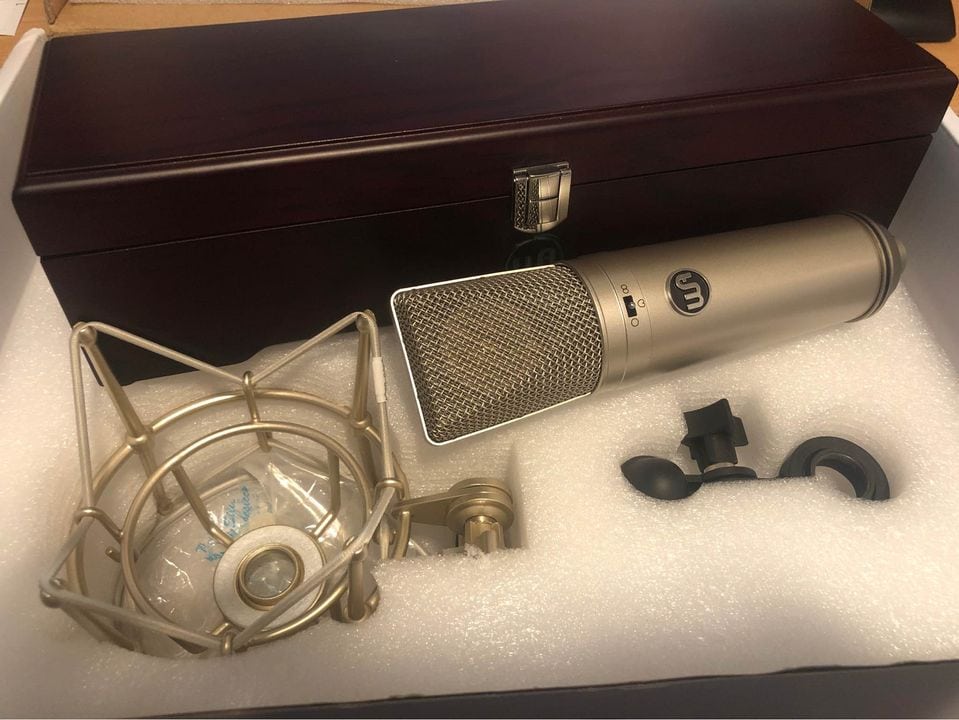
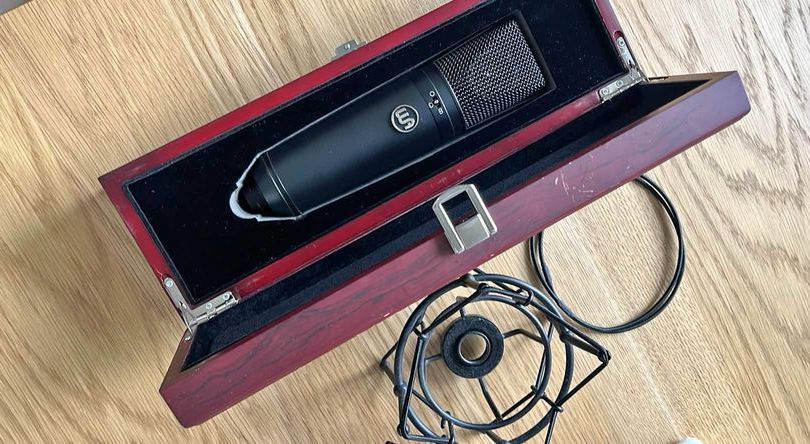
Warm Audio WA87 - looks pretty close to the original U87!
The first thing I noticed about the WA87 is that it looks deceptively similar to the original U87 that it’s based on. The biggest difference in terms of appearance is the WA87’s rounded cap. I’m sure this wasn’t done by accident and Warm Audio was going for the full U87 experience.
Looks are one thing, but what really matters is how the WA87 recreates the sound of the U87. Unlike some other U87 clones, the WA87 is based on the original U87 instead of the modern U87ai.
This means that we can expect the WA87 to have a natural, warm tone and not be as bright as the modern U87ai. So, I put it to the test to see if this is indeed the case.
With the mic put in cardioid pattern, I did a quick vocal test. The mic has a natural sound with a very smooth midrange, just like you would expect on a vintage U87. Moving closer to the mic, more emphasis is placed on the low-mids.
Using the mic on an acoustic guitar is where I really noticed a difference in sound between the two mics. While the U87 stays warm and even a bit dark, the WA87 is brighter, but not overblown and still natural.
In omni pattern, the sound is very much the same as cardioid, but with some nice ambience added. In figure-eight pattern, the treble gains quite a boost which resulted in a nice attack when I was picking the strings.
I also tried the mic on a guitar amp and drums and it performed very well in both scenarios. The mic handles high SPLs without an issue, making the WA87 an incredible all-purpose mic.
The mic comes with a nice wooden carrying case, a quality shock mount and even a hard mount.
PROS
CONS

2. sE Electronics SE2200
I wasn’t too familiar with sE Electronics as a company, so I was interested to see how their SE2200 was going to perform, as it’s often touted as a fairly cheap U87 clone (when you consider the price of the original).
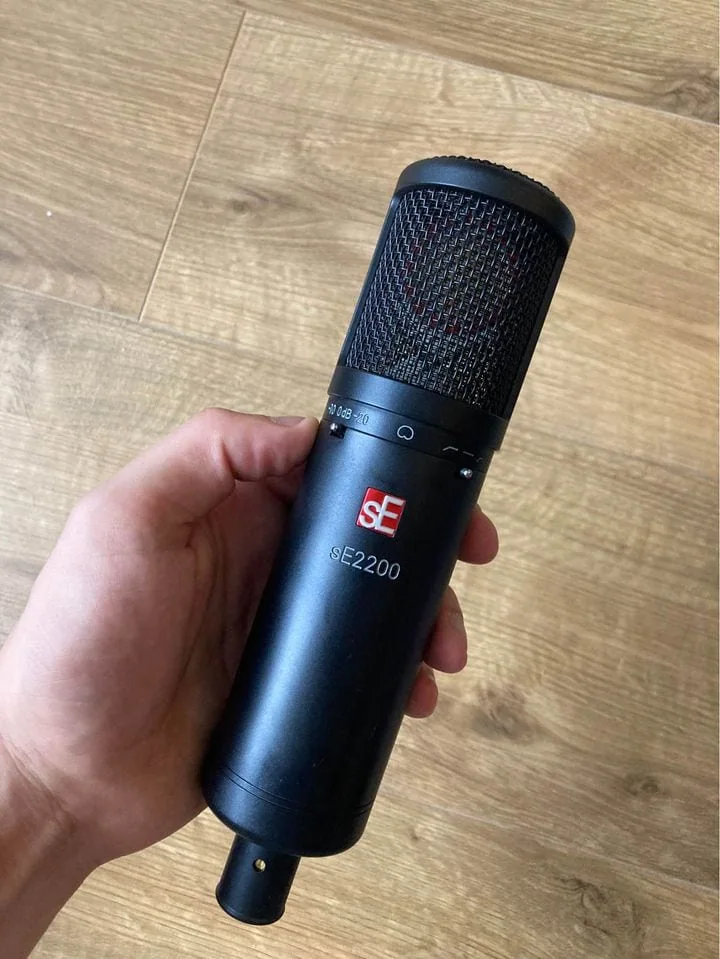
sE Electronics SE2200 - solidly built!
The first thing I noticed was that this mic is quite weighty. It’s not extremely heavy, but the weight is definitely felt when you hold it. Luckily, that weightiness isn’t for nothing as the mic feels quite sturdy and screams quality.
I was a bit concerned about the possibility of the mic’s weight causing problems with the mic stand, but it wasn’t the case. The mic’s build quality doesn’t translate to its accessories unfortunately, and the shock mount and pop filter included both feel a bit cheap. The pop filter also has an exposed edge making it a snag risk for clothes.
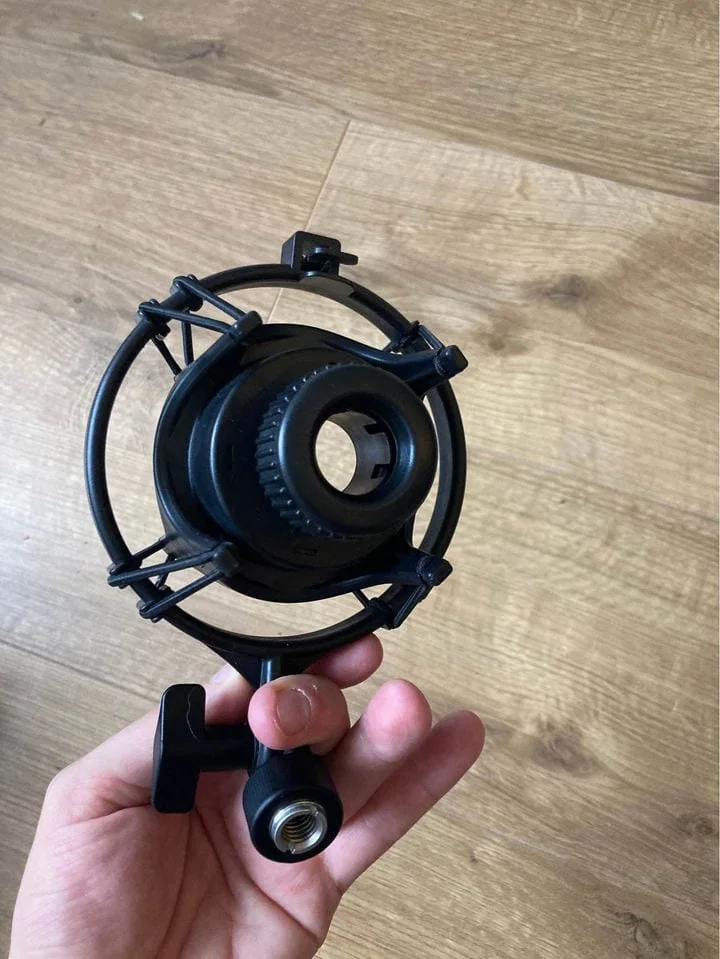
I wasn't too impressed with the shock mount that comes bundled with the SE2200.
Moving on to what’s important though, the sound. The SE2200 performs quite well in the sound department for a mic of its price range.
Testing the mic on vocals, acoustic and electric guitar, and drums, I found that it was fairly consistent across the different sources. The mic sounded extremely clear and I didn’t notice any distortion or any other glaring issues.
Enabling the -10dB pad when using the mic on drums or a guitar amp also doesn’t result in any loss of sound quality or tone that I noticed, so the mic works quite nicely on high SPLs.
The SE2200 does have a fairly flat frequency response and I felt that it doesn’t have a lot of color. That isn’t a bad thing though, and actually makes the mic a pretty good choice if you want a very clean recording.
If you want a bit of color, you will have to add it in post processing, otherwise the recording might sound too plain for your taste.
Overall, I would highly recommend the SE2200 for a variety of use cases. It’s a great choice even outside the recording studio, especially for streaming or podcasting, because of its neutral sound. It will make your streams or podcast sound very professional without needing to break the bank.
PROS
CONS
3. Lauten Audio Atlantis FC-387
The FC-387 is another heavy boy, but unlike the SE2200, I would highly suggest getting a sturdy mic stand. This mic doesn’t just feel heavy, it is actually quite heavy at slightly over 2 pounds.
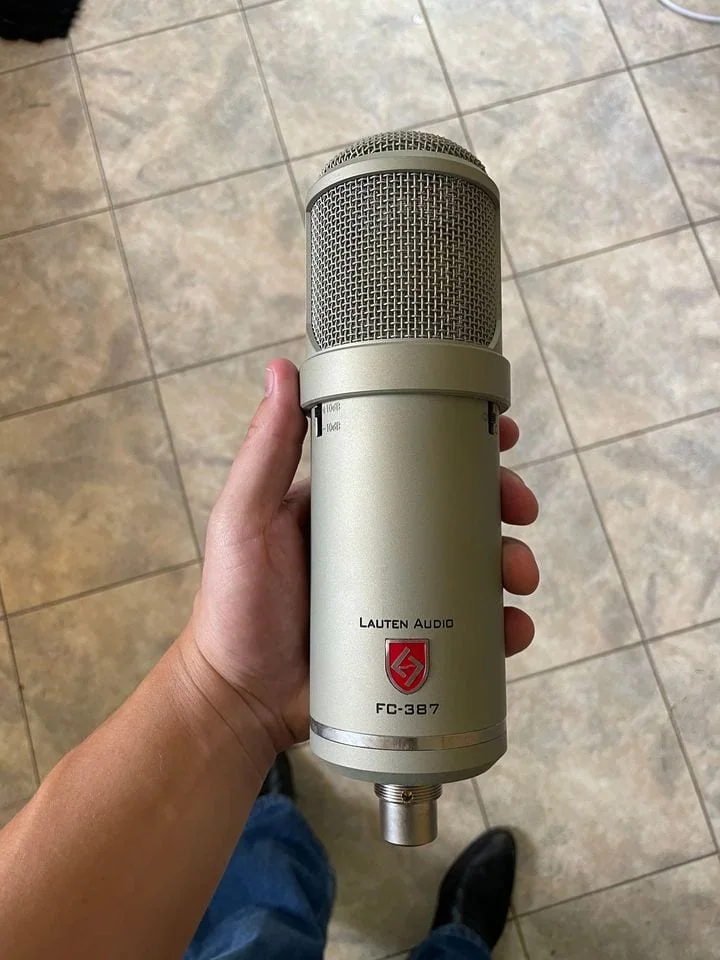
Lauten Audio Atlantis FC-387 has quite a bit of heft!
However, its weight is a small price to pay, as the FC-387 sounds amazing. The best way I can describe the FC-387’s sound is ‘beautifully natural’.
The mic doesn’t have the same tendency to be too bright like other modern large diaphragm condensers, and I found that it doesn’t make your recordings sound so obviously digital.
The FC-387 also doesn’t have the same tendency to ‘spike’ as you move closer to it like other mics do. I found the ramp-up on the lows and low-mids to be very smooth and controlled.
This is something that you will appreciate as a vocalist, since you’ll be able to play around with dynamics a lot more. You won’t have to stand still while recording, which can sometimes make you feel a bit ‘awkward’.
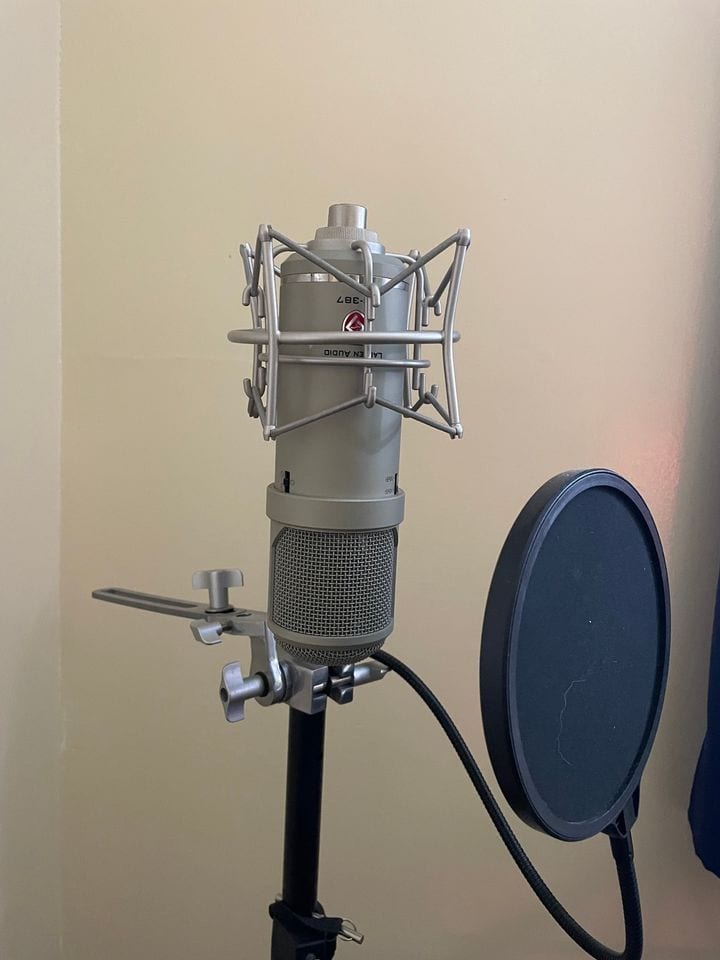
Lauten Audio Atlantis FC-387 in use.
So, you get it, the Atlantis sounds great. But what’s special about it? The real selling point for me is the amount of versatility packed into it.
Firstly, it has the standard pattern switch (cardioid, omni, figure-eight) and a pad/gain switch. The pad switch is where it starts to get interesting.
Apart from the 10dB attenuation, the FC-387 also has a 10dB gain boost. This helps to boost the gain on budget mic preamps, reducing or even eliminating distortion and noise.
Then there’s a third three-way switch at the back of the mic. This allows you to switch between Forward, Neutral, and Gentle. What this means is that you can further shape the sound of the mic depending on what you’re looking for.
Forward, for example, gives the mic a more modern sound by increasing the highs above 3kHz by a few decibels. Neutral flattens the frequency response, and Gentle tames the harsh and bright tones for a more warm, vintage sound. These voicings are not just some sort of a EQ gimmick, they really make a difference.
Lastly, I’ve found in my testing that the mic sounds great through both solid state and tube preamps. All in all, in my opinion you do get what you pay for with the Lauten Atlantis.
PROS
CONS
4. Universal Audio Sphere DLX

The Universal Audio Sphere DLX is a mic that has a 5-star rating on almost every e-commerce site. It’s perhaps also the most interesting mic on this list. I wouldn’t call it a U87 clone, but more a ‘think-of-a-mic’ clone.
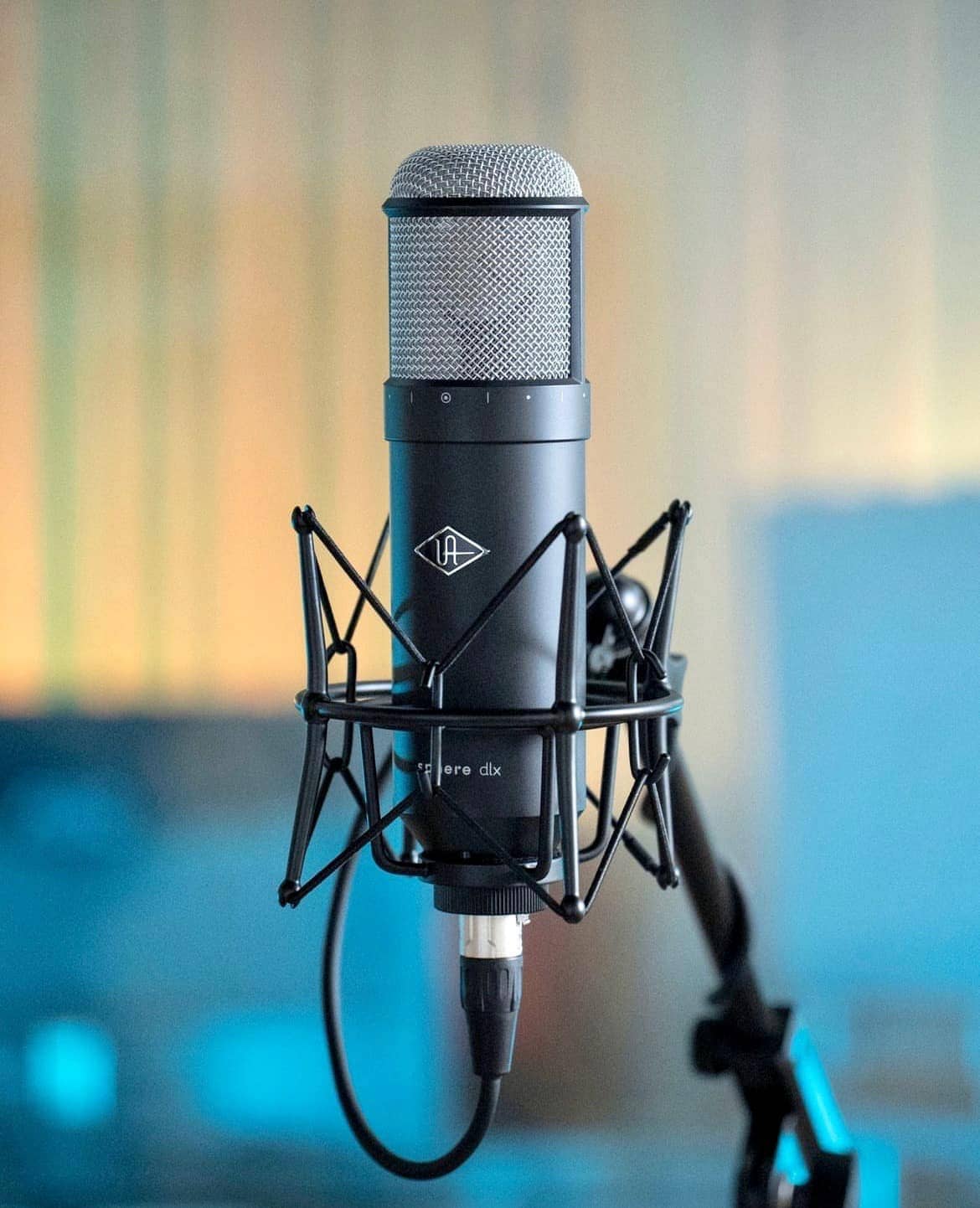
Universal Audio Sphere DLX
This reason for this is instead of simply trying to emulate the sound of just the Neumann U87, the Sphere can emulate the sound of a wide variety of mics (around 20 to be precise), including the U87.
It does this through a plugin that is preloaded with the sound profiles of 20 different mics from Neumann (two of which are U87s), AKG, Shure and everything in between.
This does mean that I can’t really describe the sound of the mic since you’re not confined to just one sound profile. There are presets that allow you to use the mic without any modeling. The mic at a ‘stock’ setting is very clear sounding, with a fairly flat frequency response.
But this is not really the main selling point of this mic, the mic modeling is. They are conveniently grouped according to Large Diaphragm and Hybrid mics. So, you’re not even limited to just large diaphragm mics, but you also have access to ribbon, dynamic, and small diaphragm mics.
On top of that, you can also shape the sound of each model by adjusting things like the pattern, filter, axis and proximity of the mic.
As you might have guessed, the emulations don’t sound exactly the same as the original mics. And that’s true even with the U87 emulation, as the emulated sound is ever so slightly brighter than what you get with the vintage U87.
What you might not have guessed is that, depending on the person who’s listening, it might actually sound even better than the original.
It’s very hard to tell the emulated U87 sounds apart from the original U87’s recordings unless you do a side-by-side comparison, due to the extremely subtle differences. One of my friends actually liked the emulated sound more!
When you start considering that you’re getting the ability to emulate many other mics than just the U87, the already reasonable price point of this mic starts to seem even more lucrative.
All of this does come at a bit of a cost, and it’s not the price of the mic. The cost I’m talking about is the way the mic actually works.
Firstly, the mic is strictly stereo and requires two gain matched preamps and a stereo track. This is evident by the Y XLR cable included in the box.
Secondly, and this is what worries me the most, the mic is highly dependent on the dedicated plugin for its modeling capabilities. I’m not very fond of things, especially hardware, being tied to software.
Not only do you need to keep the software updated and always have to worry about something going wrong, but what happens in 10 or 20 years when that software is no longer supported or the company doesn’t exist anymore?
If that happens, you can say goodbye to using the mic for its intended purposes again. At least you won’t be stuck with an expensive paperweight, as the mic will still work in its stock sonic profile (which is excellent on its own) without the plugin.
PROS
CONS
5. Soundelux U195
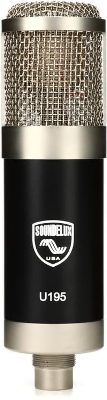
If it weren’t for the different company labels on the mics, I would easily confuse the Soundelux U195 for a Neumann U87.
These two mics, to my ears at least, are almost identical. They both have the same warm and smooth sound, with a frequency response that makes them amazing recording mics.
That doesn’t mean the U195 is just a simple copy-paste job, and it does have some significant differences. The first being that it is substantially heavier than a U87, almost a third as much.

Soundelux U195 - not quite as feature-rich but a capable U87 clone for the money!
But I think the biggest difference is in the U195’s features. The first thing I noticed was that the U195 doesn’t have a pattern selection switch, so you’re limited to using the mic in cardioid pattern. In place of this is a switch that allows you to toggle between between ‘fat’ and ‘normal’ modes.
In normal mode, the mic tightens up the low-end a bit and adds almost an airiness to the highs. Fat mode, on the other hand, balances and smooths out the overall sound.
I found that this makes the mic very well suited to a wide range of voices, and allows you to easily switch between the modes to either tighten up a bassier voice, or to add some more definition to a thinner voice.
This is such an incredibly convenient feature to have. Thanks to this, you don’t have to spend time replacing a mic if it isn’t working with someone’s voice or an amp. You just have to press a switch.
I feel like trading in a pattern switch for this fat-normal mode is well worth it, and this makes the U195 a more versatile mic than many others out there. And the fact that it’s so close to a U87 sound-wise makes it an easy pick for any studio.
The vocals captured by this mic sound full-bodied and are a breeze to mix. I found no harshness in the recorded vocals whatsoever. In my personal opinion, this mic can be placed in the same league as much pricier options like the Telefunken U47 (here's a similar list of U47 clones that I've also covered).
To eliminate any personal bias, I invited 4 friends to my studio and did a blind test between this mic and the original U87. Guess what, 3 of them preferred the sound of the U195!
The only real issue I have with the U195 is for the considerable amount of money that it costs, you don’t get a carrying case or even a shock mount.
PROS
CONS
Be Realistic about U87 Clones
Neumann mics are expensive because of their high manufacturing costs and standards to produce high quality mics, which has also led to their high value brand name.
This is where clones come in.
The most important thing to keep in mind when you’re buying a U87 clone is that that’s exactly what you’re getting: a clone.
Don’t expect them to sound exactly like a U87, because even the best ones will only be able to come so close.
The great thing is that they are easier to come by now and much more affordable than they’ve ever been. In fact, modeling solutions like the Townsend Labs Sphere L22 allow you to get the sounds of many more mics than just the U87 for a fraction of price.
Not All Clones are Made Equal
Even though they are designed to emulate the sound of the U87, the clones aren’t going to sound the same.
This basically comes down to how they are made and with what. Them being different isn’t a bad thing, and actually means that there are options available to you.
You might want the U87 sound, but one clone might be not close enough or another might add something extra like a bit more brightness or some extra feature that might appeal to you more than another clone.
Final Word
Unless you just buy a Neumann, you’re never going to get that exact sound, but if you’re looking to experience something as close to the real thing as possible, we have some of the best U87 clones ever made available right now.

Surprised you didn’t mention the BeesNeez U87i C. Everyone on gearspace rates that as the best 87 clone.
Thanks for this excellent article and alternative to the U87! Personally, I own the U87 clone kit from Mic & Mod, and I am fully satisfied with it.
With of course the K67 capsule. I tested a lot of clones and alternatives, including an excellent vintage U87 at Abbey Road Institute in Paris, which I had the chance to compare. And considering the price of the vintage, I prefer by far my clone lol, the sound was really not to blame compared to the real one.
Hello! Have you had a chance to try out the United Studio Technologies UT Twin87? Any thoughts? Thanks!!