
Neumann and Telefunken make some of the most iconic, almost legendary microphones on the market.
The problem is that these mics cost thousands of dollars, putting them out of reach of most producers, musicians, podcasters, and voice actors. Over the last few years, however, more and more companies have started making so-called ‘clones’ of these mics.
Top 3 - U47 Clones
Preview | Product | Price |
|---|---|---|
 | ||
 | ||
 |
These clones have made these high-quality mics more appealing and most importantly, more affordable to the average person. That is why today I want to present you with some of my top pics for some of the best U47 clones that you can buy right now.
5 Best U47 Clones on the Market
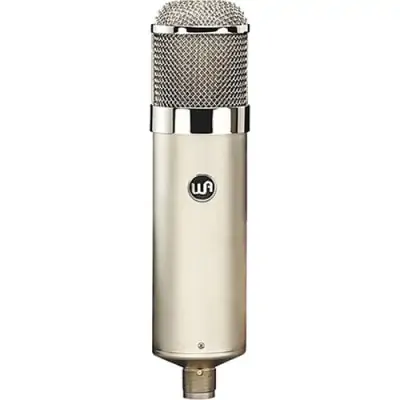
1. Warm Audio WA-47
Warm Audio is known for recreating vintage gears like compressors, EQs, and preamps to a nearly identical degree, and their mics are no exception.
This means that I expected the WA-47 to live up to that standard and be a standout U47 clone before I even started testing it, and I think I can confidently say that it does.
Mic Build
The first thing I noticed about the WA-47 after taking it out of the box was just how sturdy it felt. The shell is made from brass and plated with nickel. While it has some weight to it, I didn’t find the mic to be heavy.
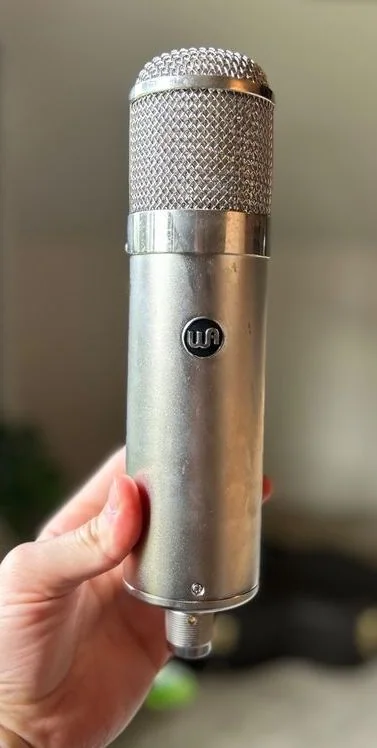
On the inside is a custom-made capsule that is tuned using two vintage U47’s. This is the heart of the mic and what really gives it the U47 sound that makes it so appealing.
I am actually quite surprised at how Warm Audio was able to keep up such a high build quality while keeping the mic’s cost so low. I guess it is just a testament to the dedication and skill of the Warm Audio engineers.
All of this excellent craftsmanship is kept in a nice wooden box. I always appreciate it when a mic comes with a nice, sturdy box for storage instead of a flimsy cardboard packaging.
The only thing that annoys me about the WA-47’s construction is the fact that the mic’s polar patterns are switched through an external power supply.
It is an IEC grounded PSU, but I still find it to be a bit inconvenient to tie the pattern switch to the PSU. So, you just have to sort of make sure nothing happens to the PSU.
The WA-47 in Action
Moving on to the real important business in the WA-47 - the sound. The best way I can describe the sound of the WA-47 is colorful and thick, almost syrup-like.
I find the thickness especially noticeable at the lower mid-range with a nice warmth as well. At certain high notes, the presence would also become slightly saturated.
In the figure-8 pattern, I found that the mic rejected the room sound quite well. This opens up an opportunity where you can record two vocalists at the same time on the mic.
This might seem like it will cause noise on the recordings, but I find that it actually creates a nice blend of the acoustics in the room.
The omni-directional pattern does drop the output of the mic a bit and I even noticed it picking up a bit of ambient noise, but having my vocalist sing closer to the mic fixed this issue easily.
Out of interest, I put the power supply in the room with the mic and switched between polar patterns while the mic was on. I can happily report that there were no noticeable or loud clicks when switching.
PROS
CONS
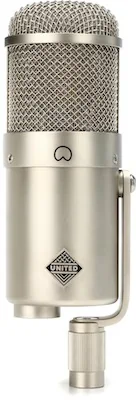
2. United Studio Technologies UT FET47
UT is a new company based in Baton Rouge, Louisiana that specializes in making exceptional recreations of vintage microphones. Their secret is using new old stock (NOS) and custom parts to recreate the vintage magic of some of the most sought-after microphones.
Lately, companies have faced the challenge of making clones of discontinued and incredibly expensive gear. Obtaining original parts that are still workable has been almost impossible. Even Moog experienced this challenge when trying to recreate their own classics, such as the Minimoog and Taurus synthesizers.
The capsule is one of the most essential components in any vintage microphone. In the case of the UT FET47, UT hired renowned designer Eric Heiserman to develop a new take on the classic K47 capsule, which is the capsule in the original U47s.
Mic Build
The UT clone of the U47FET is impressive and closely resembles the original. The nickel electroplated exterior gives the mic an old-school, vintage feel. The U47FET is a variation of the iconic U47 Tube microphone, which is one of the most famous vocal mics ever.
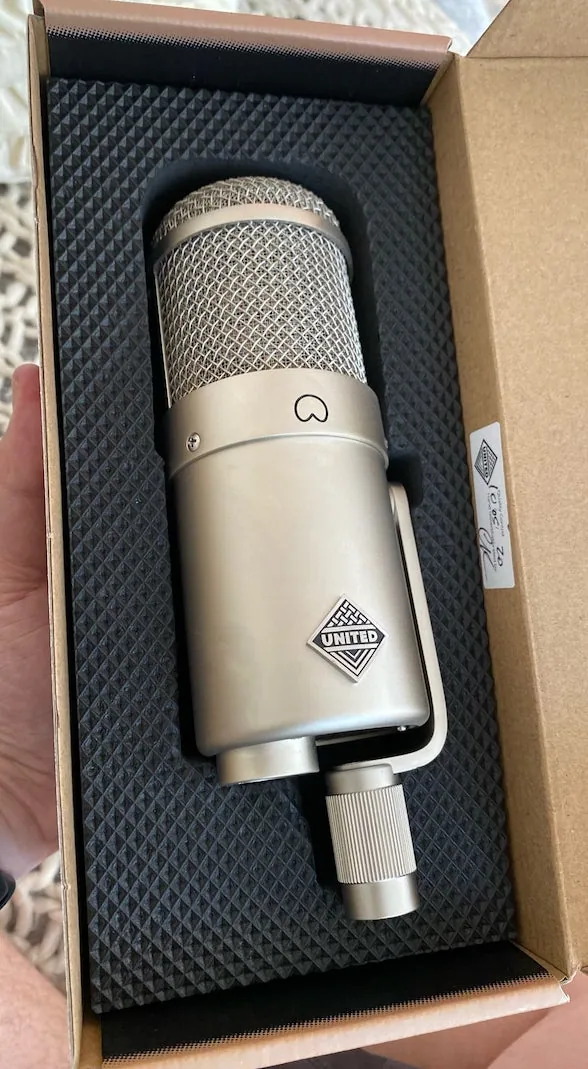
This mic is best suited for capturing low-end sounds, like kicks and bass. They've added a high-pass filter option to cut at 75 Hz, and a 10 dB pad that the original didn't have. The XLR cable connectors are 24K gold-plated, and it comes with a built-in, self-contained stand swivel mount adapter.
The only downside is the use of Cinemag transformers. It's a strange choice given that they're the same company that makes transformers for Warm Audio. Heiserman did a great job on the capsule, so it's unclear why they'd use a competitor's transformer company.
The UT FET47 in Action
So, I first tried out this microphone on my vintage Ludwig drum set in my studio. Let me tell you, I was super impressed by how it handled the low-end sounds, with a frequency response that ranged from 20 Hz to 20 kHz. Sometimes transformers can make the subharmonics sound less powerful, but I thought this microphone did a great job with the low end.
Next up, I used it on a vintage bass cabinet with a Minimoog running through it. Once again, it handled the high pressure levels and volume like a boss, which is something that not even a U 47 tube can do!
With its 137 DB of SPL handling, this microphone is a total winner when it comes to capturing all your low-end needs.
Out of curiosity, I decided to try it out as a vocal microphone, and it wasn't half bad. In fact, it might even be better than the original U 47 for vocals because the Heiserman capsule seems to be a bit more open and less dark than the U 47 without the tube option. Overall, I'd say this is a pretty awesome clone of the original FET microphone.
Now, here's something worth mentioning. After leaving the mic on for a few hours, I noticed a slight increase in the noise floor, which is a bit weird.
PROS
CONS
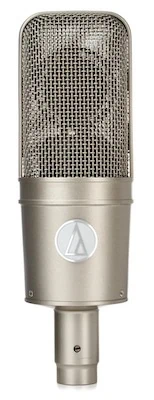
3. Audio-Technica AT4047/SV
Audio-Technica has been creating fantastic products at a great price lately. Although they have always been a quality brand, I feel like they have upped their game recently.
The AT4047/SV is possibly one of the best products they have ever created. What sets Audio-Technica apart is that they are not a hyped vintage remake company. Rather, they aim to bring back the important qualities of vintage gear without creating a Warm Audio/Behringer-type knock-off situation.
Build Quality
The AT4047 pays tribute to vintage Neumann microphones, as well as current models. To me, it actually looks more like a modern Neumann microphone, specifically the M149, than the U47. This is a good thing since the M149 is not only a beautiful microphone but also my favorite of all time.
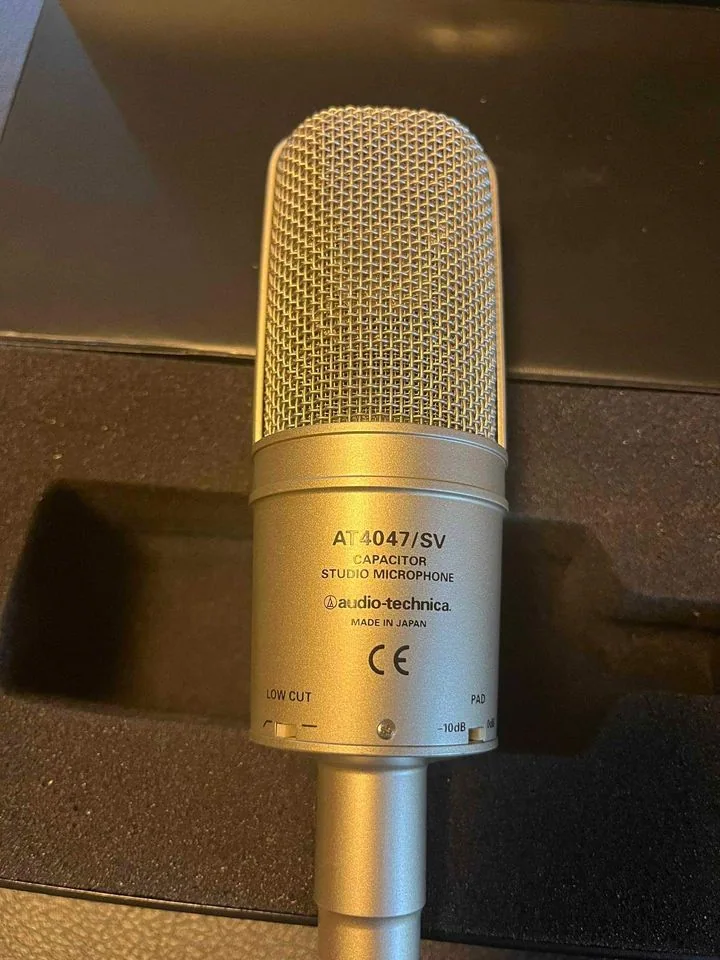
Like the U47FET, this microphone also uses a similar design coupled with proprietary transformers. According to the manual, these transformers are tuned to have a vintage sound, which I'm guessing means they will generally have a darker response.
The microphone also comes with a switchable 80 Hz high-pass filter and a 10 dB pad, which are useful for recording heavy kick drums without distortion.
The AT4047 in Action
Right off the bat, my first impression using this microphone on both kick and bass amps was that it had some warmth, probably thanks to the special transformer outputs. However, it also had a pretty clean, modern sound, which isn't too shabby.
Sometimes, when using vintage microphones in modern music, especially pop, I feel like you have to compensate with a lot of external EQ to bring out that crispiness that modern pop is known for. So, I'm stoked that this microphone actually has a little bit of a hybrid sound.
What's impressive is the sound pressure level that this microphone can handle, a whopping 149 dB, or 159 dB if you add the 10 dB pad.
Also, compared to the UT 47, I feel like this microphone has less self-noise. When using a mic with such high SPL, low noise is extremely important.
All in all, it's a pretty cool little microphone. If I had to find a fault with it, it would probably be that it lacks a little bit of character. Now, "character" is an overused word when describing music gear, but what I mean is that it's missing a combination of grit and color.
It's reminiscent of vintage Neumann microphones, but it's also a bit too modern, so it falls somewhere in between and feels like its own microphone, instead of a clone.
I guess that's what they might be going for, but I do wish it was a little bit closer to a vintage microphone than a modern one.
PROS
CONS
4. Universal Audio Sphere DLX

The Universal Audio Sphere DLX is a mic that I am very intrigued by. Instead of just recreating the internals of the U47 to emulate it, Universal Audio has gone the digital route.
This might be a bit of a red flag, I used to also be wary of digital emulation, but digital has gotten to the point where it’s almost identical to analog.
This is very evident in the Sphere L22, and Universal Audio is clearly confident since they have not only emulated the U47, but also about 19 other vintage and popular mics.
Mic Build
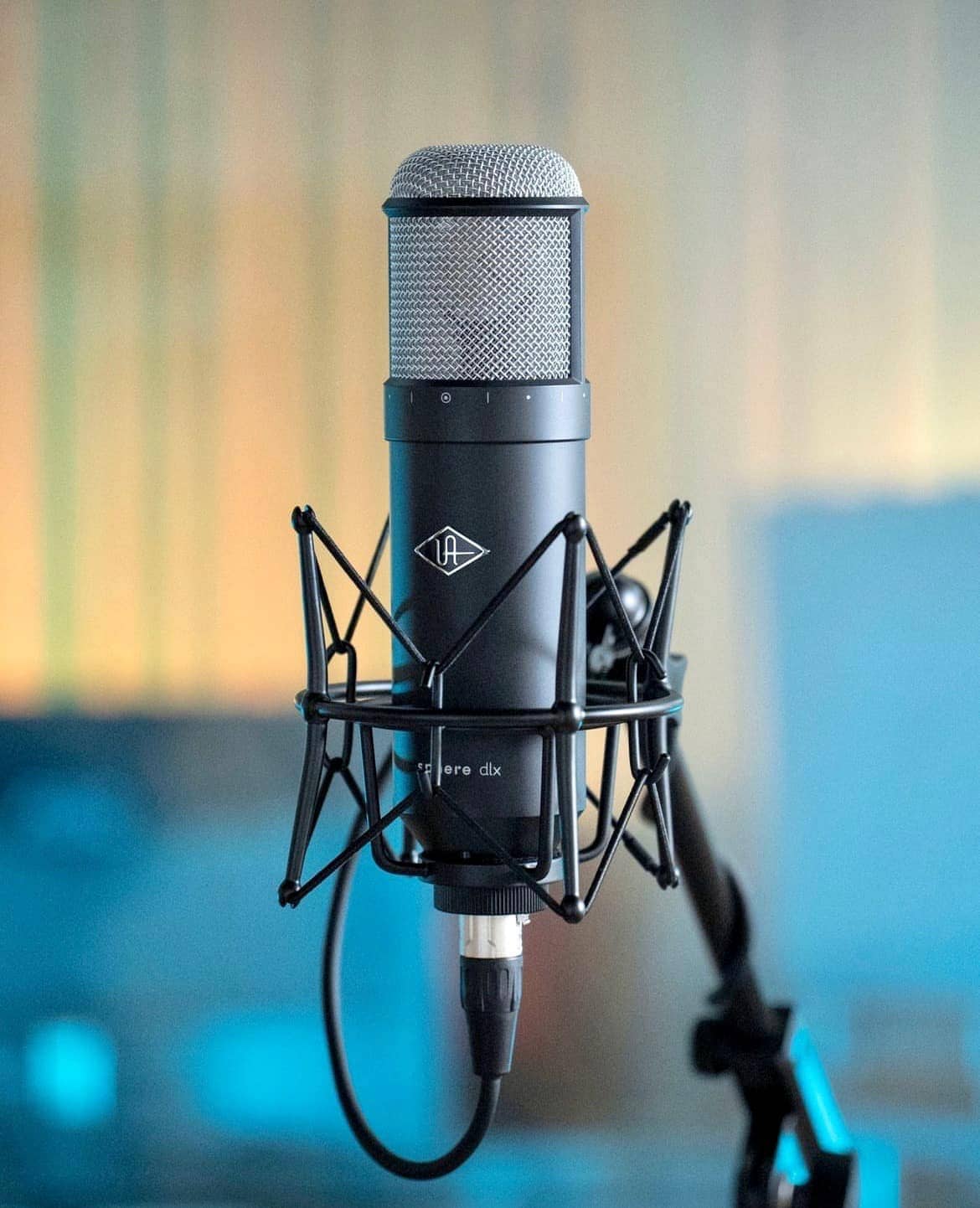
When first taking the Sphere out of the box, I wasn’t too surprised at its build quality. At this price point, a solid, sturdy shell is expected and that is what you get with the L22.
Universal Audio Sphere DLX
It isn’t really heavy either, at least I didn’t really notice it weighing more than I expected. I also really like the sleek black look that gives it a nice modern look. Four white LEDs also light up the head basket, which might put off vintage lovers, but I think it adds to the modern look.
The mic also comes with a very nice black case instead of a wooden box to store the mic and all of its accessories. This definitely scores some bonus points with me.
The Sphere L22 in Action
Since there are 20 presets, going through the Sphere’s performance and sound would take all day. So, instead, I will just quickly mention its neutral sound, and then go into what really makes the Sphere unique and a great choice.
On the neutral, or L22 preset, the mic has a very crisp and clear sound with a very flat frequency response. It’s a very solid sound, but I wouldn’t call it exceptional and I don’t find it particularly exciting.
But this is where the other presets come in. With 20 in total, a U47 among those, you’re really being spoiled for choice with the Sphere.
The presets are also controlled through the Sphere plugin, and I found it to be super easy to just switch between them if one wasn’t working or giving me the sound I was looking for.
You can also switch polar patterns and even tweak them through the plugin. I find that helps the Sphere’s modeling to be much more authentic to the real thing, rather than just being a close approximation.
You can really explore and experiment with the Sphere. I see it more as an all-in-one mic than a simple U47 clone.
This brings me to the big downside of the Sphere, which is that is that the mic is tied to the plugin. Meaning that you need the plugin to use the mic at all times. I would have much rather preferred the plugin to be a tool to use with the mic instead of a necessity.
PROS
CONS
5. Soundelux U195
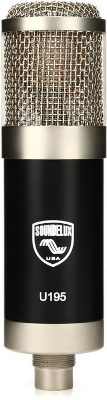
Some mics are a bit deceptive. On paper, they might seem either less or more than they are in reality. For me, the Soundelux U195 is a prime example of a mic that is much more than it first appears. At first glance, the U195 doesn’t even seem like a U47 clone.
Looking at the U195’s specifications, I noticed that the frequency range was only rated at 20Hz – 16 kHz. Typically, mics are rated at 20Hz – 20kHz. Its sensitivity is also slightly lower at 8mV/Pa.
But as I mentioned, I would soon discover that these specs aren’t telling the full story of the U195.
Mic Build
On the outside, the Soundelux U195 has the same solid build quality as any other mic in its class. I find the overall design of the mic quite simplistic and I suspect Soundelux was prioritizing function over form.

I don’t have any complaints about the design or build of the mic, but this is where I noticed the second sign that the U195 is different, and that is the controls on the mic.
The U195 doesn’t have a polar pattern switch, instead, it has a mode select between fat and normal modes. This does mean that you’re locked into a cardioid pattern.
I am not too fond of this tradeoff since there are situations where the cardioid pattern isn’t ideal and having the option to switch helps.
The U195 in Action
I don’t want it to sound like the lack of polar patterns is a deal-breaker. Having the mode switch instead is really the unique selling point of the U195 in my opinion.
In normal mode, the low-end gets tightened up a bit and the highs have this almost airiness to them. I figured that this mode works great for recording a guitar since it keeps the sound fairly natural.
On vocals, the normal mode also keeps your vocalist’s voice sounding natural, while cleaning up a voice if you don’t want it to have too much low end.
The fat mode, I find, balances out the overall sound, but also smooths out the low end a bit more. I like using the fat mode to add some more body and definition to a voice that is a bit thinner
The fat mode is ideal for situations where you want to add some extra oomph to a bassy-er voice and can really push it to sound even more powerful.
PROS
CONS
Tube vs. FET: Picking the Best U47 Clone
If you're not used to recording with vintage microphones, it can be confusing when the same model comes in two different variations: Tube and field-effect transistor (FET).
Both types have their good and bad points. It would be cool to have one of each, but these mics are so good that they can pretty much handle most recording needs.
For vocals, strings, and sources that have a lot of harmonics like piano, the tube mic option is your best bet. The way the tube enhances the overtones and harmonics is beautiful and natural. But, here's the catch: tube mics can't handle high sound pressure levels like FET mics, so they tend to distort much faster.
For instruments like drums, bass amps, and general low-mid-thick frequency recording, the FET mic option is the way to go. And, of course, for kick drum, it's a no-brainer, FET all the way.
Why Go With a U47 Clone?
I have seen a lot of people ask, “But why buy a cheap clone?” and that is a fair question. Honestly, if you have thousands of dollars to spend on a Neumann U47, you probably should.
The truth is that not everyone has that type of money, but they still want to have that same level of quality as the real deal. I think we have gotten to that point where clones are a much more viable and even appealing alternative.
The mics I spoke about in this article are a testament to how far companies have come, and to how close they have gotten to emulating mics with the quality and prestige of the U47.
I think there is still a bit of a stigma around the word ‘clone’, but I don’t think you should be put off by something that is labeled a clone.
The only thing I would suggest is doing enough research when you want to buy a clone, and if a product seems just a bit too good to be true, it probably is.
Final Thoughts
Just remember that they are still only emulating the original, and a U47 clone will probably never be an exact replacement. That doesn’t mean you should avoid them. I believe we should actually embrace them.
With that said, if you have been thinking of buying a U47 clone, I hope I have given you the confidence to buy one with my selection of some of the best U47 clones out there.

You’re not even going to mention Heisermann Audio?! Their clones are amazing.
Hi Dedrich –
Nice review. I have been eyeballing some U47 clones lately. The Townsend is an interesting creature, being a mic emulator/modeler. Not my cup of tea, most likely.
I’m not sure why the WA-47 received a ding for the polar pattern being switchable only on the PSU… this is not uncommon for tube rigs, and is certainly the case for Neumann. U47 and UM57 (the latter being Neumann-Gefell).
Lastly…. I’m curious about Terrapin Audio’s U47 clone (out of St Petersburg, Russia). They build it using a Thiersch M7 capsule. Have you run across this one?