

It's amazing how much power today's preamps can pack into such small packages. In the past, microphone preamps were bulky rack units filled with tubes, transistors, transformers, and circuitry, and they ran hot.
I appreciate that preamps are becoming more portable, and these newer models are not just inferior versions of vintage rack mounts, but rather next-generation designs that maintain high quality while being more affordable for the average musician, broadcaster, or performer.
Top 3 - Preamps for Shure SM7B
Preview | Product | Price |
|---|---|---|
 | ||
 | ||
 |
I have compiled a list of the best preamps for one of my favorite dynamic microphones, the Shure SM7B. Let's take a look!
6 Best Preamps for SM7B - Flawless Shure Companions!
1. sE Electronics DM1
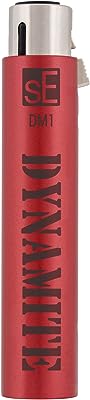
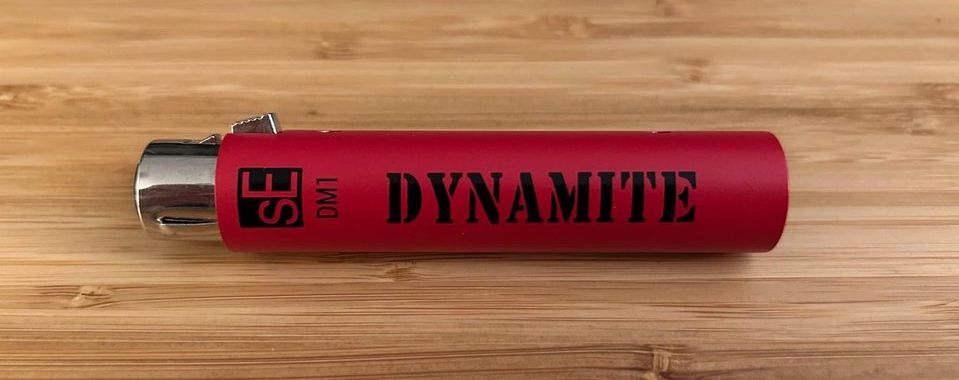
First up, we have the sE Electronics DM1 Dynamite - a preamp that really packs a punch! It provides a massive 28 dB of clean gain to boost your dynamic microphone signal. Say goodbye to noisy gear like compressors or active EQs.
sE Electronics DM1
And the best part? It's affordable without skimping on quality. sE Electronics has used high-performance Class A circuitry and hand-selected high-grade FETs.
This preamp offers top-notch sound quality with crystal-clear accuracy that picks up every sound with great detail. Plus, it hardly makes any noise itself, which is exactly what you want in a preamp.
It's great for small spaces or live broadcasts with lots of gadgets around because it effectively blocks out RF interference, buzz, and hum.
I've personally used the sE Electronics DM1 Dynamite for both a podcast setup with an SM7B and as the main studio vocal mic for a couple of hip-hop artists. It delivered excellent results.
On vocals, the high levels of boost really enhanced the power of the SM7B, and it delivered the low-end punch I really needed. Good, clean power also helps transient response, and with a dynamic mic, that's key. Plus, its transformerless design ensures that the sound remains true to life.
The only downside? The intense red-orange color might be a bit too much for some. While it can make it stand out, it might look a bit odd if you have multiple microphones with these preamps on stage or in a broadcast setup.
But overall, this preamp is a fantastic choice!
2. Cloud Microphones Cloudlifter CL-1
Nowadays, many preamps are manufactured in China, but not the Cloudlifter CL-1 by Cloud Microphones. This product is made right here in Tucson, Arizona, which is significant because the US has stringent quality control standards.
As a result, you can be confident that you're receiving the quality you paid for, you know what I mean?
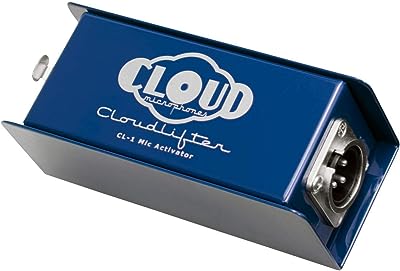
When it comes to the Cloudlifter, it features a sleek blue casing and utilizes top-of-the-line JFET circuitry. JFET is a sophisticated semiconductor that maintains your microphone's sound quality and shields it from interference and noise. It's professional-grade technology.
And get this – that circuitry makes it perfect for running long XLR cables. So if you're performing on a huge stage, you can stash it offstage and run some super-long cables without losing any signal strength or getting any noise.
Even with all that, you still get a nice 25 dB power boost to your mic. So you can use it with a Shure SM7B or some ribbon mics in the studio or on stage.
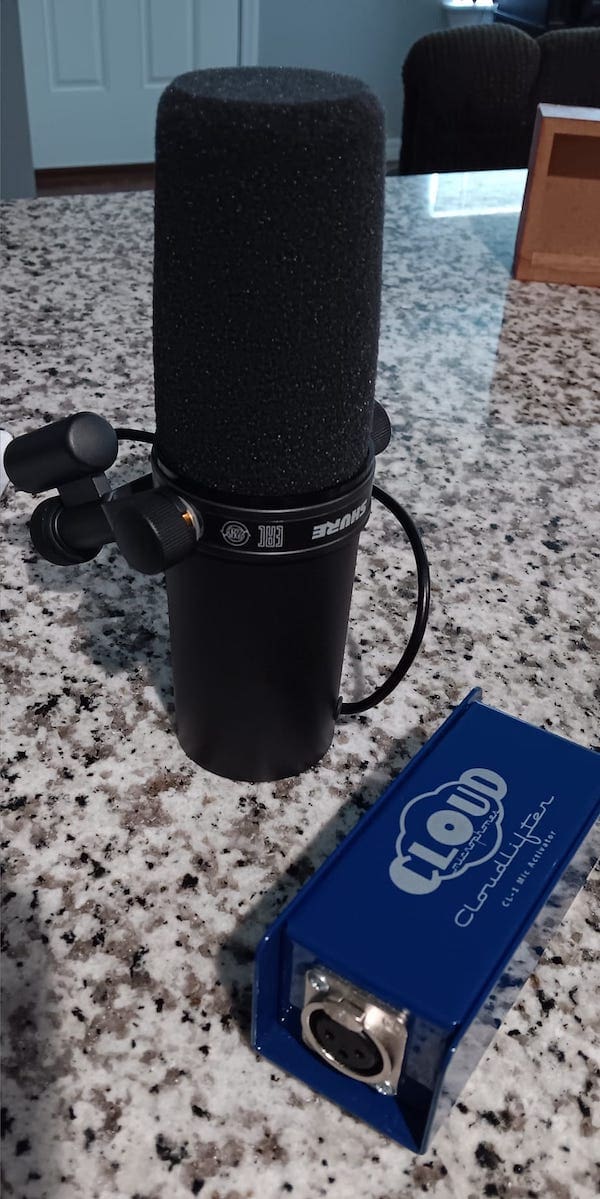
Cloudlifter CL-1 with Shure SM7B - the well-known and admired combination!
But wait, there's more! The sound of the CL-1 is even clearer than most mic activators. It's low-key and gives you a nice clean high-end without any hiss.
That's thanks to the ultra-transparent Class A circuitry. So you can keep your sound crystal clear, no matter what.
The only thing is, the rubber feet on the bottom were a bit loose and not lined up properly. It could just be my unit, but it made noise every time I moved it or adjusted the cable.
It's not a huge deal, but it can be picked up in the room with the mic, which is kind of a bummer.
3. Triton Audio FetHead
The Triton Audio FetHead has a vintage Neumann-inspired design with a diamond logo that gives it a cool Berlin industrial vibe. Its in-line mic preamp uses top-quality Class A FET technology to provide a clean boost and reject interference and hum.
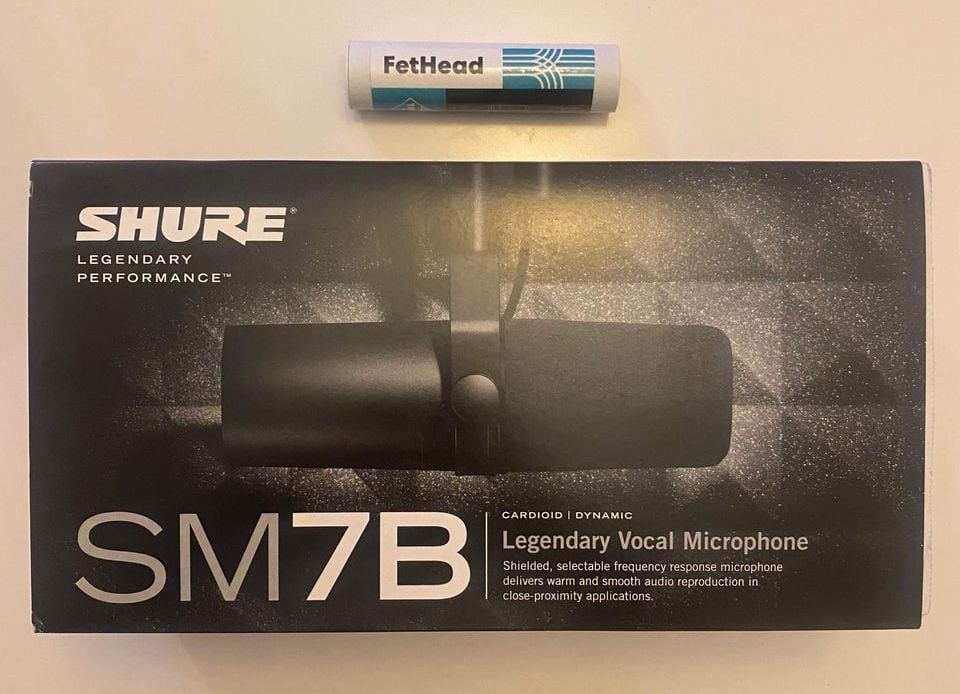
Triton Audio FetHead with Shure SM7B
I recently got my hands on the FetHead and tried it out with my SM7B mic. The results were pretty impressive. This preamp fit perfectly with my mic and even had some extra features I didn't expect.
All you have to do is insert it between the mic and cable, and you're good to go. The FetHead also allows you to connect and extend XLR cables.
With the Class A circuitry and FET (Field Effect Transistors), this preamp can run up to 50 ft long XLR cables without any issues. It has a 27 dB boost, which is less than the sE Electronics preamp but more than the Cloudlifter.
My studio partner, who is an engineer, uses this preamp to protect his ribbon mics from accidental damage caused by phantom power. That would be a total bummer to mistakenly ruin an expensive Royer R-121 or vintage ribbon mic, so it's definitely a smart investment.
One thing to keep in mind is that while Class A FET preamps usually have a neutral sound, I noticed a bit of signal thinning when I used this preamp compared to other brands. It's not very noticeable in live situations, but as a mix engineer, I always pick up on frequency changes.
The only downside to the design is that the diamond logo might break or come loose if you drop the preamp, even though it looks pretty sturdy.
4. Klark Teknik MIC BOOSTER CT 1
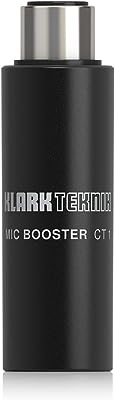
Behringer-owned brands seem to dominate the market for microphones and performance equipment these days. The Klark Teknik Mic Booster CT 1 is a small device that provides 25dB of clean gain for your SM7B and the option to use a ribbon mic in the studio. Not bad for a microdevice.
This microphone doesn't have the usual class-A circuitry you'd expect from other preamps. Perhaps the engineers at Klark Teknik decided to skip the Class A circuitry on purpose to achieve a specific sound they wanted, or maybe because this is a micro preamp, it works differently.
Either way, the mic still sounds good and is a worthy new addition to Behringer's lineup.
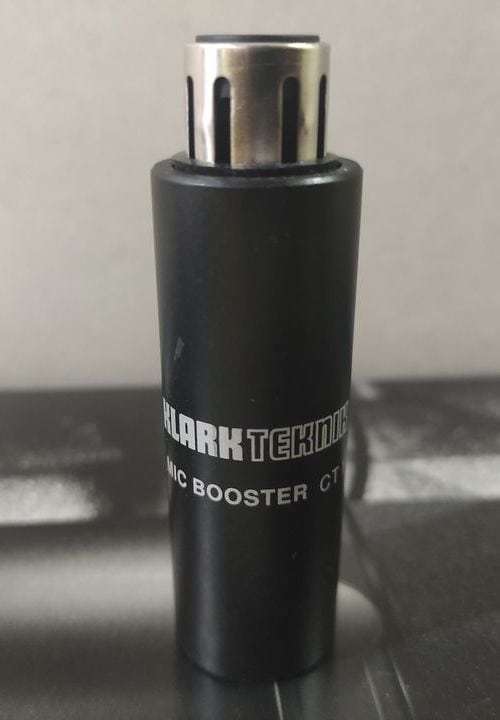
Klark Teknik MIC BOOSTER CT 1
This mic is designed and engineered in the UK but still built in China. During the time that I used it in a couple of sessions, I never noticed any RF interference or noise getting into the signal. The sound is transparent as expected and sounds excellent on the SM7B.
However, when I tried a ribbon mic in my studio on an acoustic guitar, it sounded a bit duller than usual. This is a natural occurrence for ribbon mics, but when I compared it to another preamp, I didn't notice as much of a cut. It's not a big issue, just worth noting.
There was one instance where the catch mechanism got stuck for a second when I switched mics, and I couldn't put in a new mic cable.
I eventually took a small micro screwdriver and just popped it out slightly, but it makes me feel like that could happen often, which might be a flaw from having to put the small catch on such a tiny compact cylinder.
This is definitely a red flag for anyone intending to use this live. Maybe another sturdier pre would be a safer choice.
5. TONOR TA20
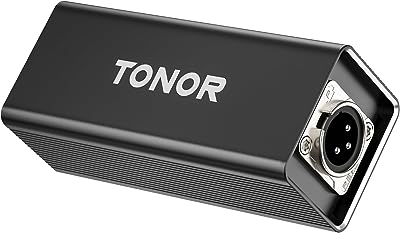
I first heard about TONOR when I started doing live shows. I noticed that some venues were using these preamps and I really liked their modern, sleek design.
The TA20 preamp has TONOR's new Pure Sound technology, which I definitely think is of high quality after using it for a few shows. This new circuitry design reduces microphone noise, provides a high signal-to-noise ratio, and shields against RF interference effectively.
It's no surprise that many LA venues trust this preamp for singers. Additionally, the XLR plug has an easy safety lock that clicks into place so it won't unplug accidentally. This could be a safer bet than the CT 1.
All these little details make me trust TONOR more as a company. I've only used this preamp live, but the new design technology held up well, giving me a clear and quiet signal.
According to the specs, this company claims it has 97% noise reduction and less distortion than other preamps in the same class.
I've played around with the SM7B and a few other in-line preamps, both live and in the studio, and they didn't hold a candle to this one, so maybe TONOR's onto something.
They even threw in a blue light that turns on when you're using phantom power, which is helpful if you're using a ribbon mic and need to know if the phantom power was left on by accident.
The only downside to this preamp is that it only boosts the signal by 20 dB, which is kind of low compared to other brands that go up to 28 dB. I'd rather have as much juice as I can get from a preamp, so this could be a dealbreaker even though it sounds great.
6. Rodyweil RO03
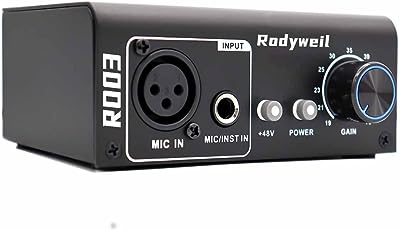
The Rodyweil RO03 is a much more elaborate preamp. This one is more like an interface with a gain knob, external power knob, 48 V phantom power, and both XLR and instrument inputs on the front panel.
So, I would say this is less of a live performance preamp and more of a studio-dedicated mic preamp. I think this could be a fantastic podcast and broadcast mic preamp, and that’s precisely how I used it on this test.
I noticed that it has an insane boost according to the specs, up to 75 dB of clean and transparent gain.
This preamp provides gain levels comparable to legendary professional brands like Avalon and Manley, which is impressive considering its price. When I used the quarter-inch input and turned it all the way up while lowering my monitors, the signal was relatively quiet despite the significant boost.
This makes it an ideal preamp for home recording and live streaming, as it allows for a clean signal at lower decibel levels, which is particularly useful in small or noisy rooms with lots of computer equipment and fans.
Not all things were perfect, though. I honestly didn’t think it sounded neutral. I thought it sounded hyped. I know the sound of my voice through an SM7B well because I use it for podcasting and interviews a lot, and I had never noticed so much high end on my SM7B.
Now, there are some people that might find it an improvement if you like really crisp mics like an AKG. I just never like hyped monitors or studio gear in general.
Choosing the Best Preamp for the SM7B
There is a common misconception that preamps are only necessary for studio condenser microphones. However, dynamic microphones can also greatly benefit from the added power provided by a quality preamp.
While the Shure SM7B is a reliable and clean microphone, it lacks power on its own. I'm not referring to phantom power – I'm talking about the boost that can elevate the performance of a dynamic mic.
Unlike some valve microphones that can sound overly sensitive and aggressive once phantom power is applied, the SM7B benefits greatly from being paired with the right preamp.
The additional boost provided by the preamp helps to bring out the nuances of the microphone, allowing you to fully appreciate its capabilities.
When there are so many preamps that don’t differ wildly from each other, it becomes a question of personal needs.
Here are a few factors that might help you in your decision-making process.
Signal Boost and Circuitry
Alright, so when we talk about preamps, boost is a big deal. Personally, I think the DM1 and Rodyweil are both pretty solid options, and it's tough to pick just one.
But you also have to keep in mind the circuitry, which can affect how the boost affects your mic. That's why the DM1 might have a bit of an edge with its Class A FET circuitry.
Here's something else: you have to apply that boost to a clean signal if you want it to really make a difference. If your signal is already noisy or full of RF interference, boosting it will just make things worse.
So make sure you're starting with a clean signal before you try to boost it, or you'll end up with a bigger mess on your hands.
Sound
Many preamp makers claim that their products can boost your sound with pure, natural, and clear audio. However, after trying them out myself, I'm not entirely convinced that this is always the case.
As someone who frequently uses the SM7B microphone, I am well acquainted with what it sounds like in its natural, transparent state. If I were to show you clips of how different preamps affect the sound, you would hear differences from brand to brand.
This is not to say that a colored sound is always undesirable. It simply means that it is not transparent. If you desire that clear sound, I recommend using preamps with high-quality technology and Class A JFET or FET transistors.
One preamp that features a nice JFET path and brings new levels of neutral transparency is the Cloudlifter CL-1. If you're looking for purity in sound, that might be the way to go.
Size
For this round-up, I mainly selected compact-sized preamps because they are more versatile when used with a microphone like the SM7B.
The SM7B is versatile and can be used live, in a vocal booth, or in a podcast or broadcast situation (I've seen people using it for even ASMR!), so it doesn't need much to sound great. That's why I opted for simpler choices.
It is important to consider whether you will be running long XLR cables to and from the microphone and if you'll be using it in situations where the preamp might get knocked around a lot, such as during a live tour.
In that case, the enclosure and casing of the preamp are crucial, choosing a robust metal chassis like the CL-1 or the TA20 may be more suitable.
Additionally, how a preamp looks and fits in a setup is also important. I have witnessed podcast interviews that have multiple microphones all running short cables to boxy preamps sitting on the same desk as the mics.
This not only looks unprofessional but also leads to clutter and could create static and hum from proximity.
I always run longer cables when multiple mics are close together, and then I couple them with these kinds of preamps before they hit the interface.
For the podcast setup I mentioned above, the smaller the in-line preamp, the better. This is where the Klark Teknik CT 1 excels.
Final Thoughts
In my recording studio, I am fortunate to have a wonderful collection of vintage preamps from Neve and Manley. These preamps are ideal for recording vocals in a controlled vocal booth, ensuring the best sound quality for albums.
However, when it comes to broadcasting, podcasting, or using my SM7B microphone, these preamps may not be the best option. Interestingly, using complex preamps with compressors, equalizers, and tubes could potentially make the SM7B sound worse than if it were paired with a simpler setup.
The SM7B's signal is practically perfect in its clarity, and it benefits from a straightforward boost. Therefore, I believe that a simple mic activator or preamp could be the perfect combination to achieve the best sound quality.
As one of my Berklee professors used to say, "When you have a great steak, don't ruin it with a bunch of sauce!"
