
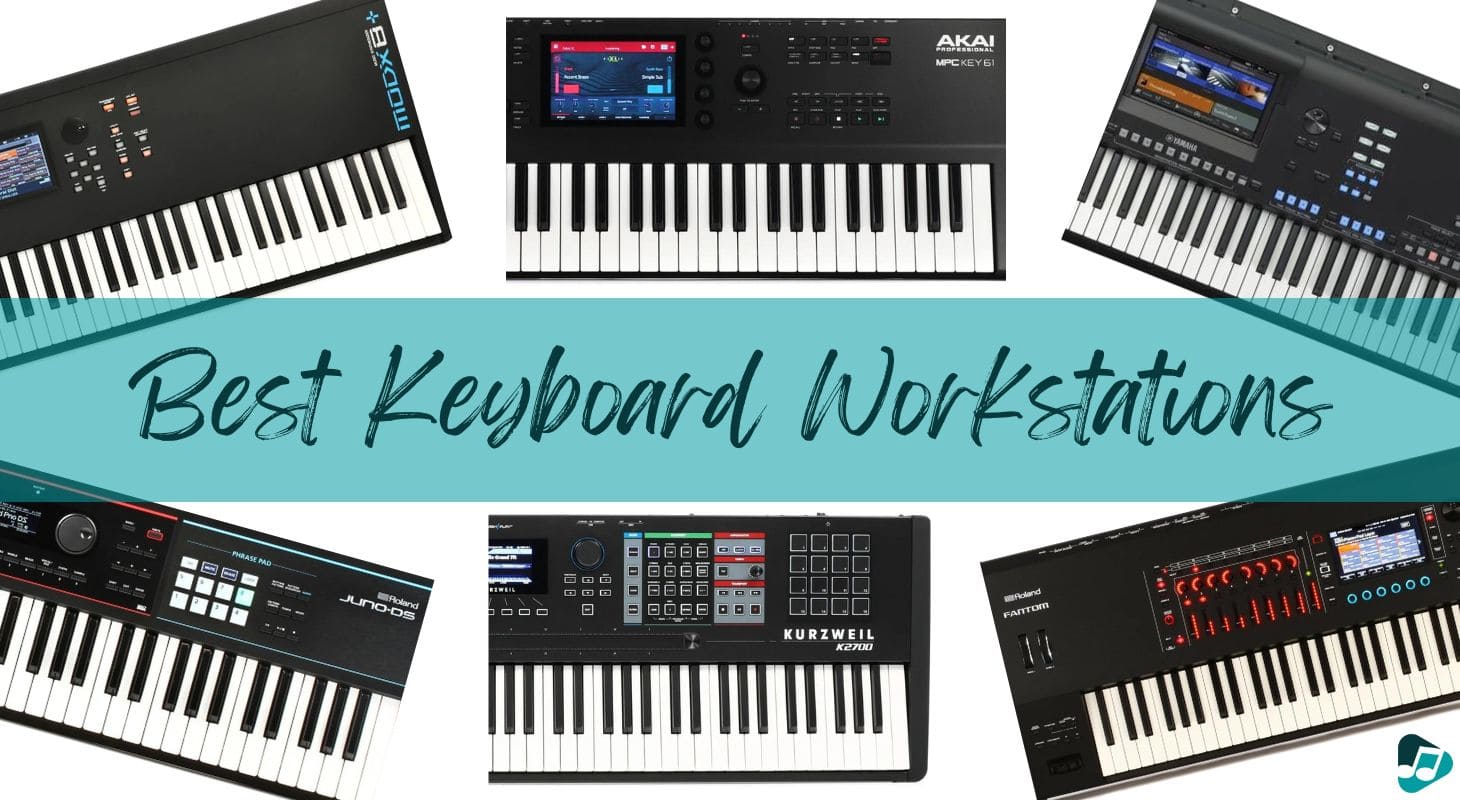
We live in a time where technology has allowed us to simplify our music-making setups. We can now record an entire album with nothing more than a laptop, mini controller, and microphone. This has made it possible to have a recording studio in our backpacks.
Why then are manufacturers still making these heavy, non-portable, and expensive workstations? Who even uses those things?!
The answer is "serious musicians." These musicians prioritize their skills and don't want any distractions. They prefer a powerful, standalone instrument - just like a pianist playing a grand piano.
While it may seem like a step back, the limitations of these workstations allow for a more focused and uninterrupted performance, which is crucial, especially for live performances. Additionally, dedicated piano players who practice for hours every day appreciate having a powerful yet standalone instrument to play on.
Keyboard workstations today are like the best of both worlds! They've got the power of a laptop, but the simplicity of a standalone instrument.
I've rounded up some of the best ones out there, so let's dive in!
The 8 Best Keyboard Workstations
1. Kurzweil K2700
Kurzweil has long been a legend in the synth game. Ray Kurzweil blew everyone's mind when he debuted the K250 back in the early '80s, pretty much ushering in the idea of the standalone workstation.
The K2700 is a huge upgrade, of course, but still retains a lot of the synth DNA that made Kurzweil famous in the first place: its incredible sound-sculpting engine. You could get super creative and super weird on those old K series, and that hasn't changed.
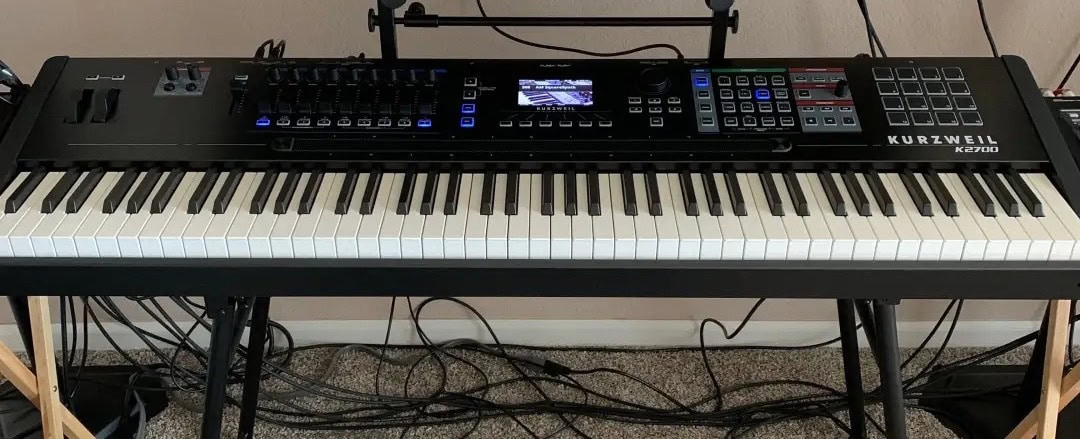
You get all the trimmings of a major workstation here: 88 weighted piano-style keys, over 8GB of memory for both user and factory samples, 16 Pad matrix, and a 16-track sequencer with an arpeggiator.
That's all great, but what I really found unique is that it has a full FM synth included, and it has the ability to import the '80s and '90s original patches in their original format! I love the old weird DX7-type sound with the detuned bell-like vibes.
Additionally, I loved the fact that it has an old-school CS80-type ribbon controller to really go to town on the detuning and live pitch-bending.
They also added a technology called FlashPlay, which instantly loads sounds with no lag time. Obviously, it's huge for live players who need to change their whole palette from song to song.
The only disappointing feature of this keyboard was its Hammond B3 emulation. I found it doesn't come close to the realism of some of the VSTs made by Arturia and UVI.
2. Roland FANTOM-8
When I first played on a Roland FANTOM, it only took about 5 seconds to realize that it was made for piano players. The feel is incredible, and it's unbelievably close to playing a real piano.
When I checked out the specs, I saw that they used their top-of-the-line PHA 50 real wood hammer action design. When you combine that with their onboard V-Piano technology for some super realistic pianos, you know they're going all out - here, take my Amex.
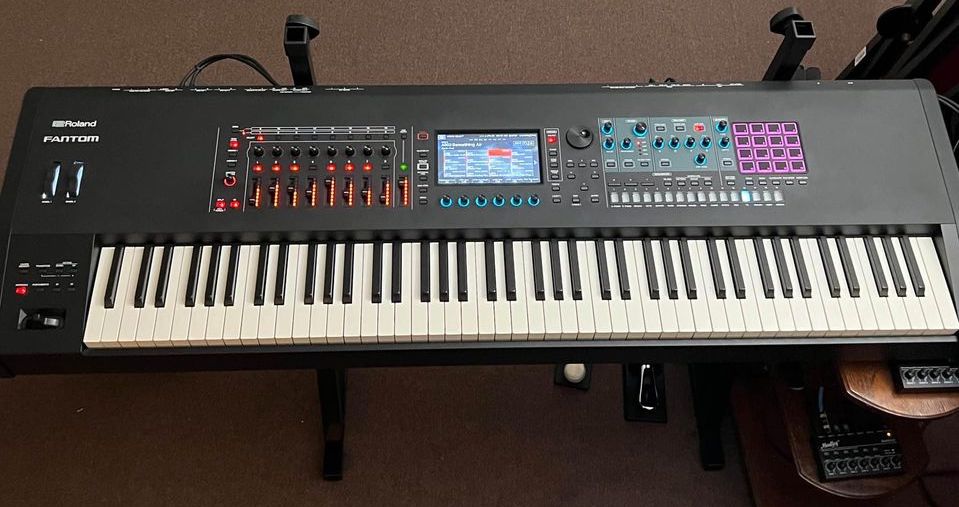
It has so many features, like high-resolution WAV sampling and recording, a 16-pad matrix for drums, and over 100 really high-end, plugin-level effects.
But what really blew me away was the added CV and gate connectivity to sync old analog drum machines and synths, as well as modular gear. That was totally unexpected and very forward-thinking.
Another feature that was really well-implemented was the USB connectivity with DAWs and VSTs. You can sequence and record both internal and external sounds together, which is pretty amazing. Plus, it even allows for a USB storage flash drive to load your own samples, so you're hitting full recording studio capabilities.
This gets especially fun loading some sick, thick drum sounds onto the pads.
The only weak point, at least to my ears, was the filters. I'm guessing that in order to rival Sequential and other analog companies, they added several analog filters. But to my ears, they just don't sound as warm as I'd like.
3. Yamaha PSR-SX920
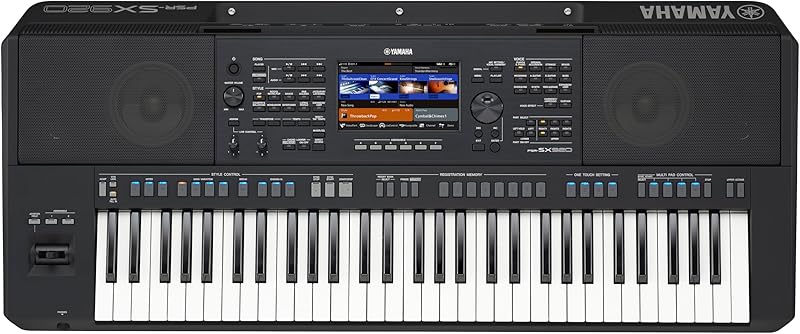
Yamaha is one of those legendary companies that does everything at a pro level. Their arrangers are no exception. I used to own the predecessor to this keyboard, the PSR-SX900, and I was always very impressed by the overall quality and flexibility of that keyboard, but the PSR-SX920 upgrade is absolutely worth it.
One of the most obvious reasons to upgrade from the previous version, and to make this your main arranger in general, is the vastly better sound quality of the internal sounds.
While its predecessor had many of the sounds of Yamaha's flagship workstation, the Genos One, this one takes the DNA of the Genos 2, which is mind-blowingly good.
The realism, especially of the plucked instruments like guitars, dobros, and even the piano sounds, is truly spectacular. As you can see from the pictures, this is also an arranger that has built-in speakers, as a good arranger should.
These aren't ordinary beginner keyboard speakers. The speakers have a technology called Yamaha Expansive Sound Field, which gives you a more immersive, almost surround-like quality. That's probably one of the reasons why the internal sounds sound even more glorious on this version.
As a songwriter, what I love about arrangers is the immediacy of getting ideas down. Not everyone is a producer. Not everyone wants to be one. Sometimes even producers like myself just want to get a beat going, some chords going, add maybe a little simple bass, and then start recording some vocal ideas.
As any of you know, it's not always ideal to just record your vocal ideas into your iPhone's voice memos. It sounds pretty terrible, and it's sometimes hard to recall (unless you name it on the spot) what vocal went with what idea.
This arranger has pristine input so that you can record both vocals and guitar into your arrangements. You can really capture everything in one place so fast. And honestly, you could probably use some of these internal sounds in your final mix, even if you're going to a bigger professional studio. They're just that good.
4. Korg Nautilus 88
Evolving the already great KRONOS line of workstations, the Korg Nautilus packs an incredible nine synth engines into one instrument! It also includes incredible emulations of legendary Korg vintage analogs such as the Polysix, MS-20, and even the venerable digital M1.
One of the features in which it excels is the onboard electric pianos. Upon further research, I realized it includes both an updated version of the EP-1 from the Kronos as well as Korg's organ emulation of their own CX-3 from the late 70s.
I always like it when a company emulates its own keyboards. They tend to have proprietary schematics that lead to a much more precise capture, much like Universal Audio did with their LA-2A and 1176 compressors.
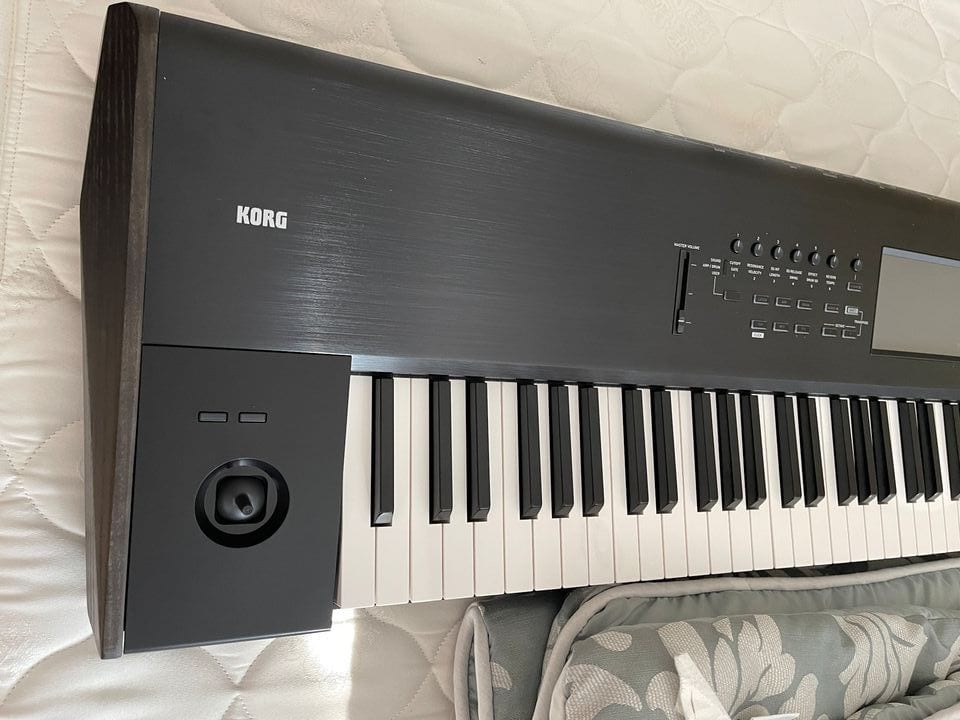
Another extraordinary feature is the feel of the 88-key keyboard. It features Korg's RH-3 real hammer action, which is on par with Roland's exquisite PHA 50 hammer-weighted keyboard.
Unfortunately, the one weak spot I found was the actual pianos included as factory sounds. I found them to be a bit too thin and one-dimensional. Maybe it's because they were recorded in a dry environment, but they lack the realism of other workstations and especially high-end libraries like Spitfire Audio's Hans Zimmer Piano.
It's a bummer considering the great feel, but at least you have the great electric pianos.
That said, you still have a 60GB SSD to load up your samples, as well as over 2500 presets and 197 effects. Add to that 5 vintage-style filters, and you're in great shape.
5. Yamaha MODX8+
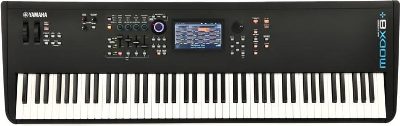
The Yamaha Montage series is pretty popular among musicians who play live. It's often used on stage during SNL and concerts by big stars.
The MODX8+ is a simpler version of the Montage. It doesn't have as many knobs and buttons on the front, but it still has a lot of cool features.
It has a bigger screen, which is always nice for workstations. Plus, it has more surface area, which could come in handy for setting up a laptop or a chain of pedals during live performances.
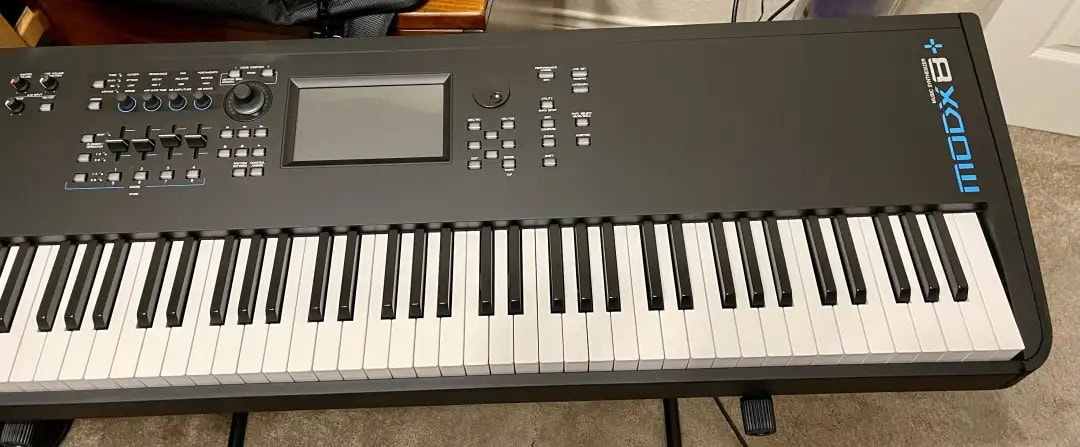
When it comes to an 88-key controller, the feel of the action is key. Yamaha's unique GHS Hammer Action Effect does a great job of recreating the weight of the keys of a grand piano more effectively. The lower keys are heavier than the upper keys, which mimics the real resistance of a piano.
Aside from the awesome sound library, the FM synthesizer is a major standout. Yamaha brought in some of their DX7 legacy to this one.
This keyboard has two super cool features: the Superknob and Motion Sequence Technology. The Superknob lets you control many synth settings with just one knob, and the Motion Sequence Technology creates rhythmic patterns like a bionic LFO.
If you play live, you'll dig the 256-voice polyphony and 4-part switching performances. You can hold a chord at the end of one song and switch all your sounds for the next one without any interruptions.
One issue I found was the unbalanced outputs. The reason might be that this is more for live use; however, it seems like a step down in quality.
6. AKAI Professional MPC Key 61
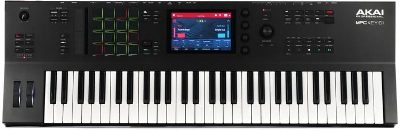
This keyboard is exactly what you'd expect from the name. It's basically the marriage of an MPC Live standalone unit and a controller.
The MPC Key is a 61-note semi-weighted keyboard instead of the full piano vibe of some of the others mentioned. It makes sense considering that the focus of this will be more on the 16th note legit MPC pad matrix with some keys to add overdubs and perhaps perform.
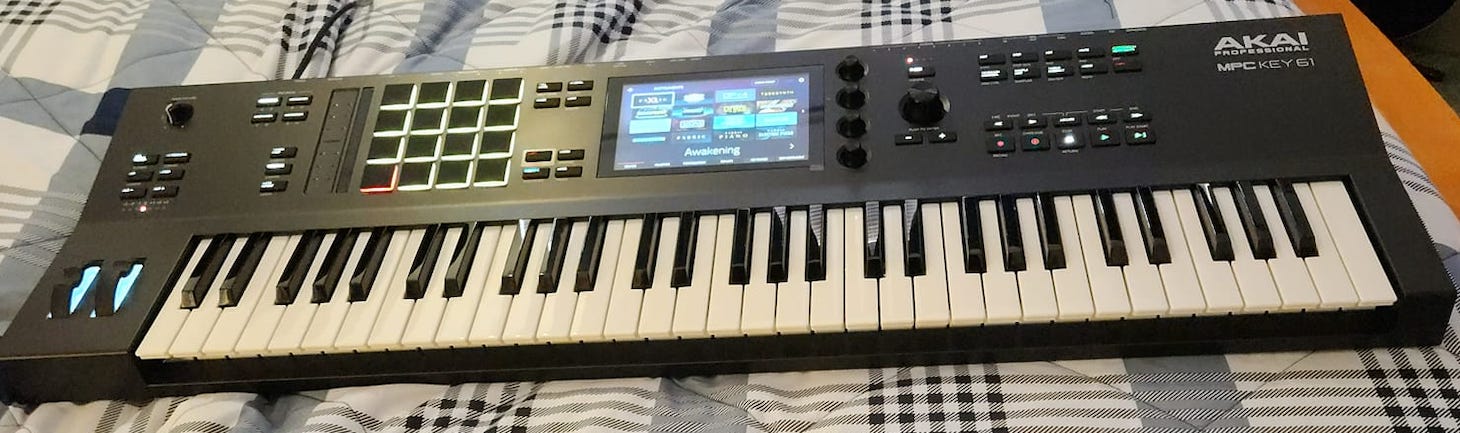
Pardon the lousy placement!
I think the fact that you have a standalone MPC sequencer with an added 8-track audio recorder, pads, and a keyboard is already worth the unit.
One feature I found delightful is that they added 8 CV/Gate outputs for your modular and vintage gear. That's super cool, and it's actually a feature from their flagship MPC X. No skimping on this one.
MPC storage is always important, so the fact that you can add your own SSD on top of the generous 16GB flash memory is awesome. I have a huge 42GB library of samples for my MPC, so this is a crucial feature. Especially since this unit allows 32-bit/96K samples which devour your memory fast.
The other feature I love is the addition of Ableton Link support. Now that's forward-thinking! I know the MPC Live II has it, but on a standalone keyboard, that's impressive.
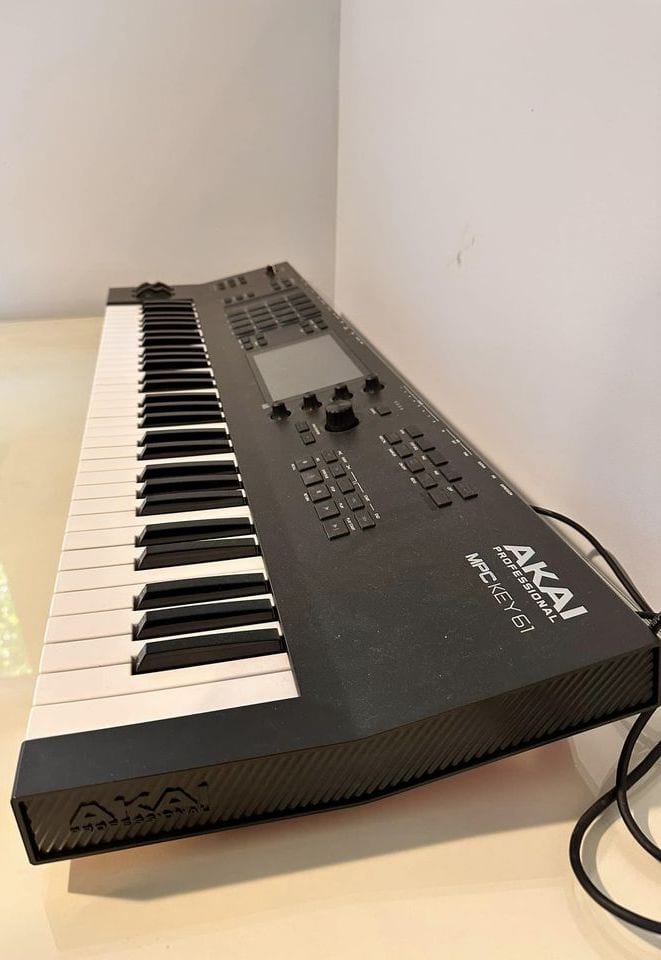
A closer look!
The one bummer I found was the lack of sliders. It has a touch strip, but it would have been amazing to have hands-on control of volumes and parameters on proper sliders. Maybe on the next edition.
7. Roland JUNO-D6
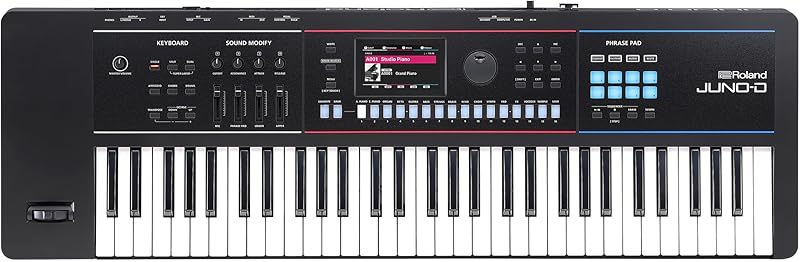
Let's start by saying that even though the Juno-D6 carries the Juno name, it has nothing in common with the vintage synth line that Roland pioneered under the Juno name. That said, it has some incredible sounds in its factory banks if you're looking for that brassy, Roland-type vintage sound.
The strength of this arranger, however, is that it incorporates many of the best parts from Roland production units that came before. It has a phrase sampler very much like the old SP-808 and newer SP-404 Mark II.
It also has that classic vocoder sound from the VP-330, Roland Cloud access, and all the good stuff you've come to expect from Roland workstations.
All in all, that's what makes this one of my favorite arrangers to use as a production machine when I'm working with artists in the studio. Though we all end up in the DAW at some point (whether it's Ableton, Logic, or Pro Tools), you're probably going to end up recording the final version in one of those. But coming up with ideas without being glued to a computer is very important to me.
I know many of you are songwriters and producers and even artists yourselves, and you've been in situations where there's a spark and you just want to get ideas down quickly. I've had all kinds of issues with DAWs before where they crash at the wrong moment, lose the files you recorded, take a long time to call up a preset, or sometimes you just get overwhelmed with so many choices.
That's where arrangers like the Juno-D6 really shine. They let you program modern-sounding tracks incredibly quickly. Instead of having to call up a sampler in Ableton and then choose the right Splice sound or loop to start looping, I can start throwing down ideas on the phrase sampler while the artist is singing.
It also comes with over 3,800 new and better sounds than its previous version, so you can quickly call up categories and just start going for it. In fact, I don't even consider this to be so much an arranger or a workstation, I think it's an incredible synth in its own right.
Sometimes I just perform some of the sounds from this keyboard live into the final session because they sound better than many of my soft synths.
So overall, I think this new streamlined upgrade of its previous version is worth it because they took everything good and made it better. That includes one of the best parts: USB-C and mobile battery support, so you can truly record ideas anywhere you want.
8. Yamaha Genos2
This keyboard is the most expensive in the group, but it's worth it. It has 76 semi-weighted FSX keys, which is different from the MODX8 and PSRSX900 and makes it stand out.
The Genos2 is an arranger workstation, so it's perfect for songwriters who want to create music quickly without spending time sequencing. It has 800 accompaniment styles to choose from.
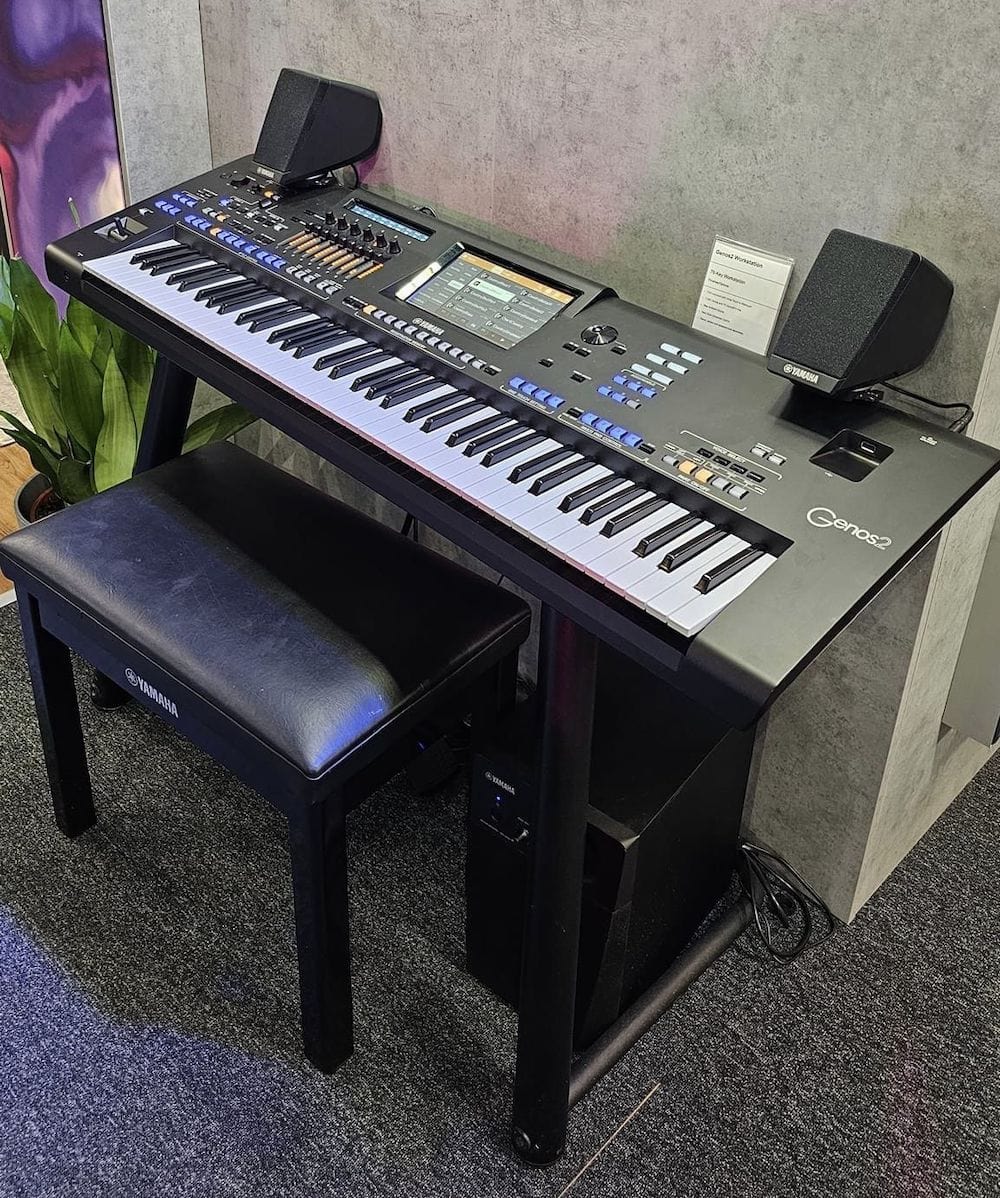
Arranger workstations are ideal for singer-songwriters and practice, and this one has quality vocal effects and a great high-end mic input with phantom power for recording with nice condenser mics.
The extra ¼" output in the back is perfect for monitoring and the 9" LCD color touchscreen display is amazing – it's like the Tesla of workstations!
The sound library is impressive and includes the CFX and C7 piano library, which is beautiful. I once played a Yamaha CFX Grand at Skywalker Ranch and was blown away.
My one complaint is that they didn't make this with 88 weighted keys. Semi-weighted keys are a waste for such high-quality pianos.
Choosing the Right Keyboard Workstation
The workstations we've been researching all have impressive features. They are all professional, high-quality machines. So, how do we make a choice?
If price isn't a factor, what is it that really tips the scale one way or the other? I think it's a combination of factors, but here are some good starting points.
Purpose
When you're thinking about why you need an all-in-one workstation, the biggest factor to consider is what you want to use it for.
If you're looking to play live and take your studio sounds and patches on the road to make it sound just like the album, then the MODX8+ would be perfect for you. If you're a serious pianist and want to practice on a keyboard with a great feel and professional sounds, then you'd love the Fantom.
Singer-songwriters who want to capture their ideas and bring them to life quickly without a DAW would absolutely love the Genos. And if you're a synth enthusiast who's all about sound design, then the Juno or K2700 is the way to go!
Connectivity
The key advantage of workstations is that they operate independently from a computer. For instance, with a keyboard like the Korg Nautilus, you can write and arrange tracks without using a computer.
However, if you'd like to begin the process on a workstation and then integrate with your DAW, the Fantom is a better choice. With its USB-to-host system, it can act as a visual controller for all your plugins.
The inclusion of CV outputs for modular on many of these models indicates that these companies have made efforts to make workstations more versatile and capable of functioning as master hubs.
Keyboard Size and Type
Many of these keyboards are equipped with 88 keys and amazing hammer action, like a real piano. They are designed for highly skilled pianists to use in live performances or in the studio.
However, smaller keyboards can also be suitable for serious keyboard players. It comes down to personal preference and how the keyboard feels.
As a producer, I know a lot of other folks like me who hate programming drums, especially realistic ones on weighted keys. They're too slow for proper hi-hat work and can come out sounding pretty janky.
Semi-weighted keys, on the other hand, are snappier and are great for both basslines and drum work.
Workstation vs. Arranger
Although any track can be arranged with enough time spent on any of these sequencers, Yamaha's arrangers have a clear advantage. Personally, I struggle with workflow all the time.
As someone who produces and writes songs but also performs live, I find that I can't do everything on DAWs alone. I've worked with both arrangers and workstations and ultimately chose a workstation over the arranger.
However, sometimes when I'm just writing songs and need a beat or something to keep time, I've even busted out my old toy Casio keyboards. There's something about just hitting one button and getting a simple beat with a bassline that's really satisfying. I totally get why songwriters would be into arranger keyboards.
Factory Sounds
Although many of these keyboards have USB and even internal swappable hard drives to let you bring your own sample libraries to the table, there’s something unique about how standalone keyboards react to their own sounds. It could be the immediacy of flash storage with less latency compared to DAWs.
The CFX pianos on the Genos are way more fun to play than most of my Kontakt library pianos, and the electric pianos on the Nautilus feel awesome.
Plus, the MPC Key has got 10GB of classic AKAI content for all you urban and hip hop producers out there.
Audio Recording
While describing each workstation, I briefly mentioned that some of them have a very robust and advanced microphone path for serious vocalists. Although I still think you would probably end up recording the album vocals at your DAW studio, this feature could be a selling point for quick professional demos to pitch.
Picture this: You're on tour and suddenly you get a call from the music supervisor for the next Fast and the Furious movie who needs a song ASAP. You don't have to worry about your audio interface or computer; all you need is your trusty Fantom to lay down a quick beat, keyboard, and vocal demo.
Plus, some of these workstations even have dual mics for recording acoustic guitars. And get this, some of them even come with a master bus compressor for direct mixdown.
Final Thoughts
I understand Computer Fatigue Syndrome (CFT) very well. Throughout my career, I've always made sure to invest in the most powerful computer audio system available. However, at times, I needed a break from sitting and staring at a screen while writing or recording.
In the past, I was the only person I knew who had the Roland VS1680 as well as an entire large Protools rig. Producers used to make fun of me, but I always enjoyed the standalone approach to recording. It felt more authentic, like using a real tape machine or instrument. I suppose this is why people still love MPCs and Elektron boxes; sometimes, you need a different approach.
I think workstations are ideal for this purpose. If they didn't have the connectivity that they do, I would say forget about them. However, the fact that you can create without waiting for everything to load is inspiring.
Additionally, they are dependable and sturdy. I have never heard of a workstation crashing and losing an album's worth of material if you didn't back it up.
If you have the funds and sufficient space in your studio, you won’t regret having one around.

The comparison changes if you are NOT looking for full 88 key. I need a 61 key. Wanna kow how hard it is to find shootout reviews for 61 key workstations?
This is the first review I have ever seen that says the Roland Pianos are more realistic than the Korg.
That can be because sound is quite subjective. A pianist with priscily hearing will tell you that neither Korg, nor Roland, nor Kurzweil nor even Yamaha. Nothing equals to be seating in front a Grand Noire and hear it at its acoustic best projection. But there are two things to consider. First, once you record a Grand Noire using digital techniques, you end with the same sound of a top end piano plugin. (Performance differences saved when talking of a commercial CD) Second, if you are not an expert pianist or/and you are near your 60 with a hearing loss like me, that will not longer will be the most relevant thing to pondering. Add to that portability for giging and the convenience of a all in one machine, not talking about price, and who does care of the Grand Noire anymore? Same come to the piano samples found in the workstations you named and the modeled pianos as well. They may be modeling different pianos or samples of different beast in different recording and gear conditions. Even two exact classic pianos may sound different. Wood is an alive component. Strings has each age. Tuning methods, room, mics. You name it. Add own taste and own heating perception and you may eventually agree with the writer of this article.
I understand and agree with many of your points and do also prefer acoustic pianos for recording. However, I lean more to the classical side for piano sound and because Roland focuses more on modeling than sampling I am not the biggest fan of their piano libraries. This is a fairly common sentiment among performers with a more piano based background versus those more interested in synths. There are definitely parts of the Roland library that I prefer to Korg but until the physical modeling process improves (which it obviously will) I still generally prefer sampled pianos.