
I once had a really cool chat with Roger Linn, the mastermind behind the Linn Drum Machine and the MPC 60. I asked him, "How did you even think of the Linndrum?
Even Prince loved it and used it on all his big hits." And then he replied, "Well, I'm a guitar player and I got so bored of my metronome while practicing that I wanted a beat that was actually fun to play along with."
Isn't it amazing how one person who was just trying to jam on his guitar completely changed the game for recording history and pop music?
Drum machines are much more than just phony beat makers - they're amazing instruments that allow you to create rhythms with unique sounds that you could never get from an acoustic drum set.
Top 3 - Drum Machines
It's no surprise that many of the hottest drum machines these days are actually newer, streamlined versions of all the classics. Let's take a look at some of the most popular and best drum machines, whether you're a beginner or a pro.
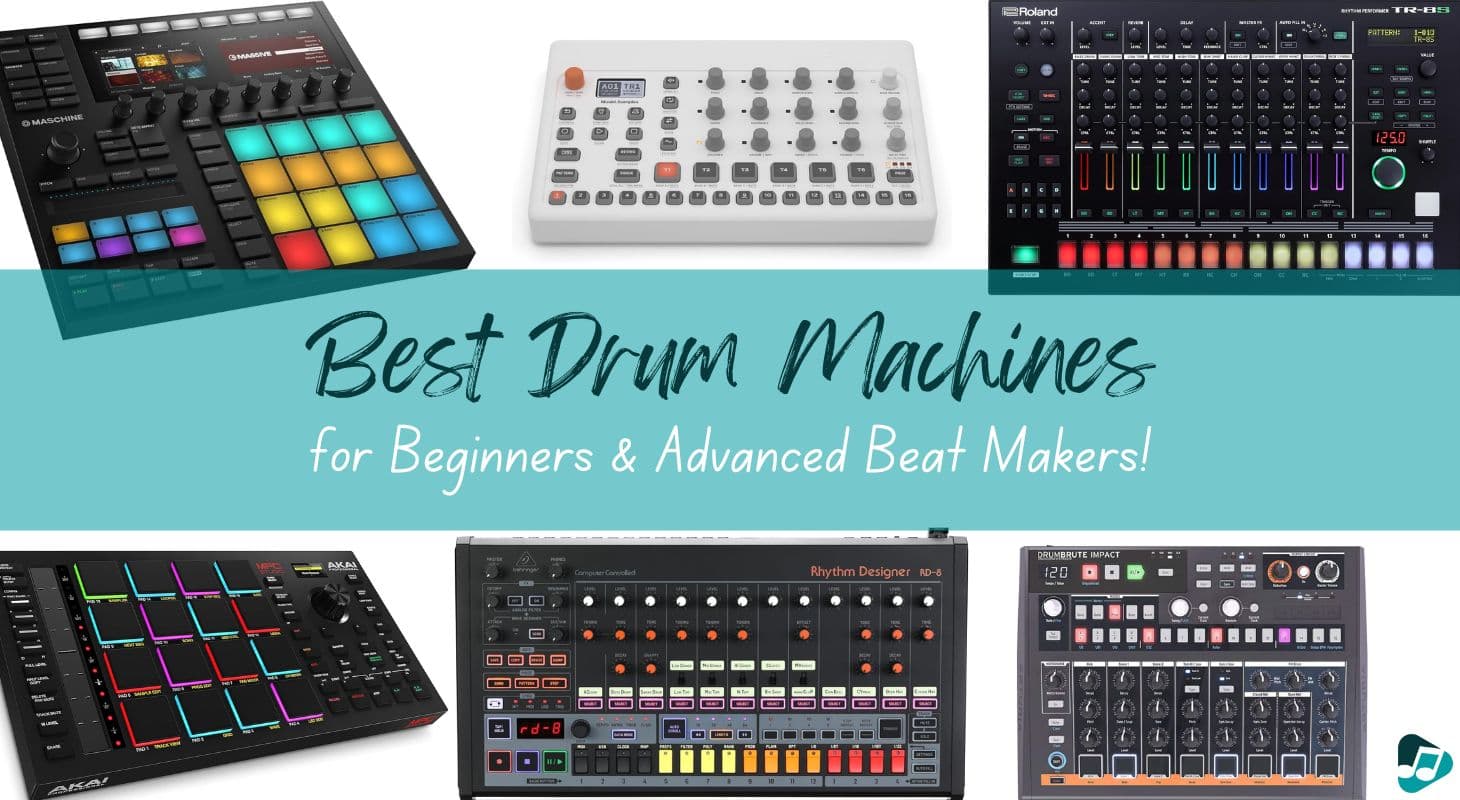
6 Best Drum Machines - Potent Beat Makers!
1. Native Instruments Maschine MK3
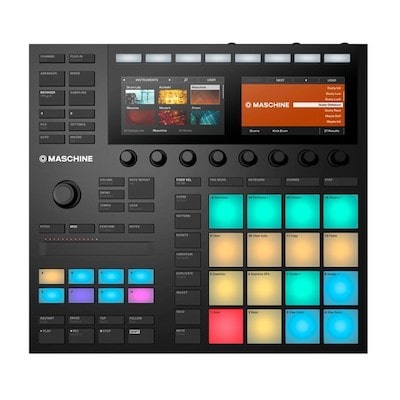
When the folks at Native Instruments released the first Maschine, it was clearly going head-to-head with the AKAI MPCs. However, what's great about it is how it works hand-in-hand with Native's full system. It includes many of their excellent Komplete sounds to make any kind of music.
The pads are super responsive, and the screen is top-notch, making it an all-around solid machine.
One of my favorite things about the Maschine Mk3 is the color-coded pads. They look even cooler than the Ableton Push and AKAI pads.
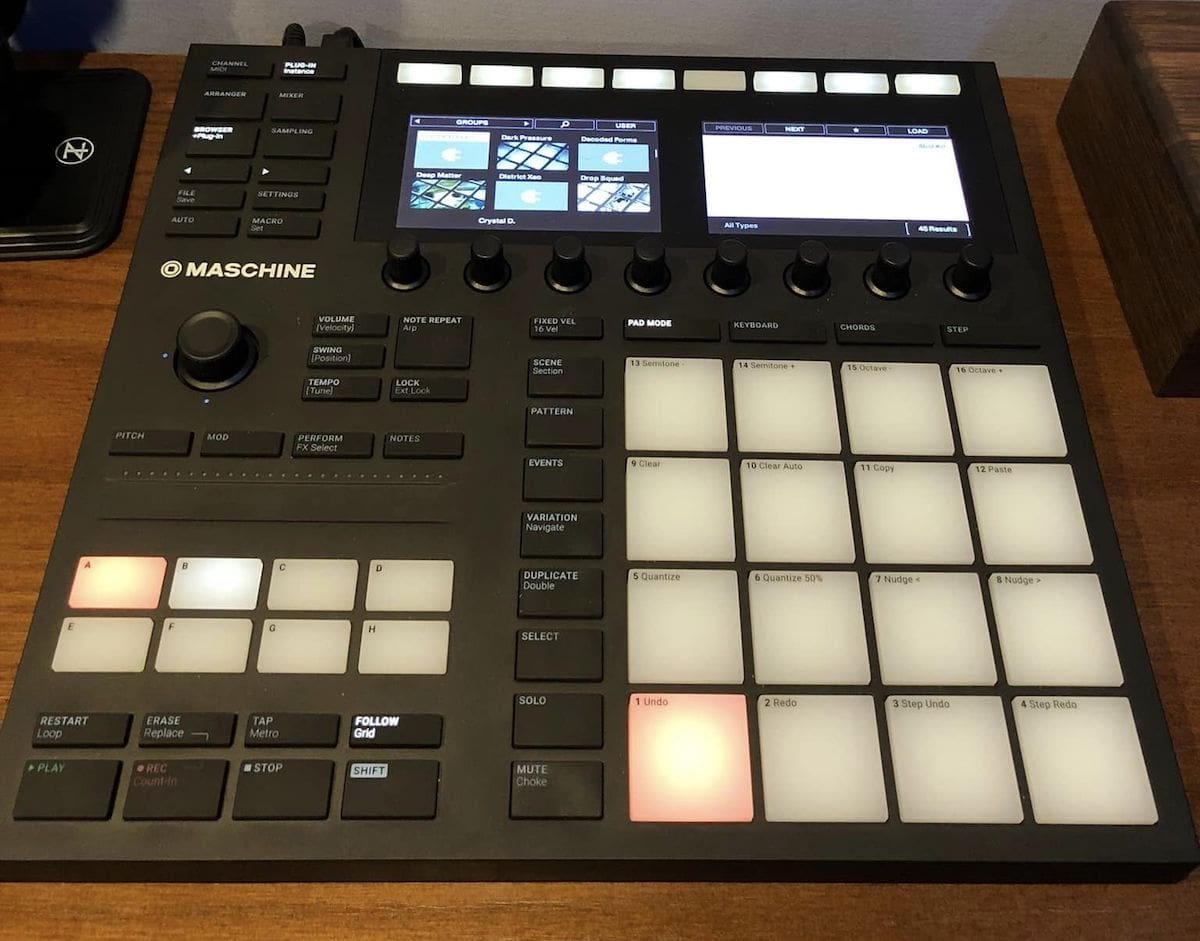
Native Instruments Maschine MK3
Color-coded pads became a trend because it's so useful to use different colors for different drum types. Now you can have kicks in yellow, snares in red, and cymbals in green. This way, you can tell what's what just by looking at the pad. That's some next-level thinking.
Native is playing it smart by making the Maschine compatible with its competitors. For instance, it's got Ableton Link, which lets it sync up or take charge of Ableton Live. It's also compatible with all the MPC programs dating back to the MPC 3000. So in a way, Maschine is more like a friend than a rival. It can work together with all these other companies. "Keep your enemies close," right?
The one thing that's always bothered me is Native Instruments' quantization. Unlike AKAI, Ableton, and even Logic to some extent, Native doesn't have that swing that other drum machines do, in my opinion.
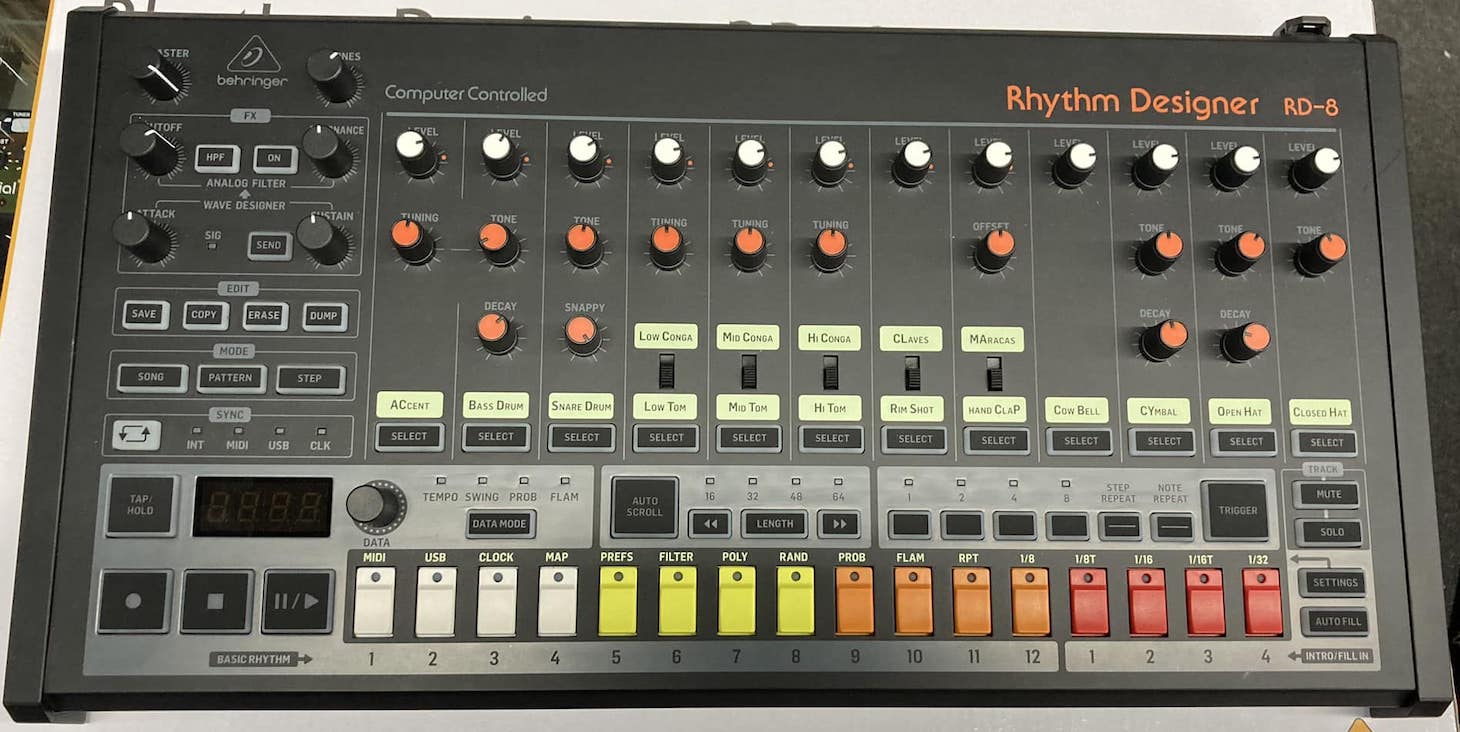
2. Behringer Rhythm Designer RD-8 MK2
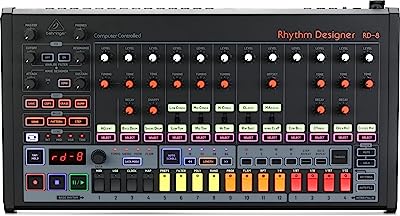
The Behringer RD-8 is essentially a clone of the famous TR-808 drum machine that was all the rage in the 80s. Marvin Gaye and other artists made it incredibly popular back then.
The reason why people love it so much is that it's an analog drum machine, so the sounds can be easily pitched and changed, much like a synthesizer. In fact, you can still hear those long-kick drums and metallic hi-hats in Trap music, as well as a lot of Hip-Hop and Pop these days.
Behringer Rhythm Designer RD-8 MK2
Moreover, it's pretty simple and intuitive to program, which is why it's so well-loved. The Behringer is a direct clone, which means they copied everything from the interface to the buttons to the layout and even the sound chip from the original, so it sounds very close.
It's also a great drum machine for beginners. You don't even have to program a beat. There's a step sequence where you input the notes mathematically, so if there are 16 buttons, you have 16 notes. That means if you run your finger across all 16 buttons, you get one bar of straight 16th notes. It doesn't get much easier than that.
Of course, there are so many ways that you can pitch different things and have amazing cut-offs that whether you're starting out or you're an advanced programmer, there's always something that challenges you to come up with interesting riffs.
Behringer has also included some modern features like USB MIDI and a very tight internal clock, which is pretty sweet.
The only thing I'm not totally sold on is the actual filter. I think filters might be where Behringer falls a little short. I had the Model D for a bit and compared it to my vintage Minimoog, and it didn't quite have the same warmth, but it came pretty close.
3. Elektron Model:Samples
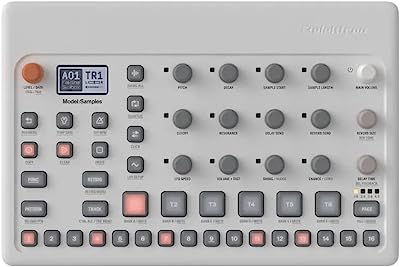
Elektron is a Swedish company that started out making incredible instruments like the legendary Machinedrum, and Monomachine in the early 2000s, but then hit a bit of a lull. I was impressed when they came back swinging with some fantastic products, including their new Digitakt drum machine.
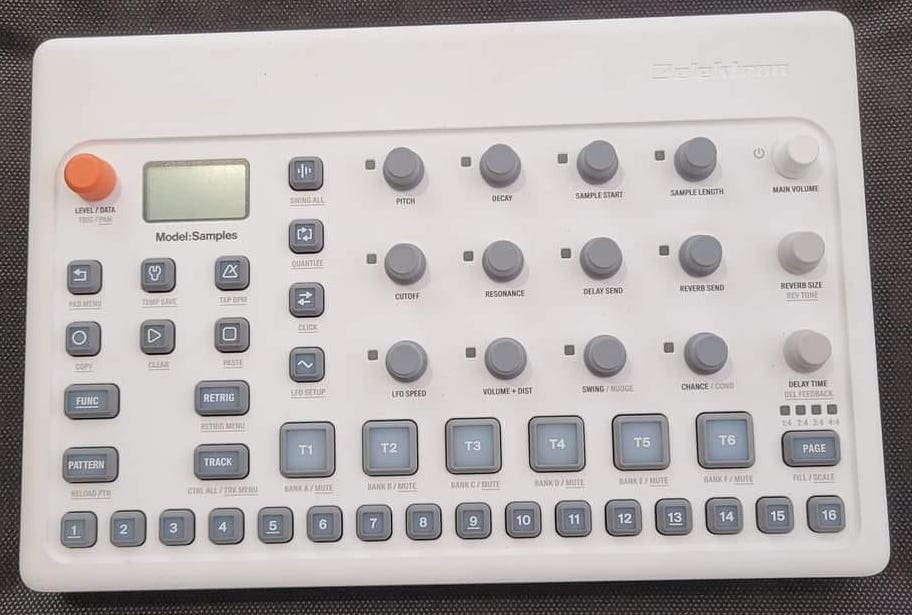
However, I am even more impressed by the simplicity of their Model:Samples. It’s very austere and almost looks unfinished, actually, but it is very simple to operate and sounds amazing.
Elektron Model:Samples
Elektron has always been criticized for having a steep learning curve to use their products, and that’s why I think they made the Model:Samples. It offers a lot of what their other drum machines have but without the need for menu diving.
As the name suggests, you import your drum samples and then you have a six-track sequencer and an additional six tracks to sequence other instruments or MIDI tracks in your computer.
This drum machine really gets cooking when you use Elektron's proprietary parameter locks. It sounds complicated, but it’s essentially a form of automation that they created and perfected. In essence, if you make a beat and you hold down any of the pads from that beat and turn any knob or parameter while recording, it saves whatever you tweaked, and the possibilities are amazing.
It’s punchy, has great effects, and even comes with 300 high-quality samples from splice.com.
The only complaint I have about this drum machine and about Elektron sequencers, in general, is that they are really limited to four-bar patterns. If you want to go over four bars, you have to create song chains, and that starts getting a little complicated.
A lot of drum machines work that way. I prefer the Akai MPC or Maschine in terms of unlimited bars for your sequence.
4. Roland TR-8S Rhythm Performer
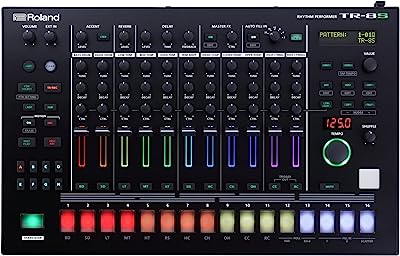
Unlike the Behringer, Roland's TR-8S is not a direct clone of the TR-808. Instead, it combines the greatest hits of classic Roland drum machines, including the TR-808 and TR-909 drum sounds, with many enhancements and modeling tools.

Roland TR-8S
Also, instead of being an analog machine like the Behringer, it is analog-modeled, which means that it digitally behaves like an analog machine. I must say it does a good job because it sounds warm and thick.
This also takes a step sequencer approach and is more about inputting the beats versus playing them on pads. It has 16 backlit step pads and supports up to 32-step patterns, so in a way, it breaks out of the limitations that the Elektron has.
Another incredible feature of this is that for more advanced producers, it actually comes with eight outputs so that you can send your individual drums and process them through pedals, rack-mount gear, filters, etc.
Another enhancement over the classic 808 and 909 is that this groove-box lets you sample up to 600 seconds so you can blend sampled sounds with the internal sounds.
For more advanced producers, you'll also like the fact that it lets you integrate it with your DAW and send multitrack directly via USB. I like this trend that companies are taking the best of the old and the best of the new and combining them.
My one gripe about the TR-8S is actually the look. I feel like they made it very busy-looking with so many sliders, knobs, and colors that it actually is uninviting. Especially if you're a beginner, it looks very complicated, almost like a mixing board with so many choices on the front.
I think part of the charm and appeal of the classic 808 is what Behringer captured in their already-cloned version, which is the simplicity and intuitive layout of the original.
5. Arturia DrumBrute
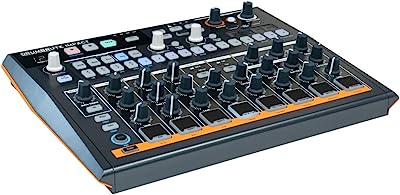
Arturia strikes again! These guys started making great analog classic synth emulations, then went on to make great controllers, and now they make great analog synth and drum machines of their own. Bravo!
The DrumBrute is a pretty cool drum machine that can produce some seriously punchy and dirty beats, all thanks to its built-in distortion circuit. It has a modern and crisp sound that does not even require separate adjustments for each sound, making it perfect for beginners.
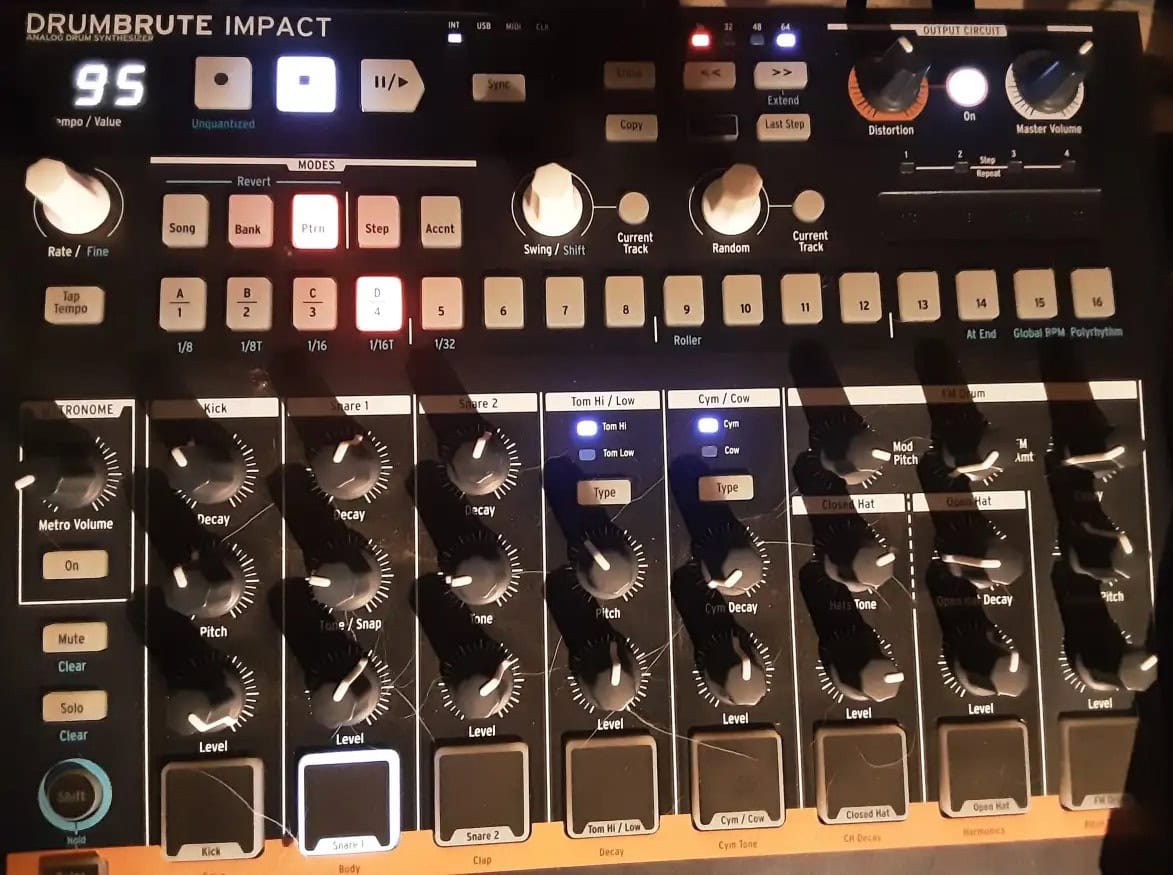
Arturia DrumBrute
The kicks have a nice low sub, and the snares and hats have a crispy transient attack that is perfect for pop and dance music.
In addition, the DrumBrute has some pretty nice add-ons, like USB sync options and an awesome synchronization clock that comes with four different kinds of sync possibilities. Arturia's design is totally on point, with just the right amount of knobs, buttons, and sliders to make it easy to use but not overly complicated.
Advanced producers are definitely going to love the DrumBrute's swing and randomness options. You can add swing to the whole pattern or just to individual drums and customize different lengths for different tracks. That means you can totally make some crazy polyrhythmic sequences!
The only downside to Arturia's analog synths and drum machines is their filter, which can be a bit too harsh and modern. It almost sounds like an analog-modeled digital filter, which is not exactly what you would expect from an analog machine. But overall, the DrumBrute is still a pretty sweet piece of gear that is definitely worth checking out.
6. Akai MPC Studio
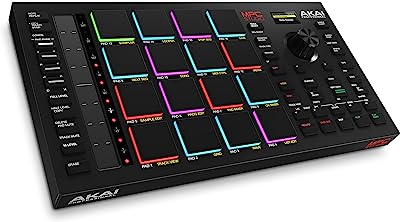
If you're putting together a list of drum machines, you have to include an Akai. Roger Linn is the man behind the Linndrum and the MPC60, which brought some serious swing to the game. That swing made its way onto all the AKAI machines, right up to the MPCX and Studio.
For those who are just starting out, the MPC Studio is really great. You get all the Akai MPC features like swing and punchy envelopes, but with the added simplicity of being able to edit everything right on your laptop.
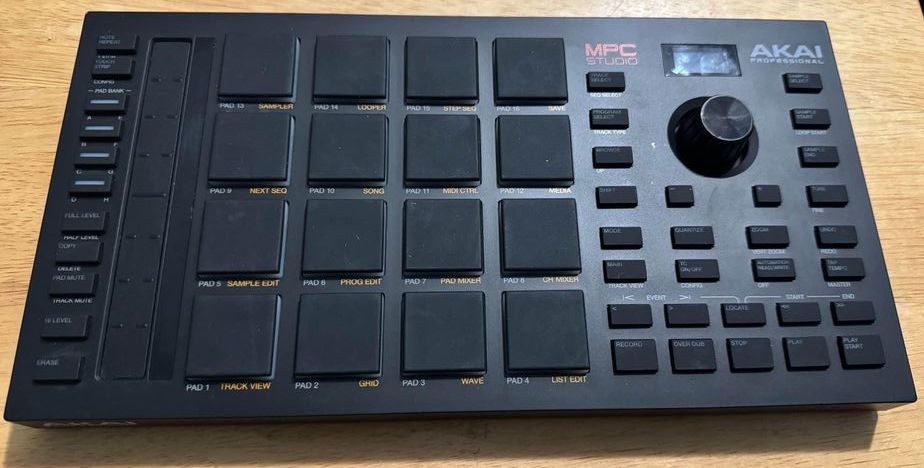
Akai MPC Studio
While it's not a standalone drum machine like the Elektron Model:Samples, the MPC software is killer for loading samples, browsing your library, and saving patterns.
Slicing is where the MPC really shines. Anyone who's into hip-hop knows what slicing is - it's like when you take a 4-bar loop from a classic tune and replay it at different tempos and pitches under a big, thick hip-hop beat. Nowadays, you can do that stuff on programs like Ableton Live, but back in the day, the MPC was the only game in town for that kind of technique.
One reason the MPC is such a great beat-making machine is that the pads are super responsive. You can almost perform without even having to quantize. It's that good.
The latest version of the MPC Studio has a smaller display compared to previous models. It's kind of a bummer because I really liked the fact that the MPC Studio was a way to get away from the computer screen.
Even though it's not a standalone instrument, it still felt like an instrument and not just a controller. Now it feels a bit too much like just a controller, albeit a great one.
Choosing a Drum Machine - Key Factors
So, when it comes to choosing a drum machine, whether you're just starting out or have been producing for a while, it all boils down to what kind of sound you're looking for in your music. We all know that every drum machine has its own set of pros and cons.
But, it's also important to figure out how you plan to use it. Will you be using it as a MIDI controller, tapping out some beats here and there, or do you want it to be a standalone, inspiring piece of gear that can really take your music to the next level?
Here are a few factors to consider when choosing the best drum machine for your setup.
Analog or Digital
In the industry, people throw around the word “analog” a ton as a marketing gimmick. But it's funny because many folks think that when someone says “analog”, it means it's hardware and not software!
In truth, Analog drum machines differ from digital drum machines and samplers in that you create the sound with sound synthesis, and the circuitry and filter are usually analog, not digital.
But it doesn't guarantee that it sounds better. That's a misconception though, because some digital machines like the Elektron Model:Samples probably have more low-end than a few of these analog machines.
So, when you're choosing drum machines for your setup, ask yourself if you really want to create sounds and get deep into designing kicks, snares, and hats from scratch. If that's the case, you probably want an analog drum machine. But if you're looking for instant punch, you might want to check out a sampler like the Model:Samples, or the MPC Studio.
Pads vs. Step Sequencing
There are significant differences among these machines in terms of how you play your patterns. Some of them allow you to perform your patterns live, while others require you to add steps in the sequence.
Pad-oriented drum machines, such as Maschine and the MPC Studio, are excellent if you want to perform your patterns live and then fix them with quantization and edits.
On the other hand, step sequencers, like the RD-8 and the Model:Samples, offer more simplicity. You just need to dial in mathematically where you want your drums to go, and the machine plays it back.
This is awesome for electronic music because a lot of it is about four-on-the-floor kicks, open hi-hats on the offbeat, and snares on two and four. So, you can literally create that in about 20 seconds. If you're a beginner, step sequences might be the way to go because you can get a nice, punchy-sounding beat without even having to have rhythm. And that's totally fine!
Style of Music
When it comes to choosing gear as a musician, you want to make sure you get something that helps you achieve your production goals. If your sound is more EDM or Techno, your gear needs would differ from someone whose focus is Film or Pop music.
For instance, the Elektron is perfect for creating some of those film score patterns that Trent Reznor composed for "The Social Network." It's an amazing machine that allows you to experiment and create some really cool, almost modular sequenced sounds.
Similarly, if you're into dance music, both the Maschine and the Arturia DrumBrute are awesome choices for those modern, in-your-face, punchy sounds that you hear at Coachella. These machines are also widely used by DJ artists and even pop icons.
Other Factors & Closing Thoughts
There's a question that keeps popping up all over the place: why bother programming drum machines when you can just use a keyboard MIDI controller and do everything in your DAW?
I come across this question a lot, and I think that, at the end of the day, musicians prefer using focused, dedicated instruments over computer environments. It's what I call the law of "Happy Accidents".
The more you interact with standalone, limited hardware and experiment, the more you come up with ideas you didn't even set out to do but are even better! Happy Accidents.
Now, if you've heard of the theory of "Flow", which has been used by many neuroscientists and authors, including Malcolm Gladwell, there's a mental state that I think musicians get into, which some may call inspiration or Flow.
It usually happens when you're not distracted but still creatively challenged. Computers are full of distractions: email, the internet, messaging, and calendar alerts. Even if you turn everything off, it's still a distracting environment.
I don't want to sound too over-the-top, but I think drum machines have a way of making you think outside the box when it comes to rhythm. It's not about replacing a real drummer at all.
So, when you're picking out your drum machine, whether you're a beginner or more advanced, go for something that really gets you excited to delve into it. Something fun. I think you'll discover that it'll give you loads of new ideas and keep your tracks fresh and inspiring.
