
One of my favorite things about going to church is the music. As a producer, I'm a big fan of not just the musicians, but also the acoustics of the space they perform in.
Choirs, in particular, sound amazing in churches. But we often overlook the fact that the microphone you use is just as important as the acoustics themselves. In a controlled setting like a film score soundstage, it's easier to mic and control a choir.
However, in a live setting with church acoustics, you really need the right microphone and position to capture the balance and power of a choir.
Here are some of my recommendations for great choir microphones to use in church and worship settings.
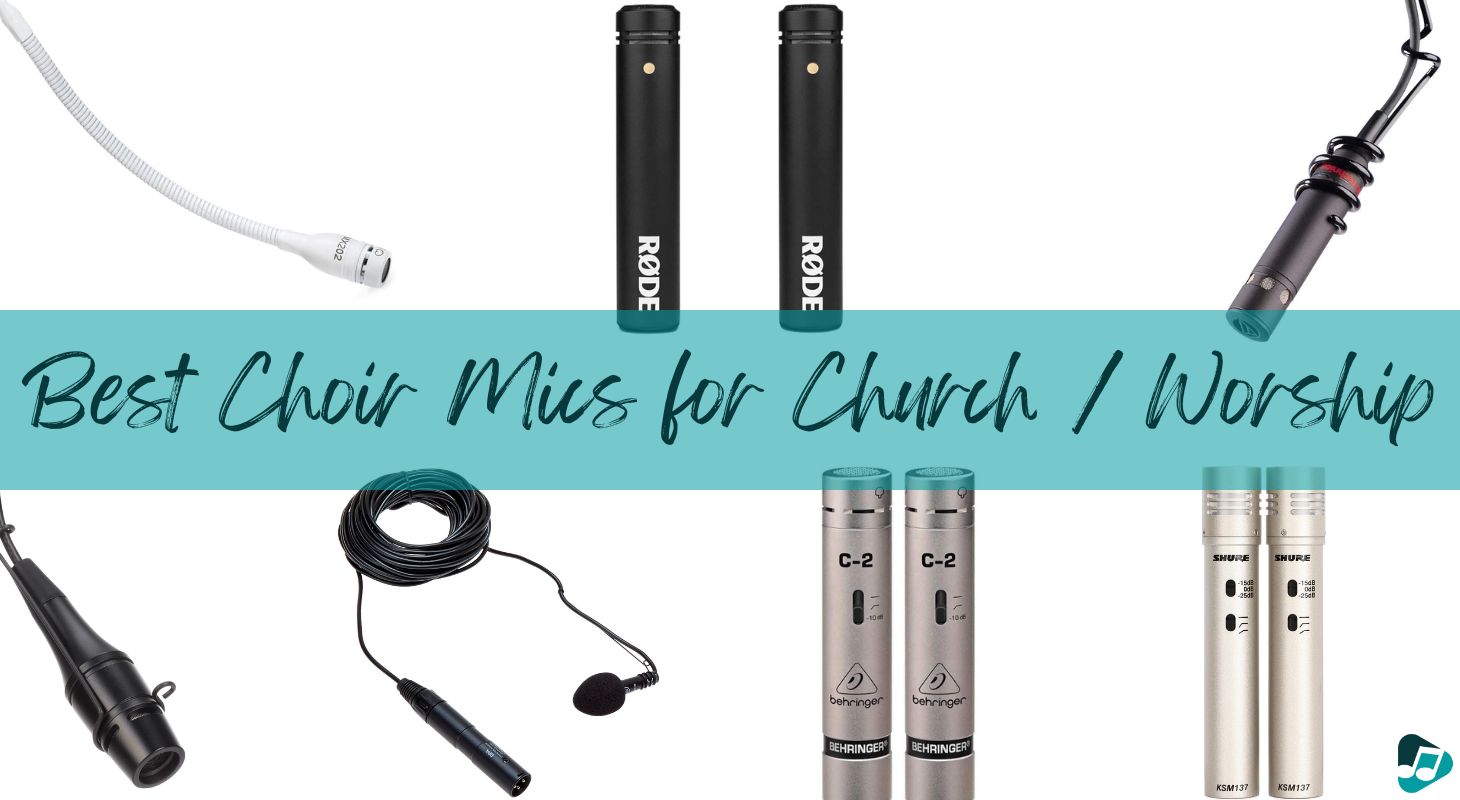
7 Best Choir Mics for Church and Worship
1. Shure MX202B/C

Shure is a legendary company that revolutionized the live performance and touring game. They are the kings of dynamic mics, with classics like the SM57 and SM58. But let me tell you about the Shure MX202B/C, a vocal mic that's perfect for choirs.
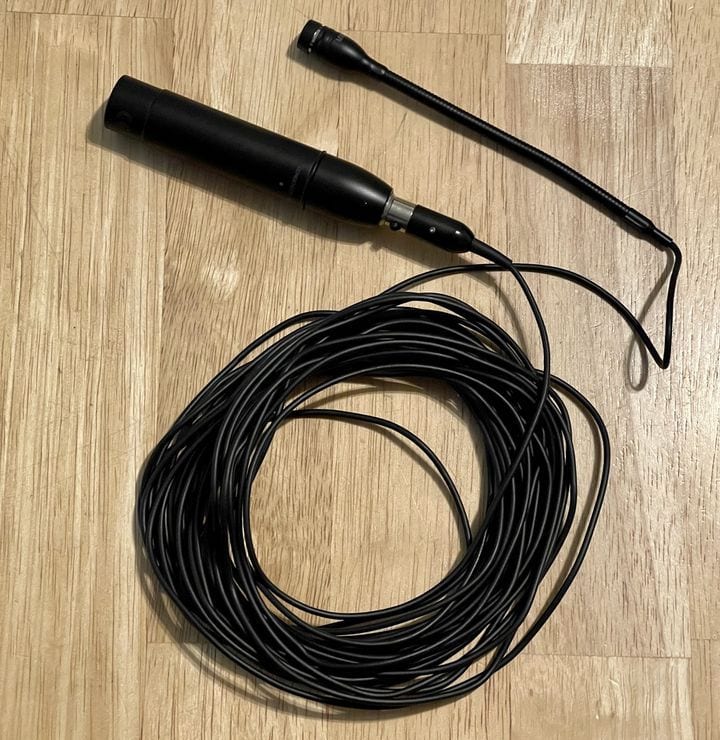
Shure MX202B/C Microflex
Getting the right sound for choirs can be tricky. You have to capture all the tones of the SATB singers (soprano, alto, tenor, baritone), and their positioning can make things tough.
If you record from the front, you'll get too much of the sopranos and not enough of the baritones in the back. So you have to record from above, like when you're recording strings in a Decca setting, the preferred orchestral mic positioning.
Shure nailed it with the design of this mic. It comes with a 30-foot XLR cable and a gooseneck that lets you tilt and position the mic exactly where you need it. And get this, there's even an in-line mic pre that powers the mic. You can attach it to the ceiling and forget about it.
One thing I thought was super smart about the design was that the high-frequency range cuts off at around 17 kHz. Sopranos can get pretty loud, and mics with an extended high-end can sound a bit harsh and shrill.
The only thing I wish was a bit better with this mic is the SPL. It's a bit low, you know? Maxing out at 124.2dB might be a little sensitive for those really passionate loud moments.
2. Rode M5
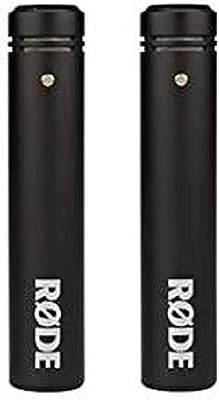
The M5 is a pair of small diaphragm condenser mics, also known as pencil mics, that sound great on Choir. They can also be ideal for other typical church band instruments such as guitars, percussion, and pianos.
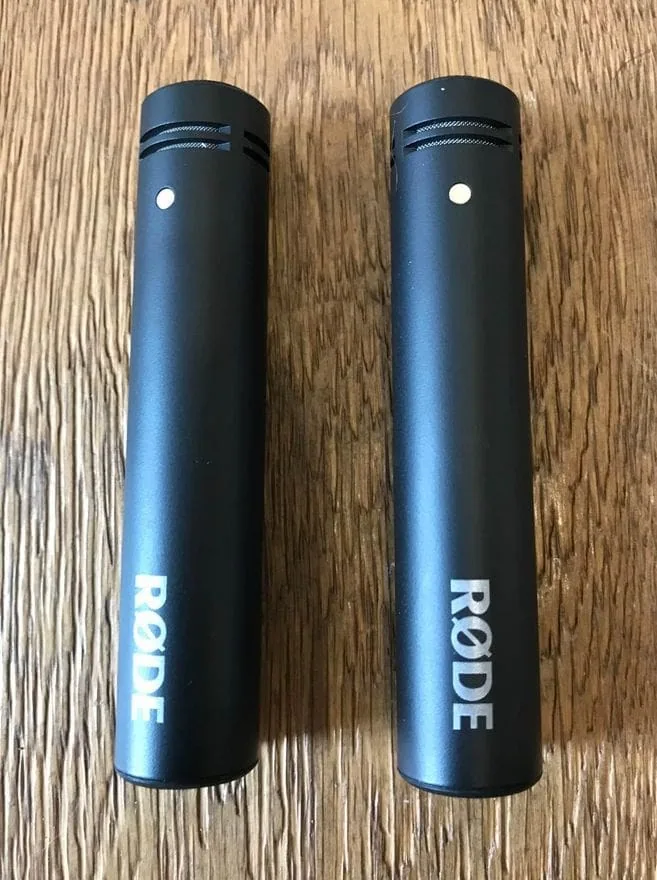
Rode M5
I gotta say, I love it when companies sell matched microphone pairs. That way, when you use them in stereo situations, they sound the same on both sides. If you get random serial numbers, sometimes the color of the sound can be way off, so buying matched pairs is definitely the way to go.
But, here's the thing about the M5: you'll probably need some very large boom mic stands to get that birds-eye view you can achieve with an overhead hanging mic. In choir settings, it's super important to balance not just left and right, but also the front-to-back stereo image.
Of course, these mics have a range of 20Hz to 20 kHz, so you could always use them as front stereo mics for the overall band and then use another mic specifically for the choir.
The only downside I found is that the Rode mic doesn't have an optional high-pass filter switch. Sometimes you have to cut the muddy subs right on the mic instead of from the EQ on the mixing board. It just sounds way more natural to capture it at the source rather than using artificial EQ.
3. Shure CVO
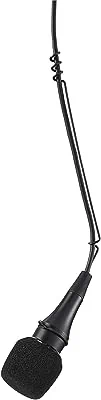
The Shure CVO hanging mic is another cool mic for choirs. Since choirs practice their dynamics and volume levels as a group, it's important to place some mics in the sweet spot of the group. Shure has created a great hanging overhead for this purpose.
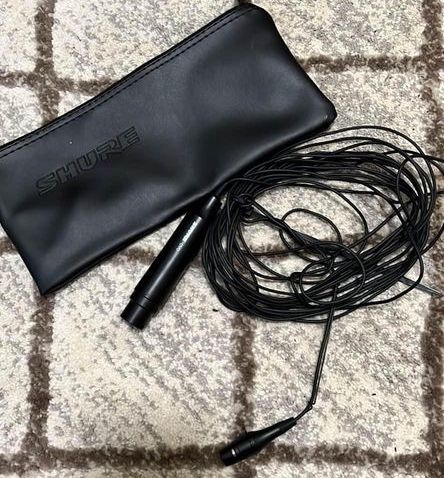
Shure CVO Choir Mic
One thing I really dig about this mic is that it comes with Shure's commshield technology which reduces RF interference. If you've ever been in a packed church, you know that the amount of cell phones and radio signals in the room can be challenging to keep isolated.
Even if all the cell phones are in silent mode, the amount of magnetic forces happening in one room could cause a lot of static problems.
The only issue I have with this microphone is that it feels like a cheaper version of the Shure MX202. It lacks the gooseneck attachment and the mic pre, and its frequency range is even more limited, ranging from 70Hz to 16KHz.
Even though I like slightly darker mics for choirs, I think 16KHz is a bit limiting, especially in worship settings where there might be other instruments surrounding the choir, such as guitars and possibly woodwinds. You do want a little bit of an extended range in your microphone. But hey, the much lower price for this indicates that it's somewhat of a budget version.
That said, Shure has a reputation for making quality instruments, so if this is where your budget is at, a stereo pair of these could easily do the job.
4. Shure KSM137
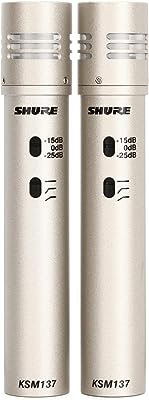
The KSM 137 stereo-matched pair is definitely the most professional and complete choir microphone in this roundup. It has everything you need to get an amazing sound in a church worship setting.
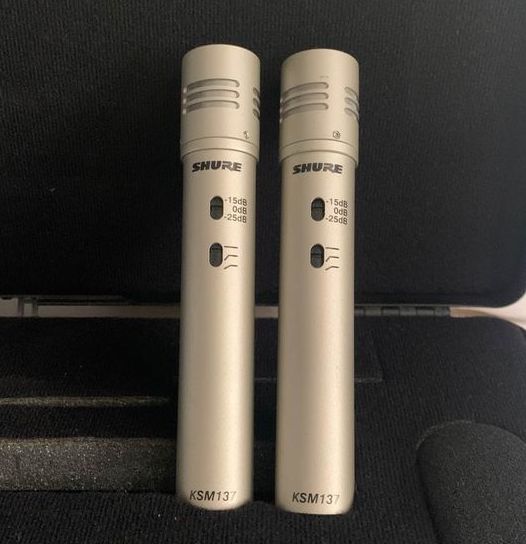
Shure KSM137
It has a great subsonic filter that you can switch on if you need to and a three-position pad for when things get really loud with a big choir. Even though they're traditional pencil mics, you could easily use them in the gallery of a church, placing them higher and a bit further away to capture a wide ambient image of the performers.
Air Studios in London, where many movie scores are recorded, often uses this technique in rooms that have a signature reverb. They usually have closer mics for instruments like strings and percussion, and then use the wider image to capture more of the room.
The only possible downside to these mics might be that they have a very narrow polar pattern that rejects off-axis instruments. This usually works well when you're close-miking things like guitars or percussion, but if you're trying to capture a wider room sound, it might not work as well.
But considering how many great features these have, that's just a minor issue. They also come with a transformer-less preamplifier, which is great because it provides a powerful, clean signal with very little distortion.
The transformer-less design was a smart choice since the SPL and harmonic content of the choir, instruments, churchgoers, and room reflections can create a dense signal when things get loud. So low distortion is definitely a plus.
5. AKG CHM 99
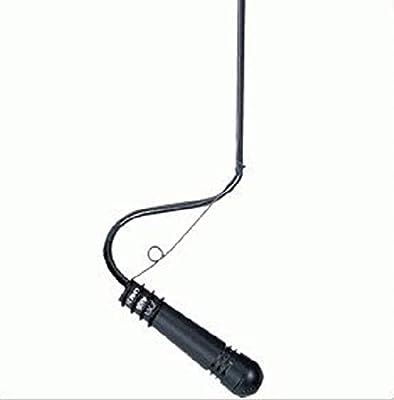
You can't have a round-up of microphones without at least one from the AKG family, right? The CHM 99 is a hanging overhead mic that's perfect for capturing choirs in worship settings.
It comes in a nice white ivory color, which is smart because it blends into the background of many churches and buildings. You don't always want to see a pair of black microphones hanging from the ceiling in a beautiful church.
Now, let's get real. Although the AKG branding is impressive, this mic is limited in many ways. Firstly, it doesn't come with a preamp to power it, so you'll need to run long cables from the ceiling to the power source.
Also, it would be great if they sold these in matched pairs for stereo recording (you'll be stuck with two mono mics if you want to capture in stereo).
On the bright side, being an AKG mic, it has a slightly higher upper range than some of the other hanging mics and goes up to 18K. I personally prefer a bit of a darker mic when it comes to capturing choirs, but AKG is known for amazing high-end, so I'll make an exception because they're the masters of bright microphones.
However, the limited low-end frequency response (cut at 70 Hz) makes me question why they didn't just add a high-pass filter switch. My guess is they figure you might leave this attached to the ceiling of the church and never access it to cut off the filter manually, but why not have that option when you're installing it?
6. Behringer C-2
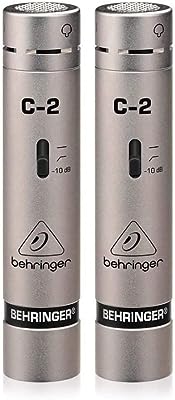
So, Behringer sometimes gets a bad reputation because some people think they simply copy other companies' designs and manufacture in China to bring down the price and essentially eliminate the competition. Although some of that may be true, I can attest that they do make quality products in general.
The C-2 studio condenser mic is one of them. It's sold as a stereo-matched pair for a super low price, yet it still receives great reviews. Overall, these small micro pencil mics are so lightweight that they could almost be lapel mics for performers.
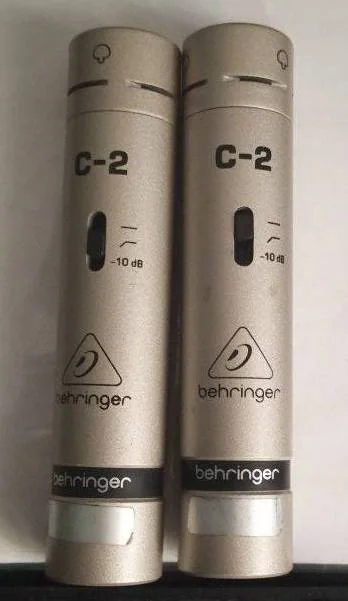
Behringer C-2
They definitely excel when used as overheads for the church, drummer, or acoustic guitar mix. They feature ultra-low noise, transformer-less outputs, so they can work very well in crowded churches with a lot of RF interference.
The fact that these mics are so small and lightweight gives them an advantage over other pencil mics when used for choir in a worship situation. You can easily dangle them from the ceiling in a stereo left-right configuration, or you could use high boom mic stands to set them in a more traditional stereo pattern.
Even though these mics don't come with power sources or pre-amps, they do have a nice -10 dB pad and a high-pass filter option. The high-pass filter option is always useful when it comes to eliminating the rumble of loud settings. Churches definitely qualify with all those reverb reflections going wild.
Another plus of this mic is that it can handle a nice punch, having 140 SPL as its general maxing point. That's more than enough for a whole congregation and band.
7. Audio-Technica Pro 45

The Audio-Technica Pro 45 is a cardioid condenser hanging microphone that works well with choirs. It falls in the middle of the range of hanging overhead mics.
On the one hand, it has a cool self-powering mechanism built in, so you can leave it installed on the ceiling. It also comes with a nice 25-foot cable that's permanently attached to the microphone.
However, I'm not sure I like the idea of having a microphone with a permanently attached XLR cable because if it gets frayed or stomped on, you pretty much have to replace the whole microphone, not just the cable.
Again, it has a pretty limited frequency response of 70 Hz to 16 KHz. It's in line with some of the other hanging overheads in this review, but I still feel that instead of cutting off the low end, they should all add a high-pass filter option. Sometimes, you want to get rid of the rumble, but cutting off at 70 Hz can make you lose some of that low baritone warmth.
On the plus side, this mic is ready to go, so you can set it and forget it. It comes with a built-in windscreen, steel hanger, and long cable. It also has a great SPL handle of 134dB. It’s not the most sensitive, but it's more than enough for a very dynamic choir.
This mic also features a very low signal-to-noise ratio, which is great to avoid that annoying loud hiss that happens in churches many times when the pastor is talking, but the performers are on standby.
Choosing the Right Choir Mic
Alright, when it comes to picking the perfect microphone for your choir, you have to think about how your church band is set up. For those classic instruments like drums, acoustic guitars, and percussion, a matched pair of pencil microphones should do the trick.
But if you're looking to capture the entire vibe of the room and choir, then overhead-hanging microphones are definitely the way to go. In my opinion, the best way to do things is to have a stereo pair of overhead hanging microphones specifically for the choir, and then a separate X/Y stereo setup or stereo microphone to capture the band.
No matter what you decide on, there are some general things you should keep in mind before you spend some money.
Placement Needs
Every worship service has its own unique needs and challenges. Whether you have a big choir or just a small group of singers, you need to think about how you can achieve the best natural balance of voices and dynamic performance.
Remember that choirs practice volume changes, so capturing their performance dynamics is crucial. It's also important to find the right balance between the general ambient sound and the close-up sound.
Smaller worship services with less traditional reverb, such as those held in a low-ceiling building, will be much easier to set up.
These factors will help you choose between an overhead setup or a closer mic setup. Sometimes, it could be a combination of both.
Power
Depending on how big the band is or how many microphones you're dealing with, things can get pretty complicated when it comes to powering all those mics. And that can lead to extra expenses, like having to get an external mixing board and someone to man it to avoid any harsh feedback during performances.
But there's a solution that can make things a lot easier: self-powered mics, especially the hanging overhead ones. If you have preset gooseneck overhead mics that are directly connected to their own power source attached to the ceiling, all you really need are two cables running directly into a small mixer.
Then you can use closer, pencil mics that require shorter cables and keep things clean and simple.
Frequency Response
Earlier, I was talking about how I like having the option to roll off some of the low end from the mic. Some mics have different settings to get the right bass roll-off without having to use external EQ.
Oh, and if you're singing, sometimes mics that can pick up the full 20 - 20 frequency range can be a bit too much and sound either too sharp or too muddy. So, depending on your stage setup, including the choir, you might want to think about using a combination of full-frequency mics and ones that are a bit more vocal-focused and have a little less bass.
Final Thoughts
At the end of the day, nailing that amazing, powerful, and beautiful sound from your choir and worship band is all about balance. It's like when you rehearse and the conductor tries to balance the lows and highs from the sopranos to the baritones, creating a cohesive blend that hits that sweet spot in the building. Capturing that perfect sound with the right microphone is the key.
My film music composition instructor once told me that sometimes the best film music is the one you feel, but don't notice. Because it shouldn't distract from the story.
I'd say that for some devoted churchgoers, prayer is the main message and the music is there to support it. That's why the smoother and more natural the musicians’ sound, the better the experience.
In a way it should sound like there aren’t any mics at all and the room is doing all the work! The audience should be hearing a detailed, close-up snapshot of how it sounds on stage.
In many ways, capturing worship choirs and musicians is similar to recording a beautiful cinematic orchestral score. Do some research on how orchestra mics are positioned on scoring stages, and it might give you some ideas for micing your own choir setup.
