
In the microphone world, condenser and tube mics usually get all the glory because of their primary use by vocalists in the studio. They also happen to look amazing in all the glossy Instagram pictures from everyone's recording sessions.
In truth, dynamic microphones are equally important — and in the live performance world, even more so!
Many would say that the clear champion of all time when it comes to dynamic microphones is the Shure SM58. This makes sense since nearly everyone has seen one without even knowing what it is, whether at church, on concert stages, in schools, auditoriums, or even at local AA meetings.
This microphone is probably the most widely used dynamic mic in the world.
That doesn't mean, however, that it's the best or only choice. I find myself using many other brands often and I'm quite surprised at how much better they perform for certain tasks and voices.
Top 3 - Budget Dynamic Mics
Preview | Product | Price |
|---|---|---|
 | ||
 | ||
 |
The SM58 has many limitations that are rarely discussed. Due to its age — it's been around for a long time — it lacks many of the technological upgrades that newer models offer. For today's world, I think it's worth looking beyond the industry standard to explore options available from other microphones.
I've put together a list of some of my favorite dynamic microphones that are definitely worthy SM58 alternatives, and you can get any one of these without breaking the bank!
Let's take a look.
Best Budget Dynamic Mics - 6 SM58 Alternatives
Table of Contents
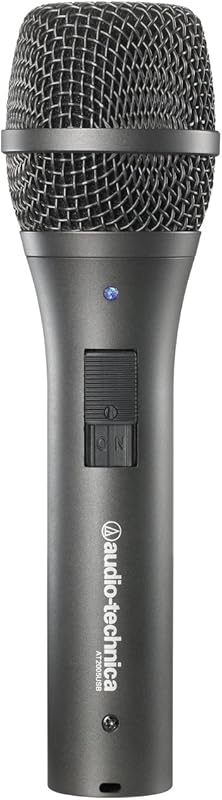
1. Audio-Technica AUD AT2005USB
From the get-go, the Audio-Technica AT2005USB looks very similar to the SM58 physically, except with a black mesh cover and sleek black body, but there's so much more to this microphone than meets the eye.
For starters, they thoughtfully added a dual output system, which means you can either use XLR into a preamp or directly into an audio interface, or connect via USB for digital output.
Even if the specs of the digital conversion of this microphone max out at 16-bit 48K resolution, that doesn't mean it can't capture a pristine signal. Audio-Technica also makes higher-end microphones that go up to 192K with very stable, high-quality clocks that don't have much digital jitter.
Digital jitter occurs when cheap clocking technology is used in digital output converter hardware. While it's difficult to detect immediately, it occasionally causes random pops and crackles in the audio.
Regardless of whether you're using a 24-bit 192K digital converter or a 16-bit 48K converter, if they're both made by the same company, used by the same brand, and are of extremely high quality like the ones Audio-Technica uses, you're still going to get great digital audio capture.
Another excellent feature is the built-in headphone jack that allows you to monitor your audio and includes a volume adjustment dial at the bottom.
Here's why that's so important: when recording digital audio at 48k or higher sample rates, you might experience latency. This occurs when your buffer size increases because you're recording high-definition audio that your CPU can't process in real time.
This creates a slight delay, which is extremely annoying and can throw off vocalists and podcasters alike. It feels unnatural to speak and then hear your voice slightly delayed. When using headphones, it's almost like hearing an echo of yourself without hearing your original voice — just plain weird.
When using this mic in the recording studio, I handle latency by using both the XLR output and the digital output, but allowing the singer to monitor through the XLR output only. With XLR output running through a decent audio interface, there should be no latency.
For that setup, I connect this mic to a quality preamp — usually either a Black Lion Audio Auteur DT or a Golden Age Project Pre-73 Mark IV. Both deliver pristine analog sound, with the Black Lion offering a more neutral profile while the Golden Age is modeled after the Neve 1073 preamp, a legendary choice for studio vocal recording.
If you prefer going directly into your audio interface, that works well too. I love Universal Audio interfaces like the Volt and Apollo because you can use their incredible preamp emulations right on input while recording in real time. This gives you access to preamps from legendary companies like API, Neve, Manley, and SSL.
These would cost tens of thousands of dollars as physical hardware, making the emulations an exceptional value.
In the studio, I love using this Audio-Technica dynamic mic for hip-hop vocalists and rappers. The SM58 was always a favorite for rap because many rappers avoid isolation booths. They prefer hearing tracks played back loudly through the main studio speakers — the bass inspires them to perform with more energy, so they often skip headphones entirely.
This creates challenges with condenser microphones, which capture more room sound even in cardioid mode, resulting in speaker leakage bleeding into the vocal track. This can cause phasing issues by essentially doubling your sound.
This Audio-Technica mic provides exceptional rear rejection thanks to its nearly hypercardioid pattern, primarily capturing sound directly in front of the chrome mesh head. When positioned close to your lips while rapping or singing loudly, virtually nothing else bleeds into the signal — just pure vocal. This is exactly what you want when recording in a control room.
For podcasting or interviews, I take a different approach. I monitor with headphones, provide headphones for guests, and use the mic's built-in headphone output. The microphone excels at capturing conversational speech, podcasting, interviews, and even outdoor recording sessions.
In these scenarios, I often prefer the digital connection because it delivers a clean, linear sound — it doesn't color the audio with excessive highs or lows, but faithfully reproduces whatever you present to it.
Here's a tip on choosing between digital and analog with this mic: for lackluster sources—such as a singer without a particularly deep or airy voice that needs enhancement — I'd typically use an analog preamp like the Golden Age Project Pre-73 for added warmth. In such cases, I'd connect via XLR for analog processing.
If you want to capture something naturally, like someone talking, and don't want excessive lows or warmth but just clarity — perhaps for video or journalism — then digital output is better.
For added color, go analog; for clean capture, go digital.
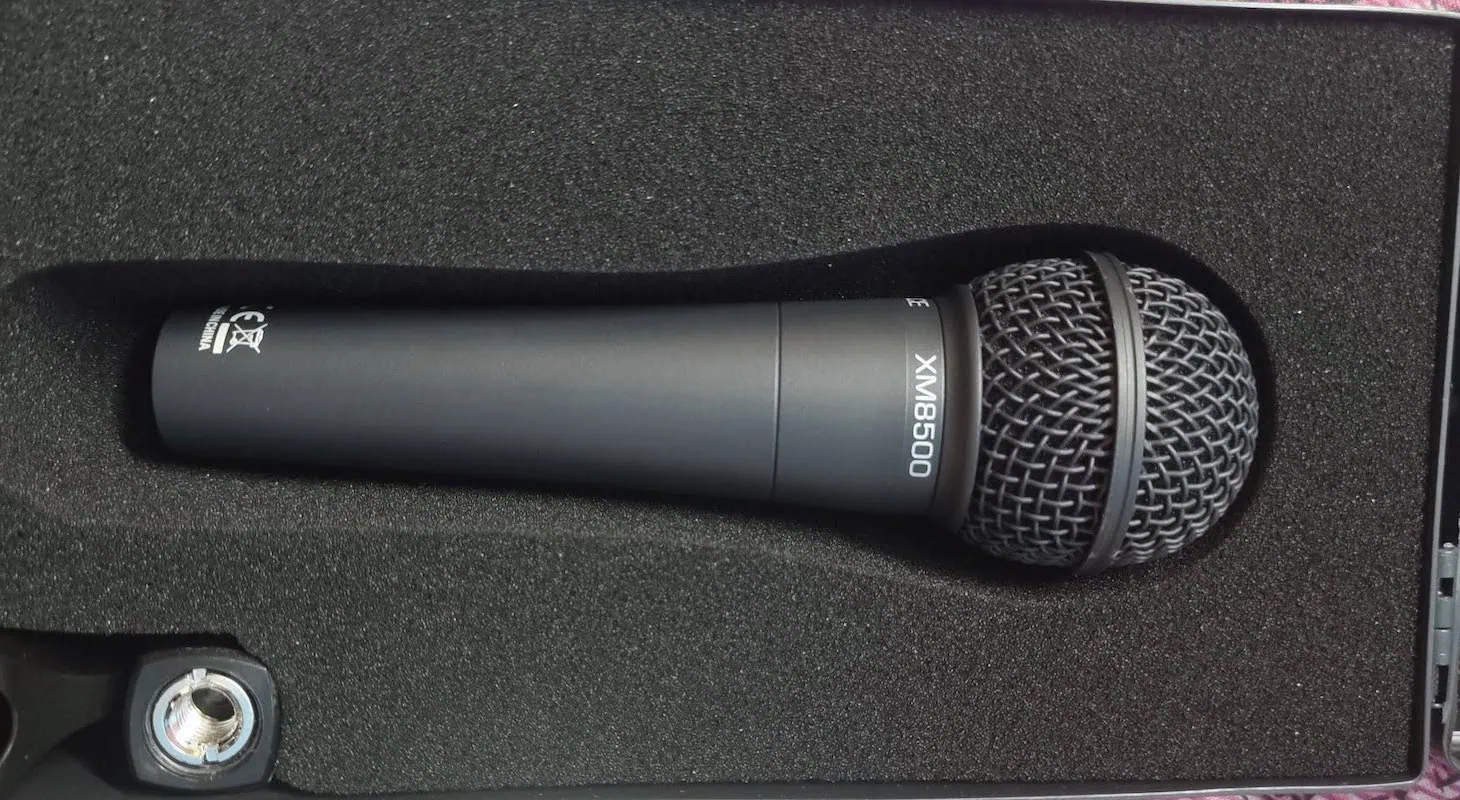
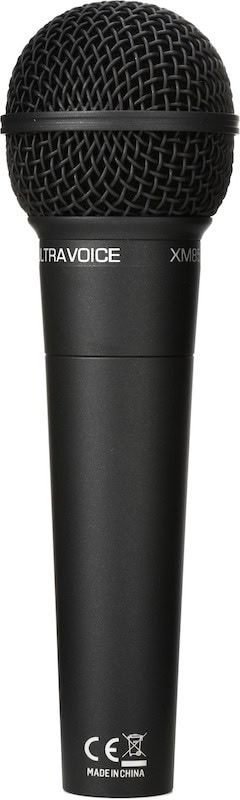
2. Behringer Ultravoice XM8500
The Behringer Ultravoice XM8500 is another favorite when it comes to recording vocals in the control room of the studio. They designed the microphone to have a specific feature called feedback rejection, which is exactly what plagues many recordings when the singer or artist doesn't want to use headphones and prefers to use the main speakers as playback.
What they implemented is a phase cancellation technique in which anything coming from behind the capsule is rejected almost completely. This doesn't just help with rappers — it also helps singers who might be tracking in their living room or a non-treated space with a lot of reverb.
If you sing against a wall, there's a good chance you'll pick up much less of the room because the room will be behind the microphone. This creates many versatile uses for this microphone when recording singers, rappers, and various artists in the studio.
Another favorite use of the SM58 has always been as a live microphone. In fact, that's probably been its most popular use. As many of you have seen in movies to emphasize humor in a scene, there are moments they call the "mic drop," where somebody says something and punctuates it dramatically by dropping the microphone, followed by feedback.
That feedback can happen on stage as well if the speakers are behind the artist and they're going into the microphone, and then the singer is also singing through the microphone and coming out of the same speaker system. Behringer's technology and design also deals with feedback coming from the side of the capsule — making it a very advanced system for such an affordable mic.
I mean, talk about an SM58 alternative. This microphone is almost half the price and has a very similar sound and overall frequency range. It has an incredibly flat sound from 50 Hz to 15 kHz, which makes it hit that sweet spot without being overly bright.
That's why I also love using this microphone for guitar amp capturing, both live and in the studio. The rule of thumb for engineers and producers is usually that you don't use a very bright mic to capture guitar amps. That's why many people actually prefer using ribbon mics, which are even darker than dynamic mics.
It doesn't have that harsh mid bump that many cheaper dynamic microphones have — even the SM58 has some of that. I also love the feedback technology in this design because one thing I've always struggled with when capturing really loud guitar amps is not getting too much room or booth reflection.
To really get that awesome guitar sound that you hear from your favorite artists, you need to crank up the guitar super loud. The problem is that any loud signal will bounce back even in the smallest possible room.
That bounce-back can start making the sound muddy because you're capturing multiple versions of the same sound.
I remember when I got to mic up the great legendary guitar player Carlos Santana's stack for an album many years ago. His trick is that he uses a lot of off-axis mics, which means you don't aim the mic head directly into the speaker but tilt it slightly — mostly at a 45° angle — to get less high end and less direct air from the amp.
Another thing that the Behringer has, which is amazing for this particular problem, is a two-stage pop filter built into the mesh capsule itself. This is meant to prevent a lot of air from causing that plosive sound that everybody hates on mics, especially on dynamics.
This integrated filter helps a lot when you're aiming the mic directly at loud amps. It also helps if you're using it on snares, and of course, it helps with very loud singers who want to be very close to the mic.
So all in all, Behringer really covered a lot of usage ground with this microphone because you can use it on anything from normal voice podcasting to incredibly loud drums and guitar amps. For the price, it's almost impossible to beat the versatility of this mic.
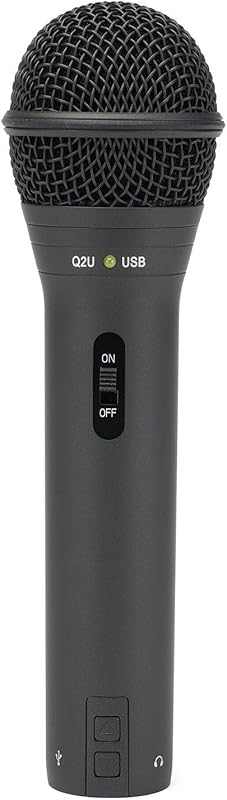
3. Samson Q2U
Samson has always been a reliable company when it comes to performance gear, and the Samson Q2U dynamic microphone is probably one of the best products they've ever made.
How they haven't gotten sued by Shure is beyond me because, just looking at this microphone, it's almost a carbon copy of the SM58 visually. I would never be able to tell from a distance that it isn't an SM58 — and maybe that's the point.
Well, they haven't gotten sued, so they're doing something right.
This microphone is a direct competitor and rival to Audio-Technica in that it also has dual output options: either XLR out into a preamp or USB for digital recording. Now you might be asking, if all these mics look similar and have some of the same features, how do you really tell them apart?
That's why you've got me — someone who loves to nerd out and A/B test all these microphones to find their true strengths. This allows me to report which microphone you should choose for specific purposes.
I personally use this mic frequently for podcasts and dialogue capture.
You can always use it for singing and studio recording, but I find the frequency response and overall character to be better for dialogue.
You might ask, "Can the others be used for dialogue too? Why would I choose this one?" My answer would be that it handles SPL probably better than all the rest.
SPL is sound pressure level, or how much beating it can take from loud signals from voices and/or singers' instruments. I love using this mic live when capturing outdoor interview shoots, and it's great for creating content outdoors.
The pressure level handling is really important when interviewing random people on the street, for example, because you never know if somebody gets super excited and starts screaming into the mic — I have that happen all the time.
You can always use a compressor in post to try to tame those peaks when somebody (like a kid or stranger you're interviewing for a documentary) puts the mic right up to their mouth and goes off, either because they're excited, nervous, or mad. Who knows?
What a compressor will do is shrink the peaks a little bit, but you still get that awful saturation that happens when signals clip digitally.
This microphone is designed to almost auto-compress extreme signals in a very musical way. So you don't get that pumping compression effect when using it to tame loud signals. That was also one of the most desirable qualities of the Shure SM58 — the way it handled loud signals and dealt with them in a very musical way without needing extra gear.
A microphone like this that handles high SPL signals can also help you if you're on a budget because it might be the best microphone to capture signals digitally, therefore you can bypass getting a preamp.
The reason most people use preamps is because many preamps have either analog circuitry that acts as a soft clipper (which means it compresses naturally) or some preamps actually have a built-in limiter or compressor to take care of those peaks before you start clipping digitally.
My advice is always: if you're going to record digitally, go in as loud as possible, but make sure you never go into the red or clipping. Unlike the pleasing saturation caused by tape machines, tubes, or high-end transformer-based gear, when a USB signal clips digitally, it's extremely difficult to fix and definitely doesn't sound cool or warm. It just sounds bad.
Then in post, you have to use iZotope RX tools and try to de-clip. Even if you can pull that off — because these tools are pretty amazing for post-production cleanup work — it doesn't sound pristine. It usually sounds like a degraded version of what it could have been if it hadn't gone into the digital red clipping zone.
So again, a tip: if you are going to use a microphone with a lot of unknown variables where people could be speaking either too softly or too loudly, this might be the right mic for you.
4. Sennheiser e835
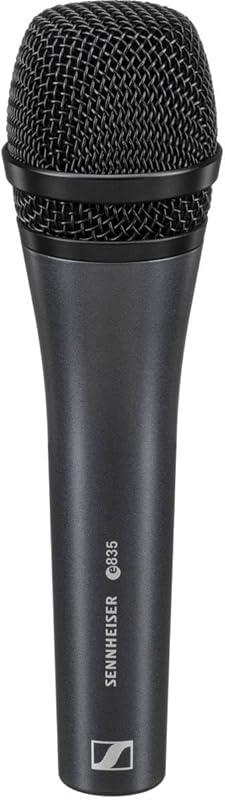
Sennheiser has always been synonymous with premium products. This dynamic mic sits on the premium side of this list and costs twice as much as some other microphones, yet it's still cheaper than an SM58. I definitely think it sounds better than the Shure SM58.
The Sennheiser e835 is probably the closest dynamic mic I've used to a condenser mic in terms of sound quality. People typically prefer condenser and tube mics because they capture more detail in the high mids and the "air zone" (12kHz and above) — qualities that vocalists love when tracking with a good microphone.
Unlike what you hear on stage at a concert, tracking vocals in a controlled studio space makes you sound larger than life. It's not just about converting your voice to digital audio — it's about making you sound like you're whispering in the listener's ear.
That's why the history of studio gear has centered on the evolution of preamps, compressors, and microphones. The challenge has always been capturing singers, especially those who sing softly and close to the microphone, without distortion or excessive noise.
Additionally, you need to achieve that delicious high-end we love in great vocal recordings without excessive sibilance or harshness. Microphone companies have continuously evolved their products to strike the perfect balance: bright but not harsh, and capable of handling soft signals without introducing noise.
I think Sennheiser definitely nailed it for what a dynamic mic can do. It offers great SPL handling and very nice uniform low and high capture, with a bit more high-end bump than other microphones — definitely brighter than the SM58, but in all the right ways.
I use this mic for capturing the best live performances for multiple content videos. It's my go-to for live performances when I want to capture studio-quality, pristine sound comparable to what I used on the actual record.
When I'm using this microphone in a situation where a singer is performing while holding the mic, and we're capturing this live show almost as if it were a real-time studio recording, this is my top pick. It's designed to minimize handling noise when shifting the mic between hands.
With an SM58, if you're performing and switching hands — say, to raise your fist in the air — when the mic body bumps against your other hand as you catch it, it produces a loud thump. In a big stadium, this can be incredibly disruptive.
Even in a more intimate showcase, like an NPR Tiny Desk-style recording, an SM58 will definitely pop, requiring post-production fixes. You could almost drop the Sennheiser on the floor without getting that low-end thump.
This particular feature, called the advanced shock mount, is a new technology created by Sennheiser that works extremely well. I hope other companies integrate this type of feature into their dynamic mics as well.
Some engineers like using the SM58 on snares, and sometimes even on the outside of kick drums to capture that attack, especially for metal drums.
The Sennheiser is great for this, not only because it has a pristine, sweet high end (similar to but more uniform than an AKG C414), but also because of its shock mount technology. If you place it in front of a loud guitar amp with a big cabinet like a Marshall or Soldano that emits powerful air and low vibrations, this microphone won't rattle.
This is crucial because many people use SM58s on big guitar cabinets for their ability to handle pressure, but if the lows are powerful enough to shake the mic, you'll get that rattle. You won't experience this problem with the Sennheiser.
So I would say this mic truly excels at capturing singers and instruments. It's more of a musical mic than what I would use for podcasting or interviews.
5. sE Electronics V7
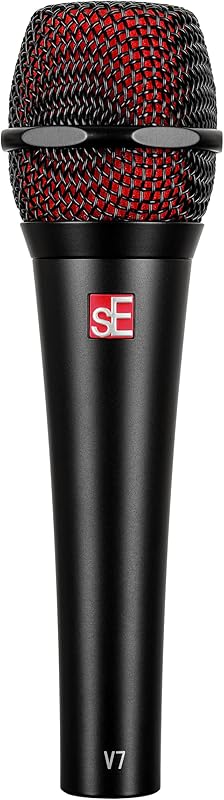
The sE Electronics V7 dynamic mic seems to pack all the best features of many mics in this roundup. It has excellent shock resistance, making it easy to handle manually — ideal for a handheld dynamic mic. It also has impressive SPL handling of up to 168dB!
For reference, the Shure SM58 tops out at 160dB max. You definitely have plenty of headroom with this mic.
The V7 delivers a more modern sound with a premium high-end clarity and a clean, crisp mid-range tone. This isn't surprising, as its frequency range extends further than all other mics on this list, spanning from 40 Hz to 19 kHz.
It's rare to see dynamic mics reach almost 20 kHz in the high end, as this range is typically reserved for condenser capsules and tube microphones, which naturally capture these frequencies better. Yet sE Electronics achieved this — I've verified it myself by running this microphone through a spectrum analyzer, confirming it beautifully captures up to 19.1 kHz.
Add to that its built-in windscreen and pop filter under the mesh, and you can see where this mic's intended market lies: outdoor performances and content creation.
"Content creation" is a term thrown around frequently today, as virtually anything uploaded to the internet can be considered content. However, those of us in the music industry understand the specific type of content musicians need to advance their careers and cut through the noise.
This includes outdoor summer performances, weekend busking for extra income, and documenting touring life from city to city or even locally within our state.
I recently worked with an artist who posts daily TikTok videos while on tour — from waking up to the evening show, the after-party, and then winding down, storing equipment with the band before returning to the hotel to rest before repeating the cycle.
Much of her content is recorded in untreated venues, vans, and outdoor settings. She uses the sE Electronics V7 after testing practically every dynamic mic available on Amazon.
Her assessment was that it has all the features needed for heavy-duty vocal capture, whether it's dialogue, singing parts of songs while preparing in venue green rooms, or interviewing band members in the tour van.
She's not a superstar with a massive marketing budget, so she relies on TikTok to grow her audience. This approach has proven invaluable — she's gained 30-40,000 new followers with millions of likes because fans appreciate her authenticity on tour and enjoy when she performs acoustically, capturing snippets on guitar or piano after sound check or in her hotel room.
Many of us face similar situations, especially artists looking for their next great dynamic microphone. This one might seal the deal if, like my friend, you create content on the go.
While there are many content creation microphones available, including some that easily attach to iPhones or GoPros, the V7 saves time if you lack the time, skills, or budget for post-recording editing. It simply sounds that good right out of the box.
It also offers excellent rejection of noise, wind, and plosives — built like a tank in many ways. It's by far the most rugged microphone on this list and definitely more capable than an SM58 for modern needs.
The only downside is the lack of digital output. This is surprising because, as I mentioned, it's my favorite content creation mic on this list.
As an audio engineer/producer, I have plenty of preamps and high-end DI boxes, but those seeking an all-in-one microphone solution might want the option of USB connectivity.
I suspect adding digital conversion might have compromised the microphone's ruggedness or sensitivity. It might also have been difficult to maintain the crisp high-end through a digital converter instead of a traditional XLR circuit.
XLR outputs sometimes feature Neutrik circuitry, which helps translate highs better through high-quality XLR cables. While not a dealbreaker, I was somewhat surprised that one of the more premium and expensive microphones on this list doesn't offer USB options.
6. Rode M1
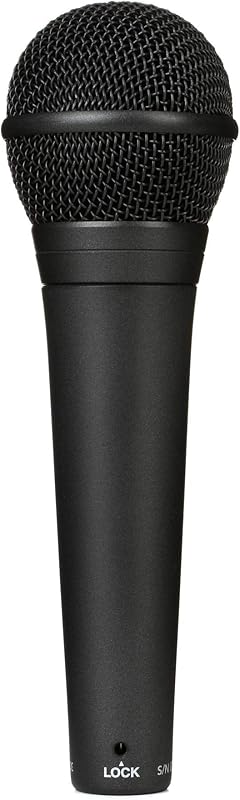
Finally, we round out with one of my favorite microphone companies, RØDE, coming to you straight from Australia. Out of all the companies on this list, RØDE is the only one that is solely and uniquely a dedicated microphone maker.
Much like my beloved Latvian favorite Blue Microphones, RØDE came into the marketplace decades ago, offering premium unique designs with new features that could be at the level of AKG and Neumann, but directed toward smaller and project studios.
There's always been a joke in the producer community that there's no such thing as a middle-class microphone. Meaning you either went premium or you were just buying a cheap knock-off version of the premiums that you couldn't afford.
That might've been true until about 20 years ago when these new companies began bringing true, premium design and circuitry to the middle class. RØDE is definitely one of those companies.
The Rode M1 is their answer to the SM58. It's primarily designed for live vocal performance. Many of my artists use it live. I bring it to gigs sometimes just because it's extremely reliable, but it also has one thing that none of the other mics on this list have — a tailor-made specialized high-power neodymium capsule.
What is that, you ask? It's essentially a capsule made with neodymium, a rare earth element widely used in magnets and headphone technology. In many ways, this microphone functions as both a mic that captures and a speaker that delivers sound.
That's why to me — and probably to most of the industry — this is one of the loudest, most powerful dynamic microphones you'll ever come across. That's not the same as highest SPL — I'm talking about high output.
High output is crucial because you never know what type of amplification or pre-amplification you're going to use on your microphone, especially in the live world.
I can't tell you how many times I've shown up to venues I've never been to before where I've called ahead to ask about the gear we're going to use and nobody called me back. Then you get there and realize all they have is a cheap digital console with stock onboard preamps for every single microphone.
I'm so traumatized by those experiences that I actually bring my own preamps for the vocal mics. How well venues are equipped depends on what level of the music business you're at. Good equipment is usually reserved for premium spots.
If you're playing smaller venues because you haven't reached that level in your career, you're probably going to be stuck with mediocre, basically trashy gear.
Having a microphone that doesn't need a lot of amplification, especially if you're using those cheap digital preamps, is a godsend. Trust me on this: have you ever been to a concert and you're waiting for the artist to come out and they're playing a stock track that sounds really good through the sound system?
Then they stop the track because it's almost time for the artist to go on, and all you hear is hum and hiss from all the microphones on stage? Yep, that's both microphones without good output amplification built-in and bad gear overall for the front of house engineer.
That's actually more common than not. So if you're an artist who wants the most reliable, detailed handheld capture that will sound great in any venue — whether a stadium or a small coffeehouse — this RØDE M1 might be the one for you.
If there's one thing that RØDE is great at, it's being reliable. I have four of their microphones and I've never had to service any of them or even return them. And they've been through the wringer. They're definitely some of my most used microphones.
I've also opened up this microphone just to check out the capsule and make sure we're not buying some snake oil salesman's marketing pitch about this new rare earth capsule. And no, it is a unique-looking capsule and definitely doesn't look mass-produced like a lot of other dynamic microphones.
RØDE products are designed and handmade in Australia to very high-quality standards, so one thing you don't have to worry about is it being a knock-off with a great marketing campaign trying to sell you on features.
Essential Tips for Choosing a Dynamic Microphone
Choosing a dynamic microphone really comes down to what you need it for. Of course, some of you might just have studios and want to have a few dynamic microphones for any purpose that comes up—that's great.
However, there are still criteria to consider. I've made a list of what I mentally run through before choosing a dynamic microphone, which will hopefully clear things up a little bit.
Sound Pressure Levels
The appeal of the Shure SM58 was always how it handled loud levels when the microphone was pressed extremely close to or even directly on the source signal. If you're in the market for a dynamic microphone, chances are you're looking to track loud signals.
The question is: will you be recording vocals or instruments? Will you be using it in the studio or for live performances?
While some microphones can handle both applications well, they differ primarily in how they capture high frequencies. The SM58 was never known for a crisp, sweet high-end.
It was always more of a neutral-sounding, midrange-focused microphone, but as you've already read, I think that technology has been surpassed.
There is a downside to brighter microphones when capturing very loud signals, but that's for you to decide what's most important. I would recommend testing several mics on this list and returning the ones that don't work—that's the best approach.
Noise Rejection
Whether it's feedback from speakers in the studio, when you're recording artists in the control room, or feedback from loud bands on stage, choosing a dynamic microphone with modern technology to suppress feedback and reject noise can be invaluable for live performers.
Modern dynamic microphones reject noise in several different ways. Some have built-in shock mounts and windscreens, which prove valuable for outdoor shooting and content creation.
Others simply have a high output level that guarantees less hiss and floor noise due to how powerfully the capsule translates sound.
Versatility and Features
Lastly, in this day and age, USB recording is where it's at for mobile setups. Maybe you're looking for something more premium than your average camera microphone or boom stand, but you don't know anything about preamps or audio interfaces.
You simply want something that can cleanly capture audio and input it digitally into your computer. There's nothing wrong with that.
Many of these companies had these types of customers in mind when they included high-quality digital outputs. If that's what you need, then a few of the microphones in this roundup will definitely stand out from the others.
Final Thoughts
Singers often like to get comfortable — turning the lights down low, relaxing on couches, closing their eyes, and singing naturally. I can't tell you how many times I've set up fancy tube mics only to have singers say "no thanks." Tube mics aren't ideal for casual sessions — they overheat, capture every slight movement, and are quite heavy.
That's where dynamic mics really save the day.
Another advantage of dynamic mics is they don't require expensive phantom power preamps, saving you money. Standard audio interfaces can work perfectly well, delivering clean sound at appropriate volumes.
Simply choose the right dynamic mic for your vocal recordings or performances.
Many artists actually prefer to stay in the control room rather than being isolated in vocal booths — and that's perfectly acceptable!
Rest assured, for whatever need you may have, you'll find your ideal dynamic mic somewhere on this list!
